
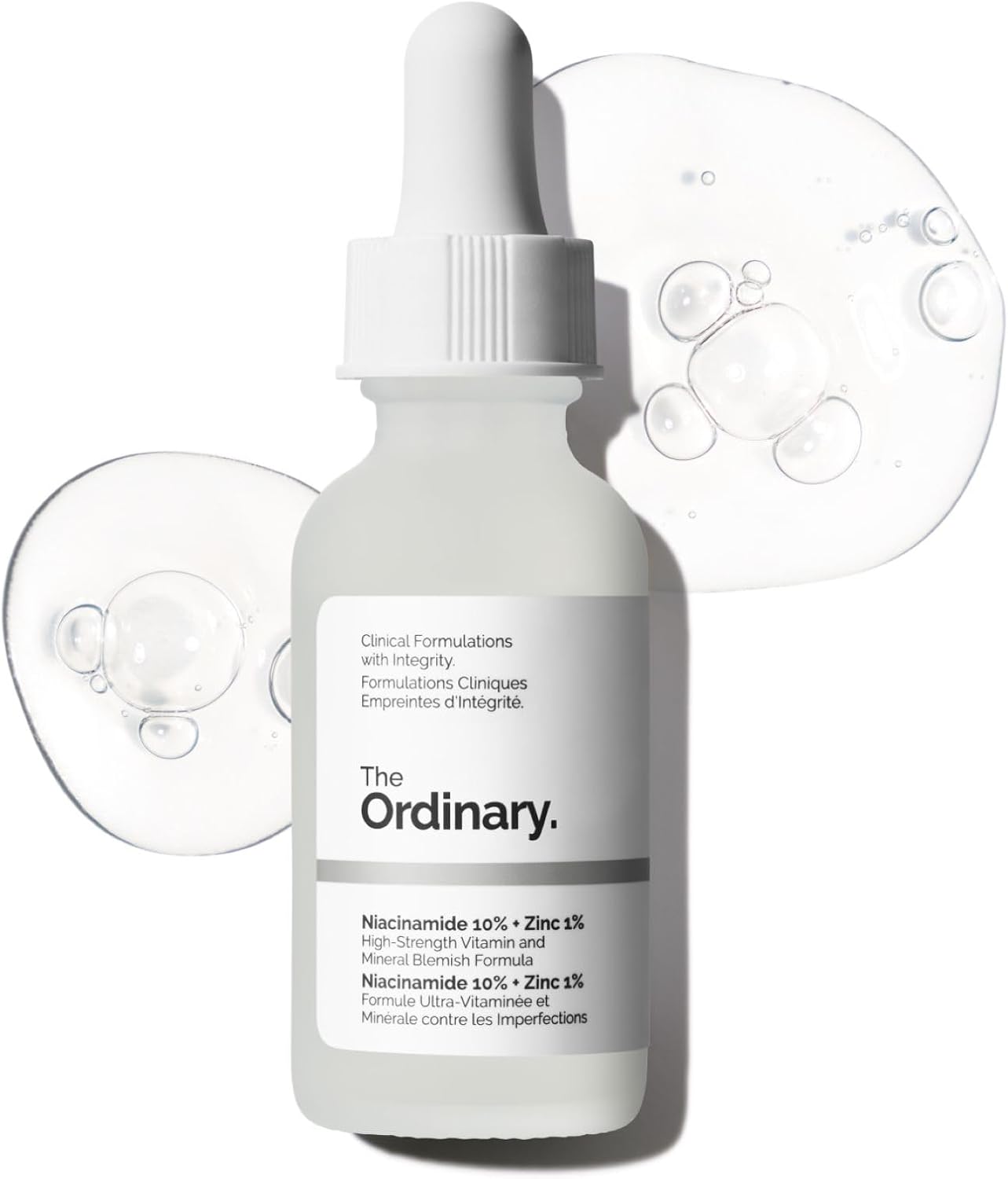
If there's one product that defines the democratization of skincare, it's The Ordinary Niacinamide 10% + Zinc 1%. It costs six dollars. It sits on the shelf at every Sephora, Ulta, and Shoppers Drug Mart. It's been reviewed, recommended, and debated more times than I can count. So why am I writing about it now? Because I've been using it on and off for over two years, and my feelings about it have shifted in ways that I think are worth sharing. This isn't a first-impression review—it's a long-term assessment from someone who keeps coming back to it despite knowing its flaws.
What's Actually In This Bottle
The full INCI list is short, which is typical for The Ordinary: Aqua (Water), Niacinamide, Pentylene Glycol, Zinc PCA, Tamarindus Indica Seed Gum, Carrageenan, Acacia Senegal Gum, Xanthan Gum, Cocoyl Proline, Ethoxydiglycol, Phenoxyethanol, Chlorphenesin. That's twelve ingredients total. No fragrance, no essential oils, no filler actives. The formulation is brutally minimalist, and that's both its strength and its limitation.
Niacinamide at 10% is the star. This concentration is well-supported by clinical research—studies show that 2-5% niacinamide improves barrier function, while 5-10% addresses hyperpigmentation and sebum regulation. At 10%, you're getting the upper end of what's effective without crossing into irritation territory. Niacinamide works by inhibiting melanosome transfer from melanocytes to keratinocytes, which is how it fades dark spots. It also reduces sebum production by downregulating the enzymes involved in lipid synthesis, which is why oily-skinned people love it. And it boosts ceramide synthesis in the stratum corneum, which is why it's considered barrier-supportive even at higher concentrations.
Zinc PCA at 1% is the supporting act. Zinc is a well-known antimicrobial and anti-inflammatory agent, and PCA (pyrrolidone carboxylic acid) is a natural moisturizing factor component. The combination of zinc and PCA is supposed to regulate sebum and soothe acne-prone skin. The problem is that 1% is a fairly low concentration for topical zinc to have a meaningful standalone effect. Most dermatologists I've spoken with consider zinc PCA more of a supporting ingredient than a primary active at this level. It's there, it's doing something, but it's not the reason this serum works.
The rest of the formulation is essentially a thickener and preservative system. Pentylene glycol is a humectant and mild preservative booster. Tamarind seed gum, carrageenan, acacia senegal gum, and xanthan gum are all natural polymers that give the serum its viscous texture. Cocoyl proline is a mild surfactant and skin-conditioning agent. Ethoxydiglycol is a solvent that helps the active ingredients penetrate. Phenoxyethanol and chlorphenesin are the preservatives. There's nothing exciting here, and there's nothing irritating either—unless you're one of the people who reacts to the gum-based thickener system.
Texture and Application: The Part Everyone Complains About
Let's address the elephant in the room. The texture of this serum is not elegant. It's viscous, slightly sticky, and has a tendency to pill when layered under certain products. The first time I used it, I applied it after toner and before moisturizer, and within thirty seconds I felt that telltale rubbery feeling—pilling. Small balls of product rolling across my cheeks. It's not a dealbreaker, but it's annoying, and it means you have to be strategic about what you layer it with.
The pilling is caused by the gum-based thickener system. Tamarind seed gum, carrageenan, and acacia gum all create a film on the skin that doesn't always play nice with silicone-based products or heavy creams. I've found that it works best when applied to slightly damp skin after toner, given a full two minutes to absorb, and then followed with a lightweight, water-based moisturizer. If you try to rush it or layer it with a silicone-rich primer or sunscreen, you'll get pilling. Every time.
The serum itself is a clear, slightly viscous liquid with no discernible scent. It dispenses from a standard dropper—three drops is enough for the full face. The absorption time is about 90-120 seconds, which is slower than most modern serums. Once it sets, it leaves a slightly tacky finish that disappears after you apply moisturizer. On its own, it's not something I'd want to leave on my skin without a subsequent hydrating step.
Two-Week Wear Test: Does It Do What It Claims?
Conditions tested: Two weeks of consistent use, morning and night. Office days (8 hours indoor, air-conditioned), four outdoor walks (20-30 minutes, direct sun exposure), one humid weekend. Skin type: combination, oily T-zone, with mild post-inflammatory hyperpigmentation on the cheeks and chin. Paired with Illiyoon Ceramide Ato Concentrate Cream and Isntree Hyaluronic Acid Watery Sun Gel during the day.
Days 1-3: The first few days were uneventful. No stinging, no redness, no adverse reactions. The serum felt comfortable on the skin despite the tackiness. I noticed my T-zone was slightly less oily by the end of the workday—not dramatically, but enough that I wasn't reaching for blotting papers by 3 PM the way I usually do. This is consistent with niacinamide's documented sebum-regulating effect.
Days 4-7: The oil control became more noticeable. My forehead and nose looked less shiny in photos taken at the end of the day. I also noticed my pores looked slightly smaller on my nose—not because they actually shrank, but because there was less sebum filling them. The dark spots on my cheeks hadn't changed, which is expected. Niacinamide takes at least 4-8 weeks to show visible improvement in hyperpigmentation.
Days 8-14: The sebum control was consistent throughout the second week. My skin felt balanced in a way it doesn't when I skip this serum. One thing I noticed was that the texture of my skin felt smoother—less rough patches around my nose and chin. The dark spots on my cheeks looked marginally lighter, but I wouldn't call it a visible improvement. Two weeks simply isn't enough time for niacinamide to meaningfully fade hyperpigmentation. What I can say is that the serum was doing something: the oil control was real, the texture improvement was real, and my skin felt calmer overall.
Pros
- Unbeatable price: At $6 for 30ml, this is one of the cheapest effective niacinamide serums on the market. You can use it liberally without wincing at the cost.
- Proven active concentration: 10% niacinamide is well-researched and effective for sebum regulation, barrier support, and long-term hyperpigmentation improvement
- Minimalist formulation: No fragrance, no essential oils, no unnecessary actives. The short ingredient list reduces the risk of reactions
- Real sebum control: I noticed a consistent reduction in oiliness on my T-zone throughout the two-week test
- Widely available: Sold at Sephora, Ulta, Shoppers, and most online retailers. You can find it almost anywhere
Cons
- Pilling: The gum-based thickener system causes pilling when layered with silicone-rich products or heavy creams. You need to wait 2+ minutes before applying the next step
- Sticky texture: The serum feels tacky on the skin until you apply moisturizer over it. Not pleasant on its own
- Zinc PCA is underdosed: At 1%, the zinc contribution is minimal. This is really a niacinamide serum with a marketing-friendly zinc label
- Slow results for hyperpigmentation: Two weeks showed no visible improvement in dark spots. Expect 8-12 weeks for meaningful fading
- Can cause irritation in some: Despite niacinamide being generally well-tolerated, 10% can cause flushing or breakouts in sensitive skin. It's not universal, but it's common enough to be a known issue
Who Is This For?
This serum is best suited for oily and combination skin types who want affordable sebum control and a basic niacinamide treatment. If you're new to skincare and looking for a cheap entry point into active ingredients, this is a reasonable starting place. The low price means you're not out much if it doesn't work for you.
It's less ideal for dry or sensitive skin types. The formulation lacks hydrating ingredients beyond pentylene glycol, and the tacky texture can feel uncomfortable on already-dry skin. If you're primarily concerned with hyperpigmentation rather than oil control, there are better-targeted options—serums that pair niacinamide with tranexamic acid, alpha arbutin, or vitamin C derivatives will give you faster and more comprehensive results.
If you've tried this serum and experienced flushing or breakouts, you're not alone. Some people react to 10% niacinamide specifically, and dropping to a 5% concentration often resolves the issue. Good Molecules makes a 5% niacinamide serum that's similarly priced and much gentler for reactive skin.
Price and Where to Buy
The Ordinary Niacinamide 10% + Zinc 1% retails for $6 USD for 30ml. It's available at Sephora, Ulta, Shoppers Drug Mart, and directly from The Ordinary's website. It's also sold through most online beauty retailers and Amazon, though I'd recommend buying from authorized retailers to avoid counterfeits.
At $6, this is genuinely one of the cheapest effective skincare products on the market. The price-to-performance ratio is hard to beat. But cheap doesn't automatically mean best—sometimes spending a few dollars more gets you a significantly better formulation and user experience.
Comparison Notes
Against Anua Niacinamide 10% + TXA 4% Serum: Anua's serum costs $24—four times the price—but it includes tranexamic acid for hyperpigmentation, ceramides for barrier support, and a much more elegant texture. If you can afford it, Anua is the better product for most skin types. The Ordinary wins on price alone.
Against Good Molecules Niacinamide Serum (5%): Good Molecules uses a lower niacinamide concentration (5%), which is gentler for sensitive skin. The texture is lighter and less prone to pilling. At $6, it's the same price. If you've had issues with 10% niacinamide, this is the swap to make.
Against COSRX The Niacinamide 15 Serum: COSRX goes higher at 15% niacinamide, which is more effective for some people but also more likely to cause irritation. It includes ceramides and has a smoother texture. At $25, it's a significant step up in price and potency. I'd only recommend it if you've used 10% niacinamide without issues and want something stronger.
Final Verdict
The Ordinary Niacinamide 10% + Zinc 1% is a product I respect more than I love. It does what it claims—niacinamide at 10% is effective for sebum regulation and barrier support, and the price is genuinely unbeatable. But the texture is a letdown, the zinc contribution is more marketing than medicine, and the pilling issue makes it finicky to use in a multi-step routine. I keep it in my rotation because it works and it's cheap, but I reach for better-formulated niacinamide serums when I want something that feels good on my skin.
If you're on a tight budget or you're just starting to explore active ingredients, this is a fine choice. If you're willing to spend $15-25 for a more pleasant experience and additional brightening actives, there are better options. The Ordinary built its reputation on accessible, no-nonsense skincare, and this serum embodies that philosophy. It's just not the best version of what niacinamide can be.