
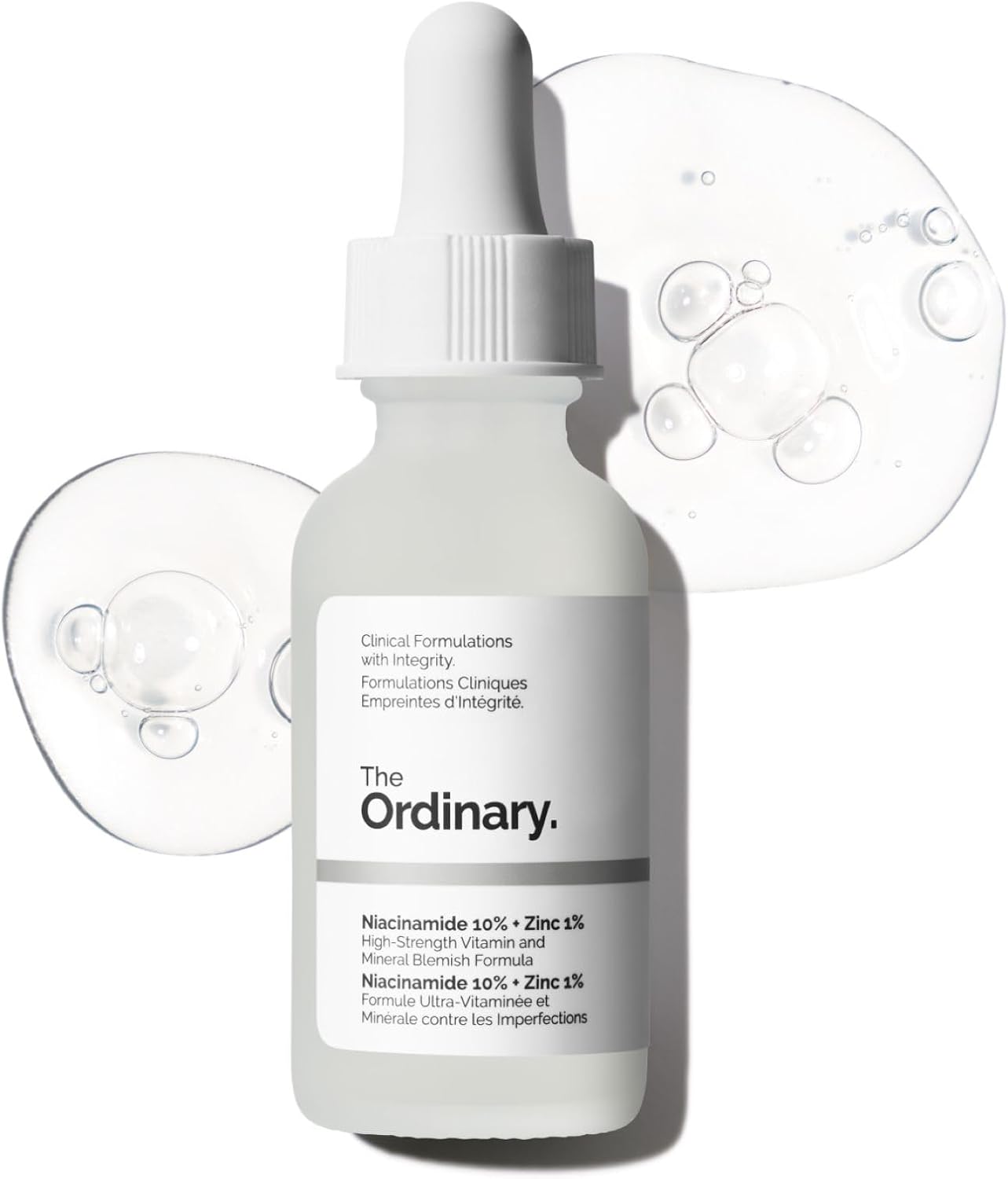
Azelaic acid is one of those ingredients that dermatologists love and skincare enthusiasts underestimate. It sits in this odd middle ground — not as buzzy as retinol, not as ubiquitous as niacinamide, but quietly effective at treating the things that actually bother people: redness, post-acne marks, and texture. Prescription-strength azelaic acid (15–20% gels like Finacea and Skinoren) has been a dermatology staple for decades. The Ordinary's 10% suspension brings the ingredient to the over-the-counter aisle at a price that's almost comically low. But a cheap azelaic acid isn't automatically a good one — the formulation matters enormously, and azelaic acid is notoriously difficult to work with. I wore this every night for two weeks to find out whether The Ordinary's version is a genuine treatment or just a budget placeholder.
Brand & Product Context
The Ordinary, owned by Deciem (now under Estée Lauder), built its brand on a simple premise: single-ingredient skincare at transparent, honest prices. Their Azelaic Acid Suspension 10% is exactly what it says on the tube — 10% azelaic acid in a silicone-based vehicle. No fragrance, no essential oils, no marketing fluff. The 30ml aluminum tube is lightweight and travel-friendly, and the product sits in their "Concentrates" line alongside other targeted treatments.
What's important to understand about this product is that it's a suspension, not a solution. Azelaic acid is barely soluble in water — it's a dicarboxylic acid that crystallizes easily — so formulating it into a smooth, cosmetically elegant product is a genuine technical challenge. The Ordinary's approach is to suspend the azelaic acid in a silicone-based matrix rather than dissolving it in a gel or cream base. This has real implications for texture and efficacy, which I'll get into.
The Ingredient Breakdown
Here's the full INCI list:
Aqua (Water), Isodecyl Neopentanoate, Dimethicone, Azelaic Acid (10%), Dimethicone/Bis-Isobutyl PPG-20 Crosspolymer, Dimethyl Isosorbide, Hydroxyethyl Acrylate/Sodium Acryloyldimethyl Taurate Copolymer, Polysilicone-11, Isohexadecane, Tocopherol, Trisodium Ethylenediamine Disuccinate, Isoceteth-20, Polysorbate 60, Triethanolamine, Ethoxydiglycol, Phenoxyethanol, Chlorphenesin.
Azelaic Acid at 10% is the star. Azelaic acid is a naturally occurring dicarboxylic acid found in whole grains (rye, barley, wheat) and produced by Malassezia furfur, the yeast that lives on everyone's skin. Its dual classification as both an anti-acne and soothing agent on INCIDecoder tells you the core story — it fights breakouts and calms inflammation simultaneously. The mechanism is multi-pronged: it's antimicrobial against Cutibacterium acnes, it inhibits tyrosinase (the enzyme that produces melanin), and it reduces kallikrein-5, which is the inflammatory cascade that drives rosacea. At 10%, it's below the prescription threshold of 15–20%, but clinical studies have shown that even 10% produces measurable improvements in hyperpigmentation and mild-to-moderate acne over 8–12 weeks.
The silicone base is the most controversial aspect of this formula. Dimethicone is the second ingredient after water, and the formula contains multiple silicone derivatives — Dimethicone/Bis-Isobutyl PPG-20 Crosspolymer (a silicone elastomer that gives the product its marshmallow-like texture), Polysilicone-11 (a film-forming silicone), and Isodecyl Neopentanoate (an emollient ester that works with silicones to improve spreadability). The Ordinary chose this silicone-heavy approach because it allows the azelaic acid to be suspended in a smooth, protective matrix that prevents the acid from crystallizing on the skin. The trade-off is that the product sits on the surface rather than sinking in deeply — which is why some people find it occlusive or notice it pilling under other products.
Dimethyl Isosorbide is a penetration enhancer derived from sorbitol. It's here to help the azelaic acid get past the silicone barrier and into the skin where it can actually do its job. This is a smart inclusion — without it, the silicone base would be too much of a wall. Ethoxydiglycol serves a similar dual purpose as a solvent and penetration enhancer.
Hydroxyethyl Acrylate/Sodium Acryloyldimethyl Taurate Copolymer is a rheology modifier — it thickens and stabilizes the emulsion. Without it, the silicone and water phases would separate. Isohexadecane is a lightweight hydrocarbon emollient that helps the product spread without feeling greasy.
Tocopherol (vitamin E) provides antioxidant protection for the formula and a minor skin benefit. Trisodium Ethylenediamine Disuccinate is a chelating agent that binds metal ions and prevents formula degradation. Triethanolamine adjusts the pH to keep the azelaic acid in its effective range. Isoceteth-20 and Polysorbate 60 are emulsifiers that keep the water and silicone phases blended. The preservative system is Phenoxyethanol + Chlorphenesin, both standard and well-tolerated.
The formula is fragrance-free, alcohol-free, and free of essential oils. It's also vegan and cruelty-free. For a product targeting sensitive, rosacea-prone, and acne-prone skin, this is the right call — nothing in here that's going to trigger the very conditions you're trying to treat.
Texture & Application Experience
The texture is where this product divides people. It's a thick, white cream that feels like a cross between a silicone primer and a lightweight moisturizer. When you squeeze it out of the tube, it holds its shape — it doesn't run or drip. On the skin, it spreads easily but has a definite "slip" from the dimethicone that feels distinctly different from a water-based gel or serum. There's a brief coolness on application, followed by a slight tackiness that takes about 3–5 minutes to settle down.
The biggest issue is the finish. The silicone base leaves a film on the skin that's perceptible if you touch your face — it's not invisible like a well-formulated serum. This film is by design (it's the suspension matrix), but it means that layering requires some care. If you apply this too thickly or try to layer a heavy moisturizer on top before it's fully set, you'll get pilling. I found the best approach was a thin layer — roughly a pea-sized amount for the full face — applied to clean, dry skin, with a 5-minute wait before the next step. Less is more with this product.
Under sunscreen, it works fine as long as you give it time to set. Under makeup, it actually doubles as a decent primer — the silicone base fills in pores and creates a smooth canvas. That's a nice accidental benefit, though it's not why you're buying an azelaic acid product.
Two-Week Wear Test Results
Skin context: I have combination skin with a tendency toward redness around my nose and cheeks, plus occasional hormonal breakouts along the jawline. I also have several post-inflammatory erythema (PIE) marks — those stubborn red spots that linger after a pimple heals — on my cheeks. I used the Azelaic Acid Suspension 10% once daily in the PM, applied after cleansing and toning, before my moisturizer. I did not use any other actives (no retinol, no AHAs, no BHAs) during the test period to isolate the results.
Days 1–3: The first thing I noticed was the mild tingling. It wasn't painful — more like a low-grade warmth that lasted about 10 minutes after application. If you've used prescription azelaic acid, you know this sensation well. It's the acid going to work, and it subsides as your skin adjusts. By day 3, the tingling was already diminishing. No redness, no flaking, no irritation beyond the initial warmth. I was careful to apply a thin layer — any thicker and the silicone film felt suffocating.
Days 4–7: The tingling stopped entirely. My skin felt smoother in the morning — not dramatically different, but the rough patches along my jawline and the sides of my nose were less textured. The redness around my nose, which is my most persistent complaint, started looking slightly less inflamed. I noticed that my moisturizer (a basic ceramide cream) seemed to absorb better on nights when I used the azelaic acid underneath — the dimethyl isosorbide and ethoxydiglycol may have been acting as penetration enhancers for the whole routine. One annoyance: the product occasionally pilled when I applied moisturizer too quickly. The 5-minute wait became non-negotiable.
Days 8–14: The PIE marks on my cheeks were visibly lighter. Not gone — two weeks is early for pigment fading — but the redness had shifted from angry pink to a calmer, more muted tone. The difference was most visible in morning light before I applied anything else. The overall redness across my nose and cheeks was also reduced, which is the rosacea-specific benefit of azelaic acid's kallikrein-5 inhibition. My skin texture continued to improve, and I had only one small breakout during the entire two weeks (compared to my usual 2–3 hormonal spots). The anti-inflammatory effect was real and measurable.
One important caveat: I did not see the kind of dramatic brightening or clearing that you'd get from a 15–20% prescription azelaic acid. At 10%, this is a maintenance product and a gentle treatment, not a replacement for Finacea or Skinoren if you have moderate-to-severe rosacea or melasma. It's the OTC entry point, and my results reflected that.
Pros & Cons
Pros:
- Azelaic acid at an accessible price: $8–10 for 30ml is remarkable for a product with a genuine dermatological active
- Effective for mild redness and PIE: Visible reduction in post-inflammatory erythema and general redness over two weeks
- Fragrance-free, alcohol-free, essential oil-free: Clean formula suitable for sensitive and rosacea-prone skin
- Mild anti-acne benefit: Fewer breakouts during the test period, consistent with azelaic acid's antimicrobial properties
- Doubles as a primer: The silicone base fills pores and smooths texture, making it a decent base under makeup
- Low irritation potential: The silicone matrix buffers the acid; initial tingling subsides quickly
- Aluminum tube is hygienic: No dipping fingers into jars, minimal air exposure
Cons:
- Silicone-heavy texture isn't for everyone: The dimethicone film feels occlusive and can be uncomfortable in humid weather
- Pilling under layers: Requires a 5-minute wait before applying moisturizer or sunscreen; rushing leads to product balling
- 10% is below prescription strength: If you need 15–20% for rosacea or melasma, this won't match those results
- Not a deep penetrator: The suspension format means the azelaic acid sits closer to the surface than a gel-based formula
- White cast on initial application: The cream is white and leaves a slight film that takes minutes to become transparent
- Not hydrating: This is a treatment, not a moisturizer; you'll need a separate hydration step
Who Is This For?
This product is best suited for oily, combination, and sensitive skin types dealing with mild redness, post-inflammatory erythema, and occasional breakouts. If you've been curious about azelaic acid but aren't ready to go the prescription route — or can't get a prescription — this is the most accessible entry point. It's also a solid option for anyone with rosacea-prone skin who wants an anti-inflammatory treatment that doesn't contain fragrance or essential oils.
It's not ideal for dry or dehydrated skin unless you're committed to layering a rich moisturizer on top. The silicone base can feel sealing rather than nourishing, and the product doesn't add any hydration on its own. If you have severe rosacea, melasma, or cystic acne, see a dermatologist — 10% azelaic acid in a suspension format isn't a substitute for medical-grade treatment.
If you're sensitive to silicones or prefer water-based formulations, this product will frustrate you. The dimethicone is structural — it's what makes the suspension work — and there's no way around it.
Price & Where to Buy
The Ordinary Azelaic Acid Suspension 10% retails for $8.70 USD for 30ml on The Ordinary's official website and at Deciem stores. It's widely available at Sephora, Ulta, Amazon (through The Ordinary's official storefront), and most drugstores that carry the brand. Korean retailers like YesStyle and Stylevana also stock it, often at a slight markup. At under $10 for a month's supply, it's one of the most affordable azelaic acid products on the market — the prescription alternatives cost $30–100+ for a similar size.
Comparison Notes
vs. Finacea (15% Azelaic Acid Gel): Finacea is the gold standard — a 15% azelaic acid in a lightweight gel that absorbs quickly and delivers clinical-grade results for rosacea and acne. It's prescription-only in the US and costs $40–100+ depending on insurance. The Ordinary's 10% suspension is a gentler, weaker, slower alternative. If you can get Finacea, it's the better product. If you can't, The Ordinary is a reasonable OTC starting point.
vs. Paula's Choice 10% Azelaic Acid Booster: Paula's Choice uses the same 10% concentration but in a lighter, water-based gel formula with salicylic acid and licorice root extract. It absorbs faster, doesn't pill, and has a more elegant texture. It's also $36 for 30ml — roughly four times the price. If you hate silicones and want a more cosmetically refined experience, Paula's Choice is the better product. If you're budget-conscious and don't mind the silicone texture, The Ordinary delivers the same active at a fraction of the cost.
vs. COSRX AC Collection Blemish Spot Patch: Not a direct comparison — the COSRX patches are hydrocolloid spot treatments for active pimples, not a full-face azelaic acid treatment. But if you're reaching for The Ordinary's azelaic acid primarily to treat individual spots rather than overall redness, you might be better served by targeted hydrocolloid patches, which are faster and more effective for individual blemishes.
Final Verdict
The Ordinary Azelaic Acid Suspension 10% is a product I respect more than I love. The formulation is honest — 10% azelaic acid in a silicone suspension at a price that democratizes access to a genuinely useful dermatological active. It works. My redness decreased, my PIE marks faded, and my skin texture improved over two weeks. But the silicone-heavy texture, the pilling, and the 5-minute wait time make it feel more like a compromise than a pleasure. If you're on a budget, this is the best azelaic acid you'll find for under $10, and it earns its place in a routine focused on redness and mild acne. If you can afford a more elegant formulation — or if you qualify for a prescription — there are better experiences to be had. But for what it costs and what it does, The Ordinary's Azelaic Acid Suspension 10% is a genuinely useful product that delivers real results without the real price tag.