
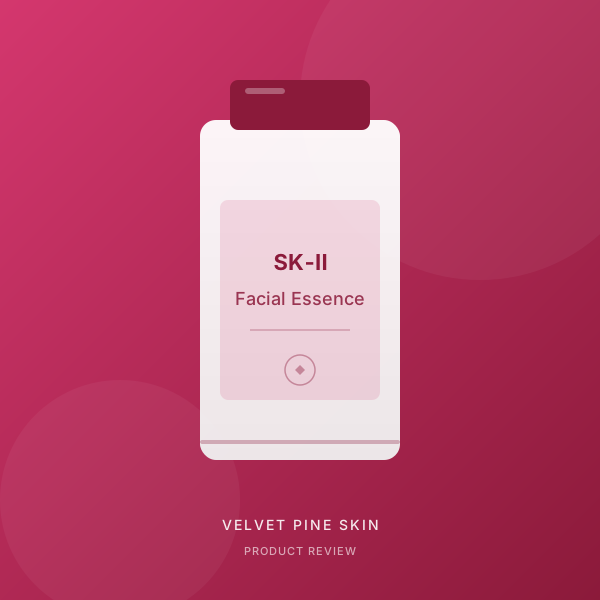
There are skincare products that arrive with a whisper and leave with a shrug, and then there are products that arrive with a full marching band and somehow manage to justify the noise. SK-II Facial Treatment Essence is the latter. It's the product that launched a thousand fermented essences, the one every K-beauty brand references when they're explaining why their rice water or galactomyces formula matters. I've reviewed cheaper alternatives, written about dupes, and watched influencers compare everything from $20 toners to this $180 icon. But I'd never actually used the original until now. After two weeks of twice-daily application, I can tell you whether the legend holds up—or whether you're better off with the alternatives.
Brand Context: The Sake Brewery Story
SK-II's origin story is the kind of marketing gold that no amount of focus-grouping could manufacture. In the 1970s, Japanese scientists were studying sake breweries and noticed something unusual: the elderly workers who spent decades submerging their hands in fermentation vats had remarkably youthful, soft hands—while their faces showed every year of their age. The researchers isolated a specific yeast strain (Galactomyces reesii) from the fermentation process and discovered that the filtrate—the liquid left after fermentation—contained a complex mixture of amino acids, vitamins, minerals, and organic acids that dramatically improved skin texture and appearance.
That discovery became Pitera, SK-II's signature ingredient, and the Facial Treatment Essence became the brand's flagship product. The formula hasn't changed much in four decades. It's still built around Galactomyces Ferment Filtrate at a concentration rumored to be over 90%, with a handful of supporting ingredients that mostly serve as preservatives and solvents. The simplicity is almost shocking in an era of 30-ingredient serums packed with peptides, retinoids, and exotic plant extracts. But simplicity isn't the same as ineffective—and four decades of cult following suggests something here is working.
Ingredient Breakdown
Galactomyces Ferment Filtrate: The star of the show, and for good reason. Galactomyces is a yeast that ferments sugars and produces a complex cocktail of bioactive compounds. The filtrate contains amino acids (the building blocks of proteins like collagen and elastin), vitamins (including B vitamins that support barrier function and cellular metabolism), minerals (zinc, magnesium, calcium—cofactors for enzymatic processes in skin), and organic acids (lactic acid, citric acid, and others that gently support the skin's acid mantle and promote cell turnover). The fermentation process also produces small peptides and polysaccharides that hydrate and signal skin cells to repair and regenerate. The concentration here is exceptionally high—likely 90% or more based on ingredient order—and that matters. Many fermented essences list their ferment second or third, meaning the actual concentration is much lower. SK-II puts it first, and the texture and performance reflect that density.
Butylene Glycol & Pentylene Glycol: Two humectants and solvents that help the ferment filtrate penetrate the skin and stay stable in the bottle. Butylene glycol is lighter and less occlusive than glycerin, making it suitable for oily and combination skin. Pentylene glycol has additional antimicrobial properties, which helps preserve the formula without relying solely on traditional preservatives. Both are well-tolerated by most skin types and don't leave a sticky residue.
Water: The solvent. Necessary, but not exciting. It dilutes the ferment filtrate to a workable consistency and helps the other ingredients distribute evenly across the skin.
Sodium Benzoate, Methylparaben, Sorbic Acid: The preservative system. This is where the formula shows its age. Methylparaben is a paraben preservative that's been used for decades and is safe at the concentrations found in cosmetics, but it's fallen out of favor with consumers who prefer "paraben-free" products. Sodium benzoate and sorbic acid are gentler alternatives that work in acidic formulations. The combination is effective and necessary—fermented products are prone to contamination if not properly preserved—but it's worth noting if you're sensitive to parabens or prefer to avoid them. The preservatives are present in small amounts (less than 1% each) and don't interfere with the ferment's benefits.
Texture & Application Experience
The essence has a thin, watery consistency that's slightly more viscous than plain water but nowhere near gel-like. It pours easily from the bottle—almost too easily, which I'll address in the cons. On skin, it absorbs within 15 to 20 seconds with no tacky residue, no sticky feeling, and no film. Your skin feels immediately hydrated, like you've splashed it with water, except the hydration actually persists rather than evaporating. There's a subtle slip to the texture that makes it feel luxurious without being heavy or greasy.
I apply it as the first step after cleansing, pressing it into damp skin with my palms rather than rubbing. Three to four drops covers my face and neck. There's an immediate softening effect—fine dehydration lines around my eyes and forehead look subtly plumper within minutes. This is the amino acids and polysaccharides doing their job, pulling moisture into the upper layers of the epidermis and holding it there. The scent is barely there—a faint, slightly fermented, almost bread-like note that dissipates within seconds. It's not unpleasant, just... present. If you're sensitive to scent, this is as close to odorless as a fermented essence gets without being clinical.
Two-Week Wear Test
Conditions tested: Twice-daily application (morning and evening). Combination skin with occasional sensitivity on the cheeks. Late spring—moderate humidity, some warm days, air-conditioned office environment.
Days 1–3: The immediate hydration was noticeable from the first application. My skin felt softer and looked slightly more luminous, but I wasn't sure how much of that was the product versus the novelty effect. No irritation, no breakouts, no stinging—even around my nasal folds, which tend to react to new products. The essence layered cleanly under my vitamin C serum and moisturizer without any pilling. The texture was so lightweight that I kept wondering if I'd applied enough, but my skin felt consistently hydrated throughout the day.
Days 4–7: By the end of the first week, the texture improvements became visible. My cheeks—usually rough and slightly flaky in the transition between seasons—were noticeably smoother. The dehydration lines on my forehead were consistently softer throughout the day, not just immediately after application. My T-zone was producing slightly less oil by midday, which I attribute to better overall hydration reducing compensatory sebum production. Makeup application improved—foundation sat more evenly and didn't settle into pores around my nose the way it typically does. The "Pitera glow" that people talk about started to make sense. My skin looked clearer, more even-toned, and had a kind of inner clarity that I associate with a healthy barrier and good hydration.
Days 8–10: A stretch of particularly warm, humid days tested the essence's staying power. It held up well—no heaviness, no greasiness, no feeling of product sitting on top of the skin. In fact, on these humid days, the lightweight texture was exactly what I wanted. My skin felt balanced rather than stripped or overloaded. I noticed a small, stubborn hyperpigmentation spot on my left temple appearing slightly less pronounced. At two weeks, it's too early to credit the Galactomyces entirely, but the trajectory was encouraging. The amino acids and organic acids in the ferment likely support gentle cell turnover and brightening over time, though dramatic fading of dark spots requires months of consistent use.
Days 11–14: The cumulative effect was clear. My skin looked more even-toned, felt consistently smoother, and had a kind of inner clarity that I associate with a healthy barrier and good hydration. The "boosting" claim—that this essence improves absorption of subsequent products—held up in my experience. Serums and moisturizers applied after the essence seemed to absorb more evenly and work more effectively. My niacinamide serum, which can sometimes pill if applied on inadequately prepped skin, went on smoothly every time. The overall impression was of skin that was functioning better—not dramatically transformed, but operating at a higher baseline.
One note on purging: I didn't experience any purging or breakouts over the two weeks. Fermented products can sometimes trigger purging in acne-prone skin due to increased cell turnover from the bioactive compounds. If you're prone to breakouts, introduce this slowly—every other day for the first week—before moving to twice-daily use.
Pros
- Exceptionally high Galactomyces concentration: Likely 90%+ based on ingredient order. This isn't a token ferment buried behind water and glycerin—it's the formula. The texture and performance reflect that density.
- Immediate, visible hydration: The amino acids and polysaccharides deliver hydration that persists, not just a temporary plumping effect. Skin feels softer and looks more luminous within minutes.
- Visible texture improvement: Smoother, more even-toned skin within the first week. The effect is subtle but real and buildable over time. Fine lines appear plumper, rough patches soften.
- Lightweight, fast-absorbing: Absorbs in under 20 seconds with no tackiness, no film, no pilling under subsequent products. Suitable for all skin types, including oily and combination.
- Enhances product absorption: The "boosting" claim held up—serums and moisturizers applied after the essence absorbed more evenly and worked more effectively.
- Four decades of track record: This isn't a trendy new launch. It's a formula that's been tested by millions of users across different skin types, climates, and concerns. The consistency and reliability matter.
- Genuine brightening over time: The organic acids and amino acids support gentle cell turnover and brightening. Hyperpigmentation and dullness improve with consistent use, though dramatic results require months.
Cons
- Expensive: $180+ for 160ml is a significant investment. Even with twice-daily use, the bottle lasts 6–8 weeks, which works out to roughly $6–7 per week. For most people, that's a luxury, not a staple.
- Pour dispenser design: The bottle has a wide mouth that makes it easy to pour too much. A pump dispenser would be far more practical and reduce waste. I've started decanting mine into a small pump bottle to avoid over-pouring.
- Contains parabens: Methylparaben is safe at cosmetic concentrations, but if you prefer to avoid parabens entirely, this formula isn't for you. The preservative system shows the formula's age in this regard.
- Minimal formulation: The simplicity is both a strength and a limitation. If you're looking for a fermented essence that also packs niacinamide, peptides, or additional actives, you'll need to layer those separately. This is a single-ingredient star with supporting players.
- Subtle scent: While minimal, there is a faint fermented, almost bread-like note from the Galactomyces. It fades in seconds, but if you're extremely scent-sensitive, be aware it exists.
- Gradual results: The brightening and tone-evening effects take weeks of consistent use. If you want dramatic results in days, this isn't that product. It's a slow builder, not a quick fix.
Who Is This For?
This essence is ideal for anyone looking for a high-quality fermented essence that delivers visible hydration, texture improvement, and brightening over time. It's particularly well-suited for combination to dry skin types that need lightweight hydration with barrier support. Mature skin will benefit from the amino acids and peptides that support collagen production and cell turnover. Dull, uneven skin will appreciate the gentle brightening and clarifying effects of the organic acids.
If you've tried cheaper fermented essences and found them lacking, this is the gold standard to compare against. The concentration of Galactomyces is significantly higher than most alternatives, and the performance reflects that. If you're new to fermented skincare entirely, this is also a good entry point—though the price means you might want to start with a smaller bottle or try a cheaper alternative first to see if fermented ingredients work for your skin.
Oily and acne-prone skin can use this as a minimal-moisture prep layer that won't add weight or clog pores. The lightweight texture and fast absorption make it suitable for humid climates and oily skin types. Introduce it slowly to monitor for any purging response, though the soothing properties of Galactomyces make irritation less likely than with some fermented products.
Sensitive skin should patch test first. While Galactomyces is generally well-tolerated, fermented products can trigger reactions in some individuals. The preservative system includes methylparaben, which some sensitive skin types prefer to avoid. If you have a history of reacting to fermented ingredients or parabens, proceed with caution.
Price & Where to Buy
Price range: $180–220 for 160ml, depending on retailer and region. This is prestige pricing, and it reflects the brand positioning, the high concentration of Galactomyces, and the four-decade track record. Smaller sizes (75ml, 30ml) are available for $80–100 and $30–40 respectively, which can be a good way to test the product before committing to the full size.
Authorized retailers: SK-II's official website, Nordstrom, Saks Fifth Avenue, Neiman Marcus, and select dermatology offices. In Asia, SK-II is widely available at department stores and duty-free shops. Amazon availability varies—check that the seller is authorized before purchasing, as counterfeit SK-II products are an ongoing issue. The brand's official site sometimes runs promotions around holidays or offers gift-with-purchase deals that can offset the cost.
Pro tip: Duty-free shopping at airports can save 20–30% on SK-II products, especially if you're traveling to or from Asia. The brand also offers a loyalty program that provides samples, gifts, and early access to promotions. If you're committed to making this a staple, signing up for the program can stretch the value.
Comparison Notes
Against MISSHA Time Revolution First Treatment Essence: The most direct comparison, and the one that comes up most often. MISSHA uses a dual-ferment system (Saccharomyces + Bifida) at a high concentration, and the texture is similar—thin, watery, fast-absorbing. MISSHA has a slightly more pronounced immediate plumping effect and a touch more viscosity. SK-II counters with a single-ferment focus (Galactomyces) at a likely higher concentration, a four-decade track record, and a more minimal formulation. If your primary concern is texture and plumping, MISSHA has a slight edge and costs a fraction of the price. If you want the original and are willing to pay for it, SK-II delivers a more refined, consistent experience.
Against COSRX Galactomyces 95 Tone Balancing Essence: COSRX uses the same ferment (Galactomyces) at 95% concentration with a simpler supporting cast. It's slightly more focused on brightening and less on barrier repair. SK-II has a longer track record and a more luxurious texture, but COSRX is a fraction of the price and delivers similar benefits. If your main concern is brightening and you're on a budget, COSRX is a solid choice. If you want the original and don't mind the price, SK-II is the gold standard.
Against Purito Fermented Complex 94 Boosting Essence: A different approach—Purito uses a multi-ferment system (rice, soybean, mistletoe, imperata root, bifida) with confirmed niacinamide at 3% and a robust soothing complex. SK-II focuses on a single ferment at a higher concentration with a more minimal formulation. Purito offers more in the way of brightening, barrier support, and soothing, while SK-II delivers a more refined, luxurious experience with a longer track record. They're complementary rather than competitive—you could even layer them if you wanted both profiles, though that would be an expensive routine.
Final Verdict
SK-II Facial Treatment Essence earns its reputation. It's not the cheapest fermented essence on the market, and it's not the most complex. What it is, is a meticulously formulated, single-ingredient star that delivers visible hydration, texture improvement, and brightening over time. The concentration of Galactomyces is exceptionally high, the texture is refined and luxurious, and the four-decade track record speaks to its consistency and reliability.
The price is a significant barrier, and the preservative system shows the formula's age. The pour dispenser is frustrating, and the results are gradual rather than dramatic. But these are minor complaints about a product that does what it claims at a premium price. If you're looking for a fermented essence that goes beyond the basics and you're willing to invest in the original, this is the gold standard. It's not the most famous fermented essence on the market because of marketing—it's famous because it works. And after two weeks of consistent use, I can confirm that the legend holds up.