
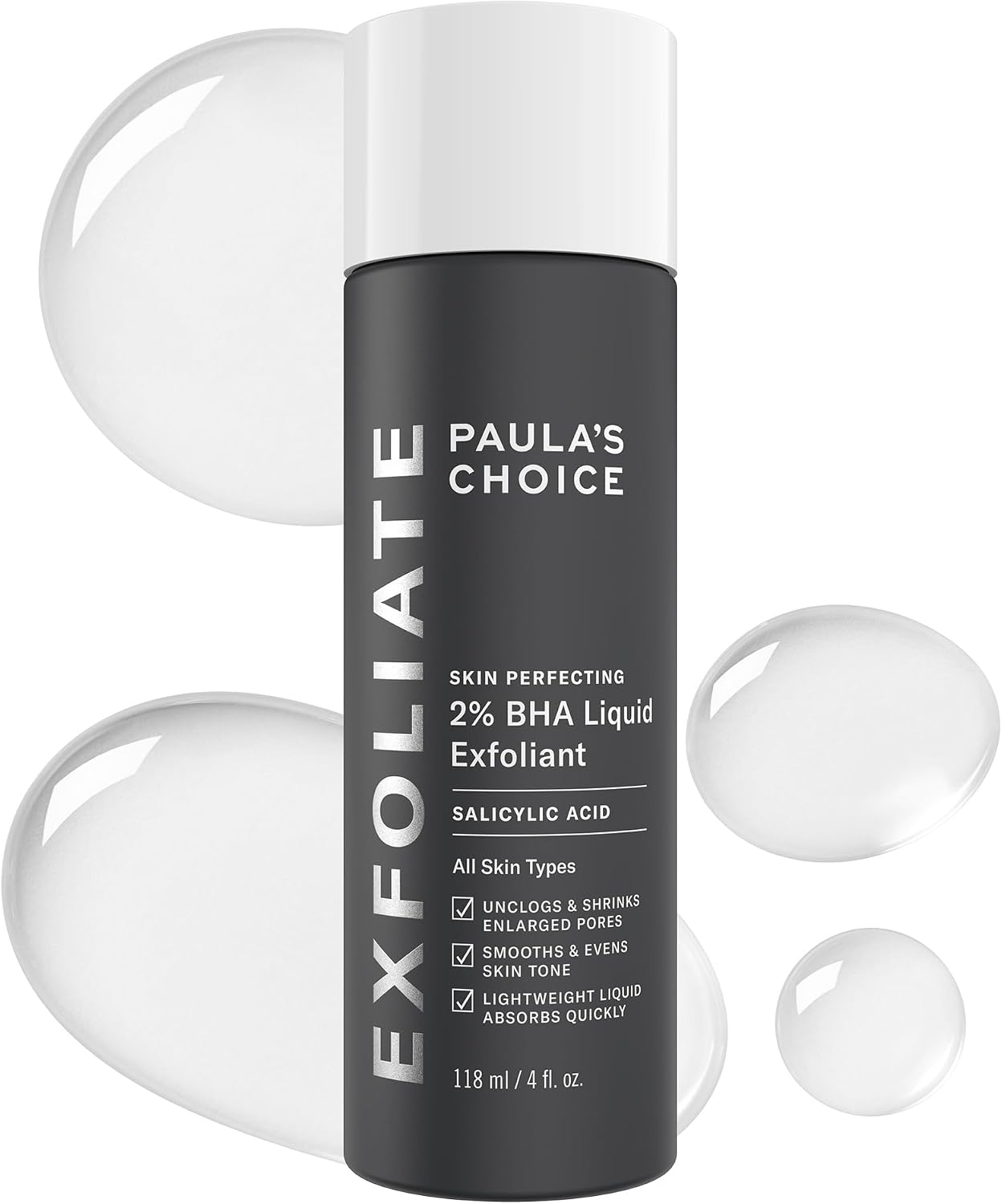
Azelaic acid has been having a moment in skincare for the past few years, and for good reason. It's one of those rare ingredients that genuinely does multiple things well — it brightens hyperpigmentation, calms redness, fights acne, and gently exfoliates, all without the irritation that stronger acids bring. But most azelaic acid products on the market are single-note formulations: just the active in a basic vehicle, doing one thing and doing it adequately.
Paula's Choice 10% Azelaic Acid Booster takes a different approach. It's not just azelaic acid — it's azelaic acid plus salicylic acid, licorice root extract, adenosine, allantoin, and bisabolol, all wrapped in a lightweight, silicone-based texture that layers beautifully under other products. I tested it for two weeks to see if this multi-active approach actually delivers, or if it's just marketing dressed up as science.
The Brand: Paula's Choice and Ingredient Literacy
Paula's Choice has built its reputation on what they call "ingredient literacy" — the idea that consumers should understand what's in their products and why. The brand was founded by Paula Begoun, who spent decades debunking skincare myths and pushing back against misleading marketing. Their product formulations tend to be straightforward, fragrance-free, and backed by published research.
The 10% Azelaic Acid Booster fits that philosophy. It's not trying to be cute or trendy. It's a treatment product designed to address multiple concerns — redness, uneven tone, acne, texture — with a combination of ingredients that work synergistically rather than competing for attention. The 10% azelaic acid concentration sits in the sweet spot for over-the-counter use: strong enough to deliver visible results, gentle enough for most skin types to tolerate without significant irritation.
Ingredient Breakdown: What's Actually Inside
Let's look at the full ingredient list and what each component brings to the table:
Azelaic Acid (10%): The star of the show. Azelaic acid is a dicarboxylic acid naturally produced by Malassezia furfur, a yeast that lives on our skin. It inhibits tyrosinase (the enzyme responsible for melanin production), which is why it's so effective at fading hyperpigmentation and evening out skin tone. It also has antibacterial properties against C. acnes, the bacteria responsible for acne, and it gently exfoliates to smooth texture. At 10%, it's strong enough to deliver noticeable results without the irritation of prescription-strength 15-20% formulations.
Salicylic Acid: A beta-hydroxy acid (BHA) that penetrates oil-filled pores to dissolve the glue holding dead skin cells together. It's oil-soluble, which means it can get into pores in a way that water-soluble acids like glycolic can't. The concentration here isn't disclosed, but it's clearly a supporting player — enough to provide gentle exfoliation and pore-clearing without overwhelming the formula.
Glycyrrhiza Glabra (Licorice) Root Extract: One of my favorite brightening ingredients. Licorice root contains glabridin, which inhibits tyrosinase and has anti-inflammatory properties. It complements azelaic acid's brightening effects and adds soothing benefits. The combination is smarter than either ingredient alone.
Adenosine: A cell-communicating ingredient that signals skin cells to behave like younger, healthier cells. It's been shown to improve wrinkle depth and skin elasticity. At the concentration used here, it's more of a long-term anti-aging benefit than an immediate visible effect, but it's a thoughtful inclusion.
Allantoin & Bisabolol: Both are soothing agents that help buffer potential irritation from the active ingredients. Allantoin promotes cell proliferation and wound healing, while bisabolol (the active component of chamomile) has anti-inflammatory and antimicrobial properties. Their presence makes this formula more tolerable for sensitive skin types.
Boerhavia Diffusa Root Extract: An antioxidant that's less commonly seen in Western skincare but popular in K-beauty. It contains boerhavia compounds that have been shown to protect against oxidative stress and support skin barrier function.
Texture Enhancers: The formula uses a combination of dimethicone, cyclopentasiloxane, and cetearyl alcohol to create a lightweight, silky texture that spreads easily and absorbs quickly. This is a silicone-based formula, which means it has that smooth, primer-like feel that layers well under makeup and other products.
Texture & Application Experience
The texture is where this product really shines. It's a lightweight, off-white lotion with a silky, almost primer-like feel. It spreads easily — a little goes a long way — and absorbs within about 60 seconds, leaving a smooth, matte finish that doesn't feel tight or dry. There's no fragrance, which is a relief for sensitive skin types, and no noticeable scent at all.
Application is straightforward: after cleansing and toning, apply a small amount (about a pea-sized drop for the full face) and gently pat into the skin. I found that it layers beautifully under moisturizers, sunscreens, and makeup. No pilling, no greasiness, no weird interactions with other products. The silicone base gives it that slip that makes it easy to spread evenly without tugging or pulling at the skin.
One thing worth noting: azelaic acid can cause mild tingling upon initial application, especially if your skin isn't yet acclimated. I experienced a slight tingle during my first few days of use, but it never escalated to burning or true discomfort. If you have very sensitive skin, I'd recommend starting with every other night and gradually building up to daily use.
Two-Week Wear Test: What Actually Happened
Conditions tested: I used this product every evening for two weeks, applying it after toner and before moisturizer. My skin context: combination skin with occasional breakouts, mild post-inflammatory hyperpigmentation from old acne, and persistent redness around the cheeks and nose. I was also using a gentle retinoid three nights per week, so I was careful not to over-exfoliate.
Week 1: The adjustment period. I experienced mild tingling on application for the first three days, which gradually subsided. No visible improvement yet, but no negative reactions either. My skin felt slightly drier than usual, so I supplemented with a richer moisturizer. The texture was pleasant — lightweight, non-greasy, easy to layer.
Week 2: This is where things started getting interesting. The persistent redness around my cheeks and nose began to visibly diminish. My skin texture felt slightly smoother, and I noticed fewer new breakouts forming. The tingling on application had completely stopped. The brightening effects weren't dramatic yet, but my overall complexion looked more even and less inflamed.
Key observations:
- Redness reduced: The redness around my cheeks and nose was noticeably calmer by the end of week two. Not gone, but clearly diminished — I'd estimate a 30-40% reduction in visible redness.
- Texture improvement: My skin felt smoother, especially around the chin and jawline where I tend to get rough patches. The combination of azelaic acid and salicylic acid was clearly doing some gentle exfoliation.
- Breakout prevention: I noticed fewer new breakouts forming during the two-week period. This isn't a spot treatment, so it didn't flatten existing breakouts overnight, but it seemed to prevent new ones from forming.
- Brightening: The hyperpigmentation marks from old breakouts weren't dramatically lighter yet — that takes more time — but my overall complexion looked more even and less dull.
Pros & Cons
What I Loved
- Multi-active formula: Azelaic acid + salicylic acid + licorice root + adenosine + soothing agents. This isn't just a single-ingredient product — it's a thoughtfully formulated treatment that addresses multiple concerns.
- Lightweight, elegant texture: The silicone base gives it a smooth, primer-like feel that layers beautifully under other products. No pilling, no greasiness.
- Fragrance-free: No added fragrance or essential oils, which is a relief for sensitive skin types.
- Visible redness reduction: Within two weeks, my cheek and nose redness was noticeably calmer.
- Gentle enough for daily use: The 10% concentration is strong enough to deliver results but gentle enough for most skin types to tolerate without significant irritation.
- Good value: At around $40-50 for 30ml, it's not cheap, but it's comparable to other multi-active treatments and lasts a long time because a little goes a long way.
What Could Be Better
- Price: At $40-50 for 30ml, it's more expensive than single-ingredient azelaic acid products like Cos de Baha ($8-12 for 30ml). You're paying for the multi-active formula and the elegant texture.
- Silicone base: Some people don't like silicone-based formulas. If you prefer water-based serums, this might not be for you.
- Results take time: The brightening effects on hyperpigmentation take 4+ weeks to become noticeable. This isn't a quick-fix product — it's a long-term treatment.
- Mild tingling initially: The first few days of use can cause mild tingling, especially if your skin isn't yet acclimated to azelaic acid.
- Not a spot treatment: This won't flatten existing breakouts overnight. It's more of a preventative and overall skin-improving treatment.
Who Is This For?
This product is an excellent fit for anyone dealing with multiple concerns — redness, uneven tone, occasional breakouts, texture issues — who wants a single product that addresses all of them without the irritation of stronger actives. It's particularly well-suited for:
Rosacea-prone skin: Azelaic acid is one of the few active ingredients with clinical evidence for reducing rosacea symptoms. At 10%, this product provides a gentle but effective option for managing facial redness without the cost and hassle of a prescription.
Acne survivors with PIH: If you've cleared your active breakouts but are left with stubborn dark marks, this product's combination of azelaic acid, salicylic acid, and licorice root targets hyperpigmentation from multiple angles.
Combination or oily skin: The lightweight, silicone-based texture is ideal for skin types that don't want heavy, greasy creams but still need treatment-level actives.
People who want a multi-tasker: If you're tired of layering five different serums to address five different concerns, this product consolidates multiple benefits into one step.
However, if you're looking for a budget-friendly single-ingredient azelaic acid product, there are cheaper options available. And if you have severe cystic acne or significant scarring, this product may not be potent enough on its own — consult a dermatologist for those concerns.
Price & Where to Buy
The Paula's Choice 10% Azelaic Acid Booster retails for around $40-50 USD for 30ml (1 fl oz). It's available directly from the Paula's Choice website, as well as authorized retailers like Sephora, Ulta, and Dermstore. I'd recommend buying from authorized retailers to avoid counterfeit products, which have appeared on third-party marketplaces like Amazon.
At this price point, it's more expensive than single-ingredient azelaic acid products like Cos de Baha ($8-12 for 30ml) or The Ordinary Azelaic Acid Suspension 10% ($8-10 for 30ml). But you're paying for the multi-active formula, the elegant texture, and the brand's research-backed approach to formulation. If you value those things, it's a reasonable investment.
Comparison Notes
Against Cos de Baha Azelaic Acid 10% Serum: Cos de Baha is a simpler, more affordable option. It contains azelaic acid plus niacinamide and salicylic acid, but the texture is more basic (slightly tacky, less elegant). If you're on a budget and don't mind a simpler formula, Cos de Baha is a solid choice. If you want a more refined texture and additional brightening ingredients, Paula's Choice is worth the upgrade.
Against The Ordinary Azelaic Acid Suspension 10%: The Ordinary's formula is very similar in terms of azelaic acid concentration, but the texture is more silicone-heavy and prone to pilling. Paula's Choice has a more elegant, primer-like feel and includes additional brightening ingredients like licorice root. The Ordinary is cheaper, but Paula's Choice feels more refined.
Against prescription azelaic acid (Finacea 15%, Azelex 20%): Prescription formulations are stronger and may deliver faster results, but they require a doctor's visit and can be expensive. For most people dealing with mild to moderate redness, hyperpigmentation, or occasional breakouts, the 10% over-the-counter concentration is sufficient and more convenient.
Final Verdict
Paula's Choice 10% Azelaic Acid Booster is a well-formulated, multi-active treatment that delivers on its promises. The combination of azelaic acid, salicylic acid, licorice root, and soothing ingredients addresses multiple concerns — redness, hyperpigmentation, acne, texture — without the irritation of stronger actives. The texture is elegant, the formula is fragrance-free, and the results are visible within two weeks.
Is it worth the price? If you value multi-active formulations and refined textures, yes. If you're on a budget and don't mind a simpler formula, there are cheaper options available. But for most people dealing with multiple skin concerns who want a single product that does it all, this is a solid choice.
My only hesitation: the brightening effects on hyperpigmentation take time — 4+ weeks to become noticeable. This isn't a quick-fix product, it's a long-term treatment. But if you're patient and consistent, it delivers.