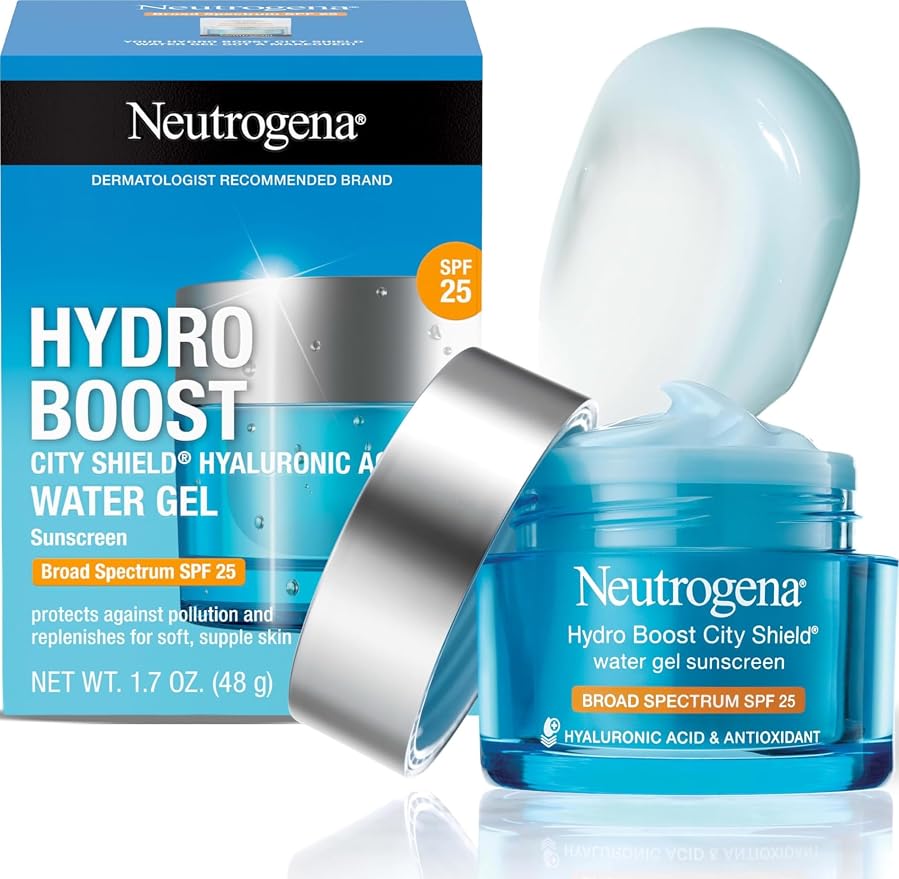
I came to the Neutrogena Hydro Boost Water Gel the way most people do — through sheer ubiquity. It's in every drugstore endcap, every "best moisturizer under $20" list, every dermatologist's casual recommendation. When a product is that visible, you start to wonder if it's genuinely good or just well-marketed. I'd been using K-beauty gel moisturizers for years and had quietly assumed the Hydro Boost was the American equivalent of products I already loved better. Testing it for two weeks forced me to confront that assumption — and the results were more complicated than I expected.
Brand Context: Neutrogena's Hydration Play
Neutrogena has been a drugstore staple since the 1930s, built on a reputation for accessible, dermatologist-recommended products. The Hydro Boost line launched around 2016 as their answer to the growing consumer demand for hyaluronic acid hydration — the same trend that had already made Hada Labo a cult favorite in Asian beauty circles. The Water Gel is the flagship of the line, positioned as a lightweight, oil-free moisturizer for normal-to-oily skin. It was one of the first mass-market American products to put "hyaluronic acid" front and center on the packaging, and its success spawned an entire ecosystem of Hydro Boost variants: gel cream, body gel cream, eye gel cream, serum, even a cleansing wax. The brand clearly struck gold with this formula — or at least with the concept behind it.
Ingredient Breakdown
The ingredient list tells a story of a product that's built on a silicone foundation with hydration sprinkled on top. It's a fundamentally different approach from the K-beauty gel moisturizers I'm used to, and understanding that difference is key to understanding what this product actually does.
Water, Dimethicone, Glycerin — The first three ingredients set the tone. Water is the solvent, dimethicone is the second ingredient (which means this is a lot of silicone), and glycerin is the humectant backbone. Dimethicone at position two tells you this product is primarily a silicone gel — it's designed to feel smooth, create a velvety finish, and lock in moisture through occlusion rather than through deep hydration. For people who love the way silicones feel on skin, this is a feature. For people who avoid silicones, this is a dealbreaker. There's no middle ground here.
Dimethicone/Vinyl Dimethicone Crosspolymer, Dimethiconol, Dimethicone Crosspolymer — Three different forms of dimethicone appear in this formula, each serving a slightly different textural purpose. The crosspolymer variants create the gel structure and give the product its characteristic "bouncy" feel. Dimethiconol is a lighter, more volatile silicone that helps the product spread easily and evaporate without residue. Together, these silicones create a smooth, matte, almost powdery finish on the skin — the kind of feel that makes people say "my skin feels like silk." It's cosmetically elegant, no question. But it's also a texture that some people find suffocating, especially if they're prone to congestion.
Cetearyl Olivate, Sorbitan Olivate — This is Olivem 1000, an olive oil-derived emulsifier system. It's a nice touch — a natural-origin ingredient that helps blend the silicone and water phases without the harshness of traditional emulsifiers. It also has mild moisturizing properties and is considered gentle and non-irritating. In a formula this heavy on silicones, the olive-derived emulsifiers add a small but meaningful layer of skin-compatibility.
Sodium Hyaluronate — The star active, and the one that gets all the marketing attention. Sodium hyaluronate is the sodium salt of hyaluronic acid, with a smaller molecular weight that allows it to penetrate more effectively. It can hold up to 1,000 times its weight in water, making it one of the most effective humectants available. The problem here is placement — it appears fifteenth in the ingredient list, which means the concentration is quite low. This isn't a hyaluronic acid serum; it's a silicone gel with a supporting role for HA. The hydration benefit is real, but it's modest compared to products where sodium hyaluronate appears in the top five ingredients.
Polyacrylamide, C13-14 Isoparaffin, Laureth-7 — This trio is Sepigel 305, a pre-made gel base that gives the product its characteristic texture. It's what makes the Hydro Boost feel like a gel rather than a lotion or cream. The polyacrylamide creates the structure, the isoparaffin adds slip, and the laureth-7 acts as an emulsifier and stabilizer. It's an effective texturizing system, but worth noting that polyacrylamide has been flagged by some researchers for potential contamination with acrylamide (a possible carcinogen) — though the amounts in cosmetics are considered safe by regulatory standards. If this concerns you, it's worth knowing about.
Fragrance — Here's where the formula loses me. The Hydro Boost Water Gel contains added fragrance, which is a significant problem for anyone with sensitive or reactive skin. Fragrance is one of the most common causes of contact dermatitis in skincare, and its inclusion in a product marketed as gentle and suitable for sensitive skin is a contradiction. The scent is a fresh, clean, slightly floral smell — pleasant enough, but unnecessary and potentially irritating. If you're fragrance-sensitive, this product is not for you regardless of how well it performs otherwise.
Blue 1 (CI 42090) — A synthetic colorant that gives the gel its signature blue tint. It's purely cosmetic — the product would work identically without it. Some people are sensitive to synthetic dyes, though reactions are rare. It's a minor ingredient, but it's another example of the formula prioritizing aesthetics over minimalism.
What's missing: No niacinamide, no ceramides, no peptides, no antioxidants, no botanical extracts. This is a hydration-and-texture product, not a treatment product. It doesn't contain any active ingredients that address pigmentation, aging, barrier repair, or acne. It's designed to do one thing — provide lightweight, silicone-based hydration — and it does that thing competently. But if you're looking for a moisturizer that multitasks, this isn't it.
Texture & Application
The texture is where the Hydro Boost Water Gel earns its reputation. It's a translucent, pale blue gel that sits somewhere between a serum and a cream — thicker than water, lighter than lotion. When you scoop it out of the jar (more on packaging later), it holds its shape briefly before melting into the skin on contact. The initial feel is cool and watery, with a slip that's almost slippery. It spreads effortlessly across the face, and the silicones create an immediate smoothness that's genuinely satisfying.
Absorption is fast — within a minute, the gel has settled into the skin and left behind a finish that's best described as "soft matte." It's not dewy, not greasy, not tacky. It's the kind of finish that makes your skin feel like it's been airbrushed. Under sunscreen, it works well — no pilling, no separation. Under makeup, it's an excellent primer-like base that helps foundation glide on smoothly. If you love the way silicones feel and perform, this texture is hard to beat.
The packaging, however, is a problem. The Hydro Boost Water Gel comes in a jar — the same jar format that plagues so many moisturizers. Every time you open it, you expose the product to air, bacteria, and contamination from your fingers. For a product that contains water and no particularly robust preservative system, jar packaging is a step backward. The gel cream version comes in a pump, which is better, but the water gel's jar format is a hygiene and stability concern. You also can't see how much product is left without opening it, and the jar takes up more space in your bathroom cabinet than a tube or pump would.
Two-Week Wear Test
Conditions tested: Early fall — moderate humidity, daytime temperatures in the low 70s, transitioning to cooler nights. My skin was combination with an oily T-zone and normal cheeks. I was not using any prescription actives during this period, just a basic routine of cleanser, vitamin C serum, moisturizer, and sunscreen.
Days 1–3: First impression was the texture — I'll admit, the silicone feel is addictive. My skin felt impossibly smooth after application, and the matte finish looked great under my sunscreen. The hydration was noticeable but light — my skin felt comfortable, not plump or deeply moisturized. I could see why people with oily skin love this: it provides just enough hydration to feel balanced without any heaviness or shine. The fragrance was noticeable at first but faded within minutes.
Days 4–7: I started noticing that the hydration wasn't lasting as long as I'd hoped. By mid-afternoon, my cheeks — which are normally comfortable with lightweight moisturizers — felt tight and slightly dry. The T-zone was fine, but the drier areas of my face weren't getting enough moisture from this product alone. I found myself wanting to layer a serum underneath or a richer cream on top. For a product called "Hydro Boost," the actual hydration felt more like "Hydro维持" (maintenance) than a boost.
Days 8–10: I experimented with layering — applying a hyaluronic acid serum before the gel to see if that would improve the hydration depth. It helped significantly. The gel performed better as a sealant over a hydrating serum than as a standalone moisturizer. This suggests that the silicone base is more effective at preventing moisture loss than at delivering moisture itself. If you're using this over a serum or essence, it works well. If you're relying on it as your only hydration step, you may find it insufficient.
Days 11–14: I had a minor reaction around day 12 — a small patch of redness near my jawline that I traced to the fragrance. I have sensitive skin and am generally tolerant of products, but the fragrance in this formula is a genuine irritant for me. The redness faded within a day after I paused use, but it was a reminder that "fragrance-free" isn't just a marketing buzzword — it's a meaningful distinction for reactive skin. After that, I switched to using the gel only on my T-zone and used a different moisturizer on the rest of my face.
Pros
- Silicone texture is genuinely elegant: The smooth, matte, velvety finish is hard to find at this price point. If you love the way silicones feel, this delivers.
- Lightweight and oil-free: Ideal for oily skin types who want hydration without any shine or heaviness. Works well in humid weather.
- Excellent makeup base: The silicone finish creates a smooth canvas for foundation and helps makeup last longer. Functions almost as a primer.
- Accessible and affordable: Available at every drugstore, Target, Walmart, and Amazon. At $18–22 for 50g, it's budget-friendly and easy to repurchase.
- Olive-derived emulsifiers: A thoughtful touch that adds mild skin-compatibility to an otherwise synthetic formula.
- Fast absorption: No waiting for the product to sink in — it absorbs within a minute and leaves no residue.
Cons
- Contains fragrance: A significant problem for sensitive or reactive skin. The fragrance is unnecessary and potentially irritating.
- Low hyaluronic acid concentration: Despite the marketing, sodium hyaluronate is fifteenth on the ingredient list. This is not a high-HA product.
- Silicone-heavy formula: If you avoid silicones or find them congesting, this product is not suitable. The dimethicone content is very high.
- Jar packaging: Unhygienic and impractical for a water-based gel. The gel cream version's pump is better — why not use it for the water gel too?
- Insufficient hydration for dry skin: Even for combination skin, the hydration is light. Dry skin types will need to layer additional products.
- Contains synthetic dye (Blue 1): Unnecessary and a potential concern for sensitive individuals.
- No treatment actives: No niacinamide, ceramides, peptides, or antioxidants. This is a texture-and-hydration product, not a treatment.
Who Is This For?
If you have oily or very combination skin, love the feel of silicones, and want a lightweight moisturizer that works well under makeup and sunscreen, this is a solid choice. If you live in a humid climate and heavier creams make you feel greasy, this is worth trying. If you're on a budget and want an accessible, easy-to-find moisturizer that provides basic hydration without any fancy actives, this fits the bill.
If you have sensitive or fragrance-sensitive skin, skip this. If you have dry skin, this won't be enough on its own. If you avoid silicones, this is not for you. If you're looking for a moisturizer that also treats pigmentation, aging, or barrier issues, look elsewhere. And if you prefer fragrance-free, minimalist formulas, the K-beauty options in this price range are significantly better.
Price & Where to Buy
The Neutrogena Hydro Boost Water Gel retails for approximately $18–22 USD for 50g (1.7 oz). It's widely available at drugstores (CVS, Walgreens, Rite Aid), big-box retailers (Target, Walmart), and online (Amazon, Ulta). Prices fluctuate with sales — I've seen it as low as $14 during promotions. The gel cream version (in pump packaging) is the same price. Always check for coupons and store loyalty discounts, as Neutrogena products are frequently on sale.
Comparison Notes
Against Neutrogena Hydro Boost Gel Cream: The gel cream version is fragrance-free and comes in a pump, making it the better choice for most people. The texture is slightly richer but still lightweight. If you're choosing between the two, the gel cream is the safer, more practical option — especially for sensitive skin. The water gel's only advantage is its slightly lighter texture, which may matter only for very oily skin types.
Against Hada Labo Gokujyun Premium Lotion: Hada Labo is a hyaluronic acid lotion with a much higher concentration of HA and no fragrance, no silicones, no dye. It's a fundamentally different product — a hydrating essence/lotion rather than a silicone gel — but if you're looking for actual hyaluronic acid hydration, Hada Labo is the superior product. The Hydro Boost feels better on the skin; the Hada Labo hydrates better. Different priorities.
Against COSRX Hydrium Watery Gel Cream: The COSRX is fragrance-free, alcohol-free, and contains more meaningful active ingredients (panthenol, allantoin, ceramides). It's also silicone-free, which makes it suitable for people who avoid dimethicone. The COSRX is a better product for sensitive skin and for people who want more than just texture. The Neutrogena wins only on price and accessibility — it's easier to find in American drugstores.
Against Versed Dew Point Moisturizing Gel-Cream: Versed is a clean-beauty brand that offers a similar gel texture with aloe, hyaluronic acid, and antioxidant-rich botanical extracts. It's fragrance-free, silicone-free, and comes in a pump. The Versed is a cleaner, more thoughtful formula, but it's slightly more expensive ($15 for 50ml vs. $18–22) and harder to find in physical stores. If you can access it, Versed is the better choice.
Final Verdict
The Neutrogena Hydro Boost Water Gel is a product that does what it does very well — and what it does is provide lightweight, silicone-based hydration with an elegant matte finish. The texture is genuinely impressive, the price is accessible, and the availability is unmatched. But the formula has real flaws: the fragrance is unnecessary and irritating, the hyaluronic acid concentration is low despite the marketing, the jar packaging is impractical, and the lack of treatment actives means this is a one-dimensional product in a market full of multitaskers.
If you have oily, non-sensitive skin and you love the way silicones feel, this is a solid drugstore option that's easy to find and easy to use. If you have sensitive skin, dry skin, or you're looking for a moisturizer that does more than hydrate, there are better options at similar price points — especially in the K-beauty space. The Hydro Boost started a trend, and it's still a competent product, but the bar has risen since 2016. This gel hasn't kept up.