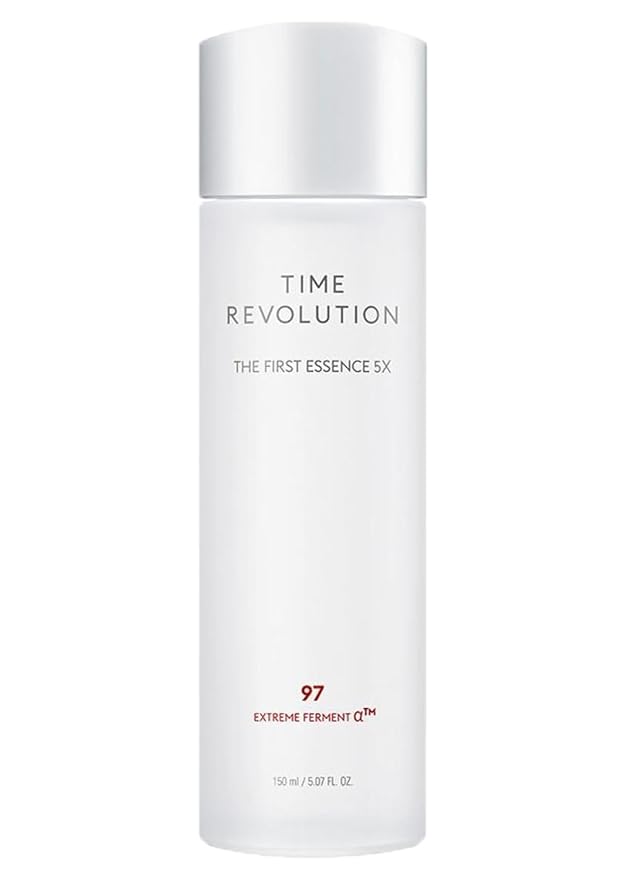
Let's get the obvious out of the way: MISSHA's Time Revolution First Treatment Essence exists because of SK-II's Facial Treatment Essence. The iconic sake-fermented Pitera product that retails for upward of $200 for a 160ml bottle. MISSHA looked at that price tag and said, "We can do that for a fraction of the cost." The question isn't whether this is inspired by SK-II—it plainly is. The question is whether it stands on its own merits, and after two weeks of daily wear, I have a clear answer.
Brand Context: MISSHA's Fermentation Heritage
MISSHA is one of the older K-beauty brands still thriving, founded in 2000 and built on the philosophy of delivering prestige-quality formulations at accessible prices. The Time Revolution line is their fermentation-focused range, and the First Treatment Essence has been through multiple reformulations. The current version (often labeled "Intensive" or the 5th generation) uses a dual-fermentation process with both Saccharomyces Ferment Filtrate (the same yeast class as SK-II's Pitera) and Bifida Ferment Lysate (a probiotic ferment also found in high-end serums like Lancôme's Génifique). This isn't a lazy copy. MISSHA invested in a genuine fermentation pipeline.
The key ingredient list is short by K-beauty standards, and that's intentional. Fermented essences work because the fermentation process itself breaks down complex molecules into smaller, more bioavailable compounds—amino acids, vitamins, organic acids, and minerals that your skin can actually absorb. The ingredient list doesn't need to be long when the fermentation has done the heavy lifting.
Ingredient Breakdown
Saccharomyces Ferment Filtrate (over 90%): The star. This is a yeast fermentation product that produces a cocktail of amino acids, vitamins (B1, B2, B12, niacin), minerals, and organic acids. The fermentation process predigests these nutrients into low-molecular-weight compounds that penetrate the stratum corneum more effectively than their unfermented counterparts. This is the same mechanism behind SK-II's Pitera—the yeast strain differs, but the biochemical principle is identical.
Bifida Ferment Lysate: A probiotic ferment that supports barrier repair and has been shown to protect against UV-induced damage. It's not a sunscreen, but it helps mitigate the oxidative stress cascade that follows UV exposure. This is the ingredient that distinguishes MISSHA's formulation from a straight SK-II clone.
Niacinamide (Vitamin B3): Present at a moderate concentration. Niacinamide supports barrier function, improves elasticity, and reduces hyperpigmentation over time. It's a well-researched multitasker that pairs well with fermented ingredients.
Panthenol (Vitamin B5): A humectant and barrier supporter. Helps with wound healing and moisture retention. Nothing flashy, but it rounds out the conditioning profile.
Notably absent: alcohol, artificial fragrance (the current version is fragrance-free), and essential oils. The natural scent is a faint, yeasty, slightly rice-water smell that dissipates within seconds. If you've used SK-II, you'll recognize the same characteristic odor—it's the fermentation, not a masking agent.
Texture & Application Experience
The essence is a thin, water-like liquid with just a touch more viscosity than plain water. It pours out of the bottle easily—sometimes too easily, which I'll get to in the cons section. On skin, it absorbs in under 30 seconds. There's no tacky residue, no sticky feeling, no film. Your skin just feels like slightly damp skin that quickly becomes regular skin, except smoother.
I apply it as the first step after cleansing, before any heavier serums or moisturizers. The standard method is to pour a small amount into your palms and press it into the skin rather than rubbing. Pressing works better—rubbing this thin liquid just spreads it around unevenly. Three to four pumps covers my face and neck comfortably.
There's an immediate plumping effect that's subtle but real. Not "I just got filler" plumping, but a visible softening of fine dehydration lines, especially around my eyes and nasolabial area. This is the fermented amino acids doing their job—drawing moisture into the upper layers of the epidermis and temporarily filling in the gaps.
Two-Week Wear Test
Conditions tested: Daily morning and evening application. Combination skin (oily T-zone, dry cheeks). Late winter into early spring—central heating still on, occasional dry outdoor air, some sunny but cool days.
Days 1–3: The immediate plumping effect was visible from the first application. My skin felt smoother to the touch, and the dehydration lines on my forehead looked softer. I wasn't sure if this was real or just the novelty of a new product. No irritation, no breakouts, no stinging.
Days 4–7: By the end of the first week, my skin texture had visibly improved. The rough patches on my cheeks that appear every winter were smoothing out. My T-zone was less oily by midday, which surprised me—essences aren't typically sebum-regulating. I suspect the improved hydration was reducing compensatory oil production. Makeup sat better on my skin. Foundation didn't cake around my nose the way it usually does by 2 PM.
Days 8–10: I hit a stretch of particularly dry, cold days and the essence alone wasn't enough for my cheeks—I needed a heavier moisturizer on top. But the essence was still doing its job as a prep layer. Products layered over it absorbed more evenly and seemed to work better. My vitamin C serum, which can sometimes sting on dry skin, went on without any irritation.
Days 11–14: The cumulative effect became clear. My skin looked more even-toned, felt consistently smoother, and had a kind of inner glow that I notice when my barrier is healthy and my hydration is dialed in. A small hyperpigmentation spot on my left cheek—the kind that lingers for months—appeared slightly lighter. Not dramatically, but enough that I noticed it in the mirror without leaning in. This tracks with the niacinamide content doing its job over time.
One important note: I didn't experience any purging or breakouts. Fermented products can sometimes trigger purging in acne-prone skin due to increased cell turnover. If you're prone to breakouts, introduce this slowly—every other day for the first week.
Pros
- Price-to-performance ratio: Roughly $25–35 for 150ml versus SK-II's $180+ for 160ml. The performance gap is nowhere near the price gap.
- Fast absorption: Zero wait time before layering. No residue, no stickiness, no pilling under subsequent products.
- Visible texture improvement: Smoother, plumper skin within the first week. The effect is real and buildable.
- Barrier-friendly: No alcohol, no fragrance, no essential oils. Safe for sensitive and compromised skin.
- Dual fermentation: The Bifida Ferment Lysate adds a barrier-repair dimension that SK-II's Pitera-only formula doesn't have.
- Versatile layering: Works as a first essence under any routine. Enhances absorption of products applied afterward.
Cons
- Bottle design: The wide mouth and pour dispenser wastes product. You'll inevitably pour too much. A pump bottle would be far more practical. I decant mine into a small pump bottle.
- Not moisturizing enough alone: On dry skin or in harsh conditions, this is a prep step, not a standalone hydrator. You need a moisturizer on top.
- Scent: The natural yeast fermentation smell is faint but present. It fades in seconds, but if you're sensitive to any scent, know it exists.
- Slow visible results: The brightening and tone-evening effects take weeks. If you want dramatic results in days, this isn't that product.
- Counterfeit risk: This is one of the most counterfeited K-beauty products. Buy from authorized retailers only—YesStyle, StyleKorean, or MISSHA's official site.
Who Is This For?
This essence is for anyone who wants the benefits of a fermented first essence without the SK-II price tag. It's particularly well-suited for combination to dry skin types looking for a lightweight hydration booster that also improves texture over time. Sensitive skin will appreciate the absence of alcohol and fragrance. Oily skin can use it as a minimal moisture layer that won't add weight. If you're acne-prone, introduce it slowly to monitor for purging.
If you're already using and loving SK-II, this isn't going to be a dramatic upgrade—or even a dramatic downgrade. It's a lateral move with a different fermentation profile and a much better price point. The people who'll notice the biggest difference are those switching from a non-fermented toner or essence into their first fermented product. The texture and glow improvements are most noticeable when you haven't been using fermented skincare before.
Price & Where to Buy
Price range: $25–35 for 150ml (frequently on sale for under $20). Compare to SK-II Facial Treatment Essence at $180+ for 160ml. The math speaks for itself.
Authorized retailers: YesStyle, StyleKorean, Olive Young Global, MISSHA's official website (missha.com), and Amazon when sold directly by MISSHA. Avoid third-party sellers on Amazon or eBay—counterfeits are common and potentially unsafe.
Pro tip: YesStyle and StyleKorean regularly run 20–30% off sales. Stock up during those. The 300ml size offers even better value per milliliter if you commit to daily use.
Comparison Notes
Against SK-II Facial Treatment Essence: The most direct comparison. SK-II's Pitera is a proprietary Saccharomyces fermentation with decades of research behind it. The texture is slightly more refined, and the immediate plumping effect is a touch more pronounced. But the difference is incremental, not transformative. MISSHA delivers 85–90% of the SK-II experience at roughly 15% of the cost. If budget isn't a factor, SK-II has the edge. If you care about value, MISSHA wins decisively.
Against COSRX Galactomyces 95 Tone Balancing Essence: COSRX uses Galactomyces ferment filtrate (a different yeast strain) at 95% concentration. It's slightly more brightening and less plumping than MISSHA's dual-ferment formula. COSRX is also a few dollars cheaper. If your primary concern is dullness and uneven tone, COSRX might edge out MISSHA. If you want the barrier-supporting Bifida ferment and a more rounded conditioning profile, MISSHA is the better choice.
Against Essence of Skin Fermented Essence: A newer entrant using a similar Saccharomyces base. Comparable texture and absorption, but the MISSHA has a more established track record and more consistent formulation quality across batches. The newer brand hasn't earned the same trust yet.
Final Verdict
The MISSHA Time Revolution First Treatment Essence doesn't need the SK-II comparison to justify itself, even though that's how most people find it. It's a genuinely effective fermented essence that improves skin texture, supports barrier health, and delivers visible results within two weeks of consistent use. The dual-fermentation approach with Saccharomyces and Bifida gives it a more complete ingredient profile than a straight Pitera alternative, and the absence of alcohol and fragrance makes it suitable for nearly every skin type.
The bottle design is frustrating, the results are gradual rather than dramatic, and you need to be careful about where you buy it. But at $25–35 for 150ml of a product that delivers 85–90% of what a $200+ prestige essence offers, this is one of the clearest values in K-beauty. I'm keeping it in my rotation. Not because it's a dupe, but because it's good on its own terms.