
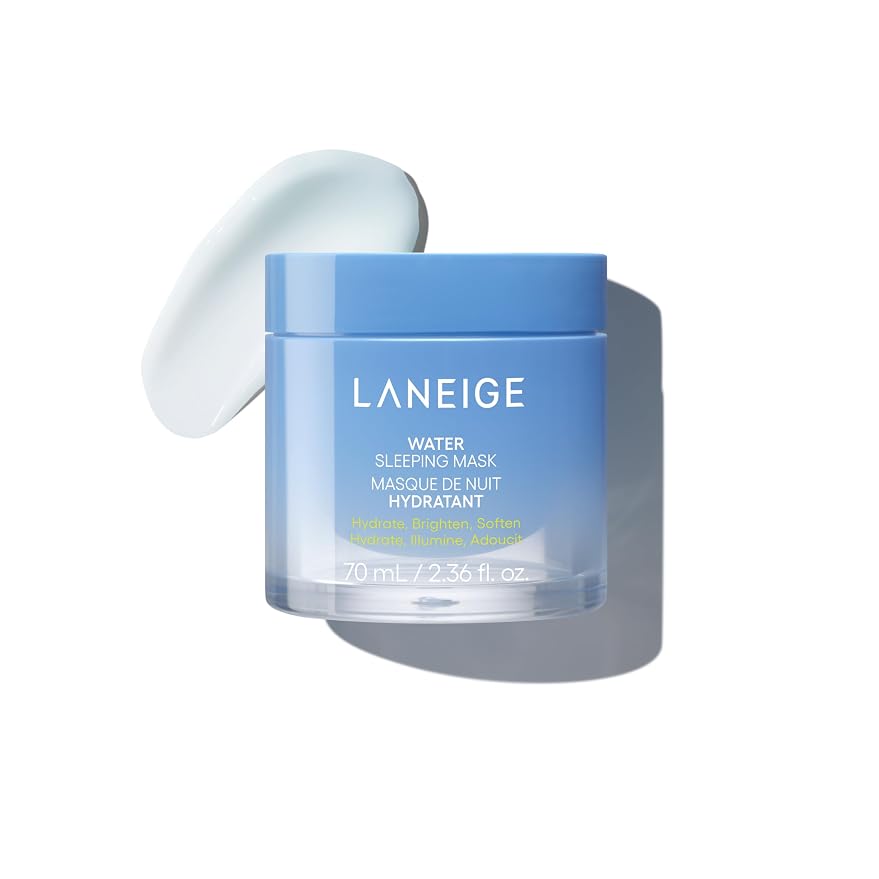
Sleeping masks occupy a strange space in skincare. They're not quite moisturizers, not quite serums, and most of them amount to nothing more than a thick cream you could have applied at any hour. The Laneige Water Sleeping Mask has been one of the best-selling overnight masks in Korean beauty for the better part of a decade, and I've watched it rack up millions of glowing reviews while quietly wondering whether it's actually doing something a good moisturizer couldn't. After two weeks of dedicated wear testing — and a few years of on-and-off use before that — I can say this: it's not a miracle, but it is a genuinely well-formulated product that does exactly what it claims, night after night, without drama.
What Is a Sleeping Mask, Really?
The concept is straightforward. A sleeping mask is the last step in your nighttime routine — a sealant layer that locks in everything underneath while delivering active ingredients over the 7 to 8 hours you're asleep. The difference between a sleeping mask and a night cream is largely about texture and occlusion. A sleeping mask should form a breathable but effective barrier that prevents transepidermal water loss (TEWL) without suffocating your skin. That's harder to achieve than it sounds. Go too heavy and you wake up with clogged pores and a greasy pillowcase. Go too light and you've basically just applied another layer of moisturizer for no reason.
Laneige positions the Water Sleeping Mask as a "hydrating overnight mask" powered by their Sleep-Tox technology — a marketing term that essentially describes the formula's antioxidant and soothing ingredients working while you sleep to counteract the day's damage. The branding is slick, but the formulation underneath is worth examining on its own merits.
Ingredient Breakdown
The full INCI list opens with Water, Butylene Glycol, and Cyclopentasiloxane — a lightweight silicone that gives the mask its signature slip and spreadability. Glycerin appears at position four, which is a genuinely functional concentration for humectancy. This isn't a product that sprinkles glycerin at the bottom of the list for label appeal; it's using it as a core moisturizing agent.
Key Hydrating Agents
- Glycerin: One of the most effective humectants available, drawing water into the stratum corneum. At its position in the list, it's present at a meaningful concentration.
- Sodium Hyaluronate: The sodium salt of hyaluronic acid, with a smaller molecular weight that allows deeper penetration than standard HA. It holds up to 1000 times its weight in water, making it a serious hydration booster.
- Trehalose: A sugar-based humectant that protects cellular structures from dehydration stress. It's particularly effective in overnight formulas because it helps maintain moisture balance over extended periods.
- Beta-Glucan: A soothing polysaccharide that also functions as a humectant. It's one of the most underrated soothing ingredients in skincare — clinically shown to reduce redness and support barrier repair.
Barrier Support
- Hydroxypropyl Bispalmitamide Mea (Ceramide PC): A synthetic ceramide analogue that mimics the skin's natural ceramides. This is the ingredient that elevates the Water Sleeping Mask from a simple hydrator to something that actively supports barrier function. It's not present at a high concentration, but even a small amount contributes to the skin's lipid matrix.
- Evening Primrose Root Extract: Rich in gamma-linolenic acid (GLA), an omega-6 fatty acid that supports the skin barrier and has anti-inflammatory properties.
Brightening & Antioxidant
- Ascorbyl Glucoside: A stable vitamin C derivative that converts to ascorbic acid on the skin. It's gentle and provides mild brightening over time. Don't expect the dramatic results of a dedicated 15% vitamin C serum, but as a supporting player in a sleeping mask, it's a smart inclusion.
- Apricot Fruit Extract: A mild antioxidant that also provides gentle exfoliation via natural fruit acids. The concentration here is low enough that it won't irritate sensitive skin.
What Gives Me Pause
Alcohol appears in the middle of the ingredient list. In context, it's functioning as a solvent and texture enhancer — it helps the product dry down quickly and prevents that heavy, sticky feeling that many sleeping masks suffer from. At this concentration, it's unlikely to cause problems for most skin types, but if your barrier is compromised or you're sensitive to drying alcohols, it's worth noting. The formula also contains Fragrance and Blue 1 (CI 42090), which gives the product its signature pale blue tint. The fragrance is light and pleasant — a subtle floral that fades within minutes — but it's unnecessary from a formulation standpoint and a potential irritant for sensitive skin.
The silicone base (Cyclopentasiloxane, Cyclohexasiloxane, Dimethicone, Dimethiconol) is effective for creating that elegant, weightless texture, but it's worth noting that Cyclohexasiloxane has been restricted in the EU due to environmental concerns. This isn't a safety issue for your skin, but it's something to consider if you're ingredient-conscious beyond personal use.
Texture & Application
This is where the Water Sleeping Mask earns its reputation. The texture is a translucent blue gel-cream that spreads effortlessly. A little goes a long way — I used roughly a hazelnut-sized amount for my entire face, and that was sufficient. The product glides on with a cooling sensation that feels genuinely pleasant at the end of a long day, and it absorbs within 2 to 3 minutes, leaving behind a barely-there film that's noticeable only if you touch your face and compare it to untreated skin.
There's no stickiness, no tackiness, and no pillow-staining residue. This is a crucial point that many sleeping masks fail on. The Water Sleeping Mask passes the "roll over onto your pillow without consequence" test with flying colors. The silicone base is responsible for this — it creates a breathable, flexible seal that moves with your skin rather than transferring onto your bedding.
Two-Week Wear Test
Conditions tested: Late spring with moderate humidity (50–65%), indoor air conditioning during the day, central heating at night. My skin type is combination with a tendency toward dehydration on the cheeks and congestion in the T-zone.
Week 1: I applied the Water Sleeping Mask every night as the final step in my routine, after a gentle cleanser, toner, and a lightweight serum. The immediate effect was noticeable — my skin felt softer and more plump each morning. Not dramatically different, but distinctly more hydrated than mornings when I used my regular night cream alone. The dehydration lines on my cheeks, which are usually visible by mid-morning, were less pronounced. By day 4, I noticed that my skin felt calmer overall — less of that tight, slightly irritated feeling that creeps in after cleansing.
Week 2: The cumulative effect became more apparent. My skin texture was smoother, and the overall tone looked more even — likely the ascorbyl glucoside working quietly in the background. I intentionally skipped the mask for two nights to see whether the results were just from the rest of my routine, and the difference was clear: my skin felt less supple and the dehydration lines returned. This confirmed that the mask was contributing something meaningful beyond what my other products were providing.
One concern: I noticed a very slight increase in congestion around my nose after the first week. This is likely due to the silicone content creating a more occlusive environment. It wasn't enough to be a dealbreaker, and it resolved when I applied a thinner layer in that area, but it's something to watch if you're prone to clogged pores.
Pros & Cons
✦ What We Loved
- Lightweight but effective: Delivers real hydration without the heaviness of a traditional night cream
- Elegant texture: Absorbs quickly, no sticky residue, no pillow transfer
- Thoughtful formulation: Glycerin, sodium hyaluronate, trehalose, and beta-glucan provide multiple pathways of hydration
- Ceramide support: Hydroxypropyl Bispalmitamide Mea adds barrier reinforcement
- Brightening bonus: Ascorbyl glucoside provides mild, gradual brightening
- Generous size: 70ml jar lasts 2–3 months with nightly use
- Universal appeal: Works across most skin types without drama
✦ What Could Improve
- Contains alcohol: Functional but potentially irritating for compromised barriers
- Added fragrance: Unnecessary and a potential irritant for sensitive skin
- Silicone-heavy: May cause congestion for very oily or pore-prone skin
- Jar packaging: Exposes ingredients to air and light; a pump or tube would be more hygienic and preserve actives better
- Cyclohexasiloxane: Restricted in the EU for environmental reasons
- Not enough for very dry skin alone: You'll still need a richer cream underneath in harsh conditions
Who Is This For?
The Water Sleeping Mask is ideal for normal, combination, and slightly dry skin types looking for a lightweight overnight hydration boost. If your current routine leaves your skin feeling "almost there" by morning — hydrated but not quite plump — this is the product that fills that gap. It's also a great entry point for anyone curious about sleeping masks but intimidated by the heavier, more occlusive options on the market.
If you have very dry skin, you'll need a richer moisturizer underneath — this is a sealant, not a substitute for deep nourishment. If you're sensitive to fragrance or alcohol, proceed with caution. And if you're dealing with active breakouts or severe congestion, the silicone base might not be your friend.
Price & Where to Buy
The Laneige Water Sleeping Mask retails for approximately $25–$32 for a 70ml jar, depending on the retailer. It's widely available at Sephora, Amazon (ensure you're buying from the Laneige storefront or an authorized seller — counterfeits are a known issue), Olive Young, YesStyle, and the official Laneige website. At roughly $0.35–$0.45 per ml, it's mid-range for a K-beauty sleeping mask — not the cheapest, but not the most expensive, and the quality justifies the price.
Comparison Notes
Against COSRX Ultimate Nourishing Rice Overnight Spa Mask: The COSRX is richer and more nourishing, thanks to over 65% rice extract. It's better for dry skin but heavier and less elegant in texture. The Laneige wins on lightweight feel and quick absorption.
Against Sulwhasoo Overnight Vitalizing Mask: Sulwhasoo's offering is more luxurious and herbally fragrant, with a thicker texture. It's a lovely product but costs nearly twice as much. The Laneige is the more practical choice for daily use.
Against Saturday Skin Yuzu Vitamin C Sleep Mask: The Saturday Skin mask is more focused on brightening with a higher concentration of vitamin C derivatives. If brightening is your primary goal, it's the better pick. For pure hydration and barrier support, the Laneige wins.
The Final Verdict
The Laneige Water Sleeping Mask has earned its place in the K-beauty canon for a reason. It's not revolutionary — it's a well-formulated, lightweight overnight hydrator that does exactly what it says it will do, night after night, without fuss. The ingredient list is thoughtful, the texture is genuinely pleasant, and the results are consistent and measurable. The alcohol and fragrance are notable drawbacks, and the jar packaging is a missed opportunity for a product that contains light-sensitive actives like ascorbyl glucoside. But for the vast majority of skin types — those looking for a no-drama, effective overnight hydration step — the Water Sleeping Mask delivers reliably. It's a workhorse, not a show pony, and there's real value in that.