
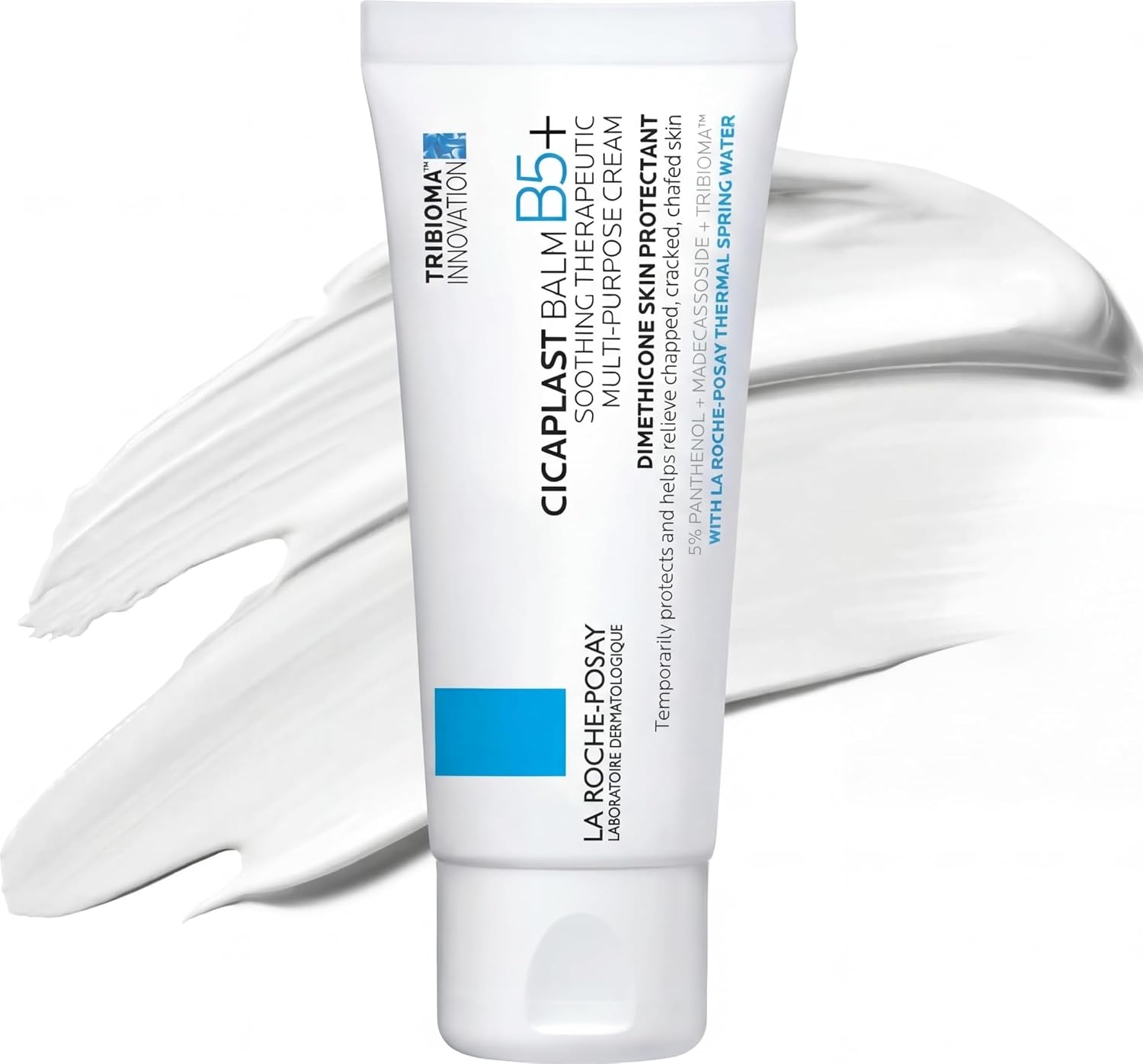
There's a particular kind of skincare fatigue that sets in when you've tried your twentieth "miracle repair cream" and they all feel the same — thick, vaguely medicinal, promising barrier restoration while delivering nothing more than expensive occlusion. I'd written off the entire category until a dermatologist friend handed me a tube of La Roche-Posay Cicaplast Baume B5 with the kind of casual confidence that suggested she'd been using it for years. "Just try it," she said. "Two weeks. On that eczema patch on your cheek." I did. And I'm still using it.
What Is Cicaplast Baume B5?
La Roche-Posay is a French pharmacy brand with decades of dermatologist recommendations under its belt. The brand built its reputation on thermal spring water from the La Roche-Posay spa town — water rich in selenium, a mineral with documented anti-inflammatory properties. Cicaplast Baume B5 sits in the brand's repair-focused line, positioned as a multi-purpose balm for damaged, irritated, or post-procedure skin. It's not marketed as a luxury treatment or an anti-aging miracle. It's positioned as a workhorse — the kind of product you reach for when your skin needs help, not hype.
The "B5" in the name refers to panthenol (provitamin B5), the star ingredient at a 5% concentration. Panthenol is a humectant and barrier-support ingredient with solid clinical backing — it accelerates wound healing, reduces transepidermal water loss, and calms inflammation. But panthenol alone doesn't explain why this balm has such a devoted following. The supporting cast matters just as much.
Ingredient Breakdown: What's Actually Inside
The full INCI list reads like a masterclass in barrier repair formulation:
- Panthenol (5%): The headline ingredient. At this concentration, panthenol delivers measurable wound-healing acceleration and anti-inflammatory effects. It's the reason this balm works on eczema, post-laser skin, and cracked cuticles with equal effectiveness.
- Madecassoside: A triterpenoid extracted from Centella asiatica (tiger grass). This is the same ingredient that makes K-beauty's cica products so effective — it stimulates collagen synthesis, reduces inflammation, and accelerates wound healing. La Roche-Posay doesn't market the centella connection, but it's there, working quietly in the background.
- Zinc Gluconate: A zinc salt with anti-inflammatory and antimicrobial properties. Zinc supports wound healing, regulates sebum production, and calms redness. It's the reason this balm works on acne-prone skin without clogging pores.
- Copper Gluconate: Another mineral salt that supports collagen synthesis and wound healing. Copper is a cofactor for lysyl oxidase, an enzyme critical for cross-linking collagen and elastin fibers. It's a subtle inclusion, but it adds to the repair profile.
- Shea Butter: An emollient rich in fatty acids and triglycerides. It provides occlusion to prevent water loss while delivering lipids that support barrier repair. The shea butter here is what gives the balm its thick, creamy texture.
- Glycerin: A humectant that draws water into the skin. It's the most proven, most studied hydrating ingredient in cosmetics — boring, but effective.
- Dimethicone: A silicone that provides slip and occlusion. It's what makes the balm spreadable despite the thick shea butter base, and it creates a breathable barrier that locks in moisture without feeling suffocating.
The formula also includes chlorhexidine digluconate, an antimicrobial agent that keeps the product stable and adds a layer of protection for compromised skin. Some people flag this as a concern, but at the concentration used here (well below 0.1%), it's unlikely to cause irritation — and it's why the balm works on open wounds and post-procedure skin without infection risk.
Texture & Application: The Thick Balm That Spreads Like a Dream
Cicaplast Baume B5 is a thick, creamy balm with a texture that sits somewhere between a rich moisturizer and a traditional ointment. It's not greasy — the dimethicone and hydrogenated polyisobutene give it a silky slip that belies its density. A little goes a long way. I found that a pea-sized amount covered my entire face, and a dime-sized amount was enough for both hands and cuticles.
The balm absorbs within 60–90 seconds, leaving behind a soft, slightly occlusive film that feels protective without feeling suffocating. There's no white cast (the titanium dioxide is present in such a small amount it doesn't leave a visible residue), and no sticky residue. It's fragrance-free, which is a relief — the product smells faintly of shea butter and nothing else. If you're sensitive to fragrance, this is a non-issue.
One caveat: the balm can pill if you layer it over silicone-heavy serums or primers. I found that it played nicely with water-based serums (hyaluronic acid, niacinamide) but clashed with anything containing dimethicone high in the ingredient list. If you're using it as a spot treatment or overnight mask, this isn't a problem. If you're using it as a daytime moisturizer under makeup, give it time to absorb fully before applying foundation.
Two-Week Wear Test: From Eczema Patch to Everyday Staple
Conditions tested: A persistent eczema patch on my left cheek (dry, flaky, mildly inflamed), post-shaving irritation on my jawline, and general winter dryness across my face. I used it twice daily — morning and night — as a spot treatment on the eczema patch and as a thin layer over my entire face on days when my skin felt particularly tight.
Days 1–3: The Initial Relief
The eczema patch was the first test. I applied a thin layer directly to the dry, flaky area morning and night. Within 24 hours, the flaking stopped. The redness didn't disappear, but the tight, uncomfortable sensation that comes with eczema — that feeling like your skin is too small for your face — was gone. By day three, the patch was visibly smoother and less inflamed. I wasn't shocked, but I was impressed. I'd tried prescription-strength hydrocortisone on this same patch two months earlier, and it took a week to see comparable results.
Days 4–7: The Post-Shaving Test
I switched to using the balm on my jawline after shaving. I have a tendency toward razor burn — not dramatic, but enough that my jawline feels tight and looks pink for a few hours after shaving. I applied a thin layer immediately after shaving and rinsing with cold water. The tightness was gone within minutes. The redness faded within 30 minutes. By the end of the week, I noticed that the razor burn wasn't just being masked — it was healing faster. The combination of panthenol, zinc, and madecassoside was doing exactly what it's supposed to do: accelerating wound healing and reducing inflammation.
Days 8–14: The Everyday Staple
By the second week, I'd started using the balm as a nighttime moisturizer on my entire face. My skin was in rough shape — winter dryness, indoor heating, and a retinol experiment that had gone slightly too hard had left my barrier compromised. The balm didn't fix everything overnight, but it provided the kind of deep, occlusive hydration that my skin was craving. I woke up with skin that felt soft, not tight. The eczema patch was completely healed — not just improved, but gone. The post-shaving irritation was a non-issue. And my overall skin texture was smoother and more resilient.
Was this the balm alone, or was it the combination of the balm and a simplified routine (no retinol, no actives, just gentle cleansing and this balm)? Probably both. But the balm was doing the heavy lifting. It provided the hydration, the barrier support, and the anti-inflammatory action that my skin needed to recover.
Pros & Cons
✅ What I Loved
- Genuinely effective barrier repair. The combination of panthenol, madecassoside, zinc, and copper delivers measurable results on eczema, razor burn, and compromised skin. This isn't just occlusion — it's active repair.
- Multi-purpose versatility. I used it on my face, hands, cuticles, and a dry patch on my elbow. It worked on all of them. This is the kind of product you keep in your bag, your bathroom, and your desk drawer.
- Fragrance-free and sensitive-skin friendly. No essential oils, no fragrance, no alcohol. The formula is as minimal as it gets while still delivering results.
- Thick but not greasy. The texture is rich without feeling suffocating. It absorbs quickly and leaves behind a protective film that doesn't transfer onto pillows or collars.
- Dermatologist-recommended for post-procedure skin. This is the balm dermatologists recommend after laser treatments, chemical peels, and microneedling. That's not marketing — it's because the formula supports wound healing without infection risk.
- Long-lasting tube. A little goes a long way. My 40ml tube lasted two months of twice-daily use, and I still have product left.
❌ What Could Be Better
- Can pill under makeup. If you're using it as a daytime moisturizer, give it time to absorb fully before applying foundation. It clashes with silicone-heavy products.
- Not a standalone moisturizer for oily skin. The shea butter and dimethicone base is too rich for oily skin types. If you're oily, use this as a spot treatment or overnight mask, not a full-face moisturizer.
- Price point is mid-range. At $16–$18 for 40ml, it's not cheap, but it's not luxury pricing either. The tube lasts a long time, so the cost-per-use is reasonable.
- Availability can be inconsistent. La Roche-Posay is widely available in pharmacies and dermatologist offices, but it's not as easy to find online as K-beauty brands. Stockists include Ulta, CVS, and the La Roche-Posay website.
- Not a replacement for prescription treatments. If you have severe eczema or rosacea, this balm can support your treatment, but it's not a replacement for prescription-strength topicals. Think of it as an adjunct, not a cure.
Who Is This For?
Cicaplast Baume B5 was designed for a specific profile: dry, compromised, or post-procedure skin that needs barrier repair and anti-inflammatory support. If you have eczema, rosacea, razor burn, or skin that's been damaged by over-exfoliation or harsh actives, this balm is one of the best options on the market. It's also an excellent choice for anyone who wants a multi-purpose repair balm for hands, cuticles, and dry patches.
If you have oily or acne-prone skin, this balm might be too rich for full-face use. But it's still worth keeping in your arsenal as a spot treatment for dry patches or as an overnight mask on areas that need extra support. The zinc gluconate content means it won't clog pores, but the shea butter base is too occlusive for oily skin types to use liberally.
If you have normal or combination skin, this balm is an excellent nighttime moisturizer or winter staple. It provides the kind of deep hydration that prevents transepidermal water loss without feeling heavy or greasy.
Price & Where to Buy
La Roche-Posay Cicaplast Baume B5 retails for $16–$18 for a 40ml tube and $25–$28 for a 75ml tube. It's widely available at Ulta, CVS, Walgreens, and the La Roche-Posay website. It's also available on Amazon, but be cautious of third-party sellers — stick to the official La Roche-Posay storefront to avoid counterfeits.
Compared to K-beauty repair balms, the price is mid-range. It's more expensive than Benton's Aloe Propolis Soothing Gel ($12) but cheaper than Dr. Jart+'s Cicapair Tiger Grass Cream ($52). The cost-per-use is reasonable given how little product you need and how long the tube lasts.
Comparison Notes
Against Dr. Jart+ Cicapair Tiger Grass Cream: Both products are centella-based repair creams, but they serve different purposes. Cicapair is a color-correcting treatment with SPF — it's designed for daytime use and redness reduction. Cicaplast is a fragrance-free repair balm designed for nighttime use and barrier repair. If you want color correction and SPF, go with Cicapair. If you want pure repair without cosmetic effects, go with Cicaplast.
Against Aestura Atobarrier 365 Cream: Aestura is a Korean dermatologist-recommended barrier cream that's gained a cult following for its ceramide-rich formula. It's lighter and more hydrating than Cicaplast, making it a better choice for daily use on normal or combination skin. Cicaplast is thicker and more occlusive, making it better for compromised skin that needs intensive repair.
Against CeraVe Healing Ointment: CeraVe's Healing Ointment is a petrolatum-based balm with ceramides and hyaluronic acid. It's more occlusive than Cicaplast and better for preventing water loss, but it lacks the active repair ingredients (panthenol, madecassoside, zinc) that make Cicaplast so effective on damaged skin. If you need pure occlusion, go with CeraVe. If you need active repair, go with Cicaplast.
Final Verdict
La Roche-Posay Cicaplast Baume B5 is not a miracle product — it's a workhorse. It doesn't promise glass skin or anti-aging miracles. It promises barrier repair, and it delivers. The combination of panthenol, madecassoside, zinc, and copper creates a formula that accelerates wound healing, reduces inflammation, and supports barrier function in a way that's backed by both clinical research and decades of dermatologist recommendations.
Is it perfect? No. The texture can pill under makeup, it's too rich for oily skin types, and it's not a replacement for prescription treatments. But for the audience it was designed for — people with dry, compromised, or post-procedure skin — it's one of the best options on the market. It earned its cult status, and it's earned a permanent spot in my skincare routine.
Would I repurchase? Already did. The backup tube is sitting in my bathroom cabinet right now. And if that's not the strongest endorsement I can give, I don't know what is.