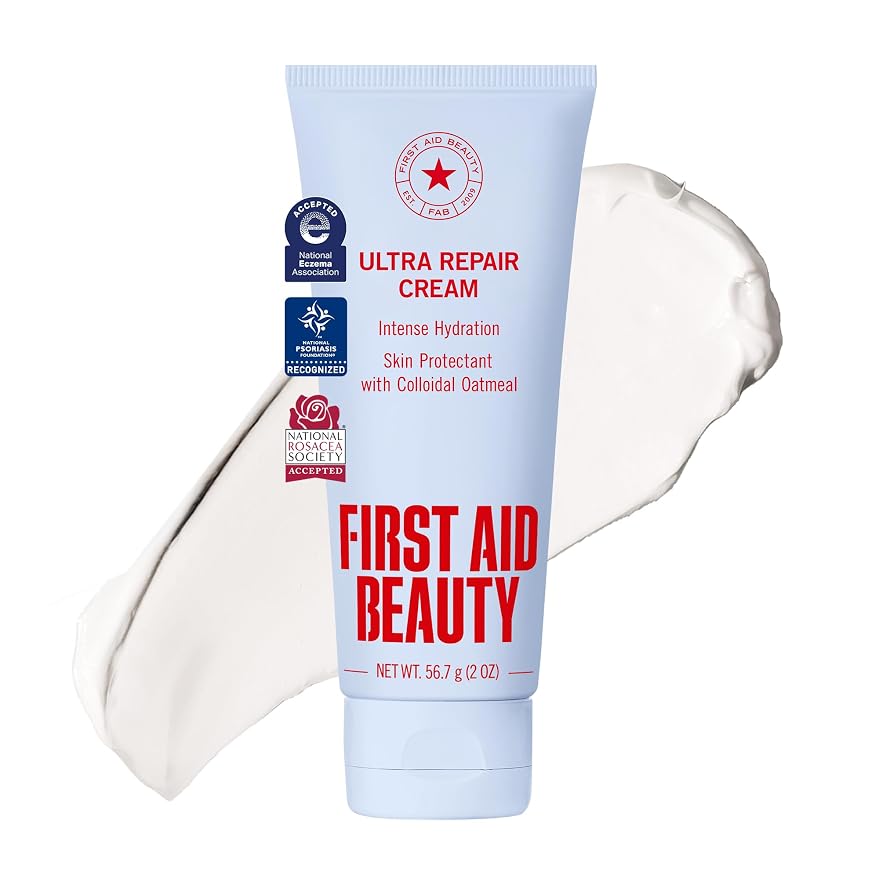
There are products that arrive with a marketing blitz — influencer unboxings, TikTok trends, limited-edition packaging — and then there are products that become staples because they actually work. First Aid Beauty's Ultra Repair Cream falls squarely in the second camp. It's been sitting on Sephora shelves and pharmacy end-caps for years, quietly accumulating a loyal following among people who deal with dry, reactive, or eczema-prone skin. I'd walked past it dozens of times, always noting the clinical-looking tub but never quite reaching for it. After two weeks of wearing it, I understand the hype — and I have a few reservations.
What Is First Aid Beauty Ultra Repair Cream?
First Aid Beauty (FAB) was founded in 2009 by Lilli Gordon, who set out to create effective skincare for sensitive skin that didn't require a prescription. The brand was acquired by Procter & Gamble in 2018, which gave it the distribution muscle to land in every Sephora, Ulta, and Target across the country. The Ultra Repair Cream is the brand's flagship product — a thick, no-nonsense moisturizer that promises to relieve dry, distressed skin with colloidal oatmeal, shea butter, and ceramides.
It comes in a generous 6-ounce tub (also available in a 2-ounce travel size and a 12-ounce jumbo) and is marketed as a head-to-toe moisturizer — meaning you can use it on your face, body, hands, and anywhere else that needs rescue. The price point sits comfortably in the "affordable but not cheap" zone, which makes it accessible without feeling like a drugstore afterthought.
The product is fragrance-free, paraben-free, cruelty-free, vegan, and non-comedogenic. It's also been awarded the National Eczema Association Seal of Acceptance, which is not a trivial endorsement — it means the formula has been vetted for people with eczema and sensitive skin conditions.
Ingredient Breakdown
The full INCI list reads: Water, Stearic Acid, Glycerin, C12-15 Alkyl Benzoate, Caprylic/Capric Triglyceride, Glyceryl Stearate SE, Glyceryl Stearate, Cetearyl Alcohol, Butyrospermum Parkii Butter, Dimethicone, Squalane, Allantoin, Camellia Sinensis Leaf Extract, Caprylyl Glycol, Ceramide 3, Chrysanthemum Parthenium Extract, Colloidal Oatmeal, Disodium EDTA, Eucalyptus Globulus Leaf Oil, Glycyrrhiza Glabra Root Extract, Sodium Hydroxide, Xanthan Gum, Phenoxyethanol.
That's 23 ingredients — a moderate count for a cream moisturizer. Not as minimalist as Vanicream's 19-ingredient Daily Facial Moisturizer, but far leaner than the 40+ ingredient formulas common in department store creams. The structure is clear: a water base, a heavy emollient and occlusive middle, and a handful of actives at the end.
The Star Players
Colloidal oatmeal is the ingredient that defines this product. It's listed at 0.5% concentration, which is the standard effective dose for skin protectant claims. Colloidal oatmeal is a finely ground oat suspension that has been used for centuries to treat itching, irritation, and inflammation. It works by forming a protective barrier on the skin, holding moisture in, and delivering anti-inflammatory compounds called avenanthramides. The FDA recognizes colloidal oatmeal as a skin protectant, which means this isn't just a marketing claim — it's a regulated, clinically validated ingredient. If you've ever taken an oatmeal bath for chickenpox or poison ivy, you already know how effective it can be.
Shea butter (Butyrospermum Parkii Butter) is the ninth ingredient, which means it's present at a meaningful concentration. Shea butter is a rich emollient loaded with stearic and oleic acids, and it's one of the best occlusive ingredients for dry skin. It creates a physical barrier that prevents water loss from the stratum corneum — think of it as a natural Vaseline, but with a softer, more skin-compatible texture. The combination of shea butter and colloidal oatmeal is the core of this formula: one hydrates and protects, the other soothes and repairs.
Squalane appears at position eleven. Like the Vanicream Daily Facial Moisturizer, FAB uses squalane as a lightweight lipid replenisher. It's a hydrogenated form of squalene — a lipid your skin naturally produces — and it absorbs quickly without clogging pores. Having squalane here alongside the heavier shea butter creates a nice balance: the shea butter provides the occlusive seal, and the squalane delivers lightweight, fast-absorbing hydration underneath.
Ceramide 3 (also known as ceramide NP) is the sole ceramide in the formula. It's one of the most abundant ceramides in healthy skin, and it plays a critical role in maintaining the lipid barrier. I wish FAB had included more ceramides — Vanicream's five-ceramide complex sets a higher bar — but even one ceramide is better than none, and ceramide 3 is the right one to include if you're only going to pick one.
Allantoin is a soothing agent that promotes cell turnover and wound healing. It's derived from comfrey root, and it's been used in skincare for decades. In this formula, it works alongside the colloidal oatmeal to calm irritation and support skin repair.
Camellia sinensis leaf extract (green tea extract) is a potent antioxidant that protects against free radical damage and has anti-inflammatory properties. It's a nice addition in a cream aimed at distressed skin — when your barrier is compromised, oxidative stress accelerates damage, so an antioxidant is genuinely useful rather than just a label claim.
Glycyrrhiza glabra root extract (licorice root extract) is a skin-brightening and anti-inflammatory ingredient. It contains glabridin, which inhibits tyrosinase (the enzyme that produces melanin) and reduces redness. In a cream for sensitive, reactive skin, licorice root extract is a smart inclusion — it addresses the hyperpigmentation and redness that often accompany barrier damage.
The One I Wish Weren't Here
Eucalyptus globulus leaf oil is the ingredient that gives me pause. Eucalyptus oil is a volatile essential oil with a strong, medicinal scent. While it has antimicrobial properties, it's also a known skin sensitizer — incidecoder flags it as "icky" for good reason. The European Union's Scientific Committee on Consumer Safety has identified eucalyptus oil as a potential allergen, and it's one of the 26 fragrance allergens that must be declared on EU cosmetic labels. In a product that's marketed for sensitive and eczema-prone skin, the inclusion of eucalyptus oil feels like a contradiction. The concentration is low enough that most people won't react, but for the truly sensitive — the people this product is ostensibly designed for — it's a risk. I noticed a faint, cool scent when I first opened the tub, which I attribute to the eucalyptus. It dissipates quickly on the skin, but it's there.
Texture & Application
The texture is a thick, rich cream — not quite as dense as a body butter, but far from a lightweight lotion. It scoops out of the tub easily and warms quickly between your palms. When you apply it, there's an initial feeling of richness that's almost luxurious — the kind of texture that makes you feel like you're actually doing something for your skin, not just going through the motions.
Absorption time is longer than a lightweight moisturizer — about 2 to 3 minutes for a moderate application. The finish is a soft, dewy glow rather than a matte finish. If you apply a thick layer, you'll notice a slight sheen that takes a while to settle. For nighttime use, this is fine. For daytime use under sunscreen or makeup, you'll want to apply a thinner layer and give it time to absorb before layering.
The dimethicone in the formula gives it a smooth, slightly silky feel during application. It also helps with spreadability — the cream glides across the skin without dragging. If you're someone who avoids silicones, this is worth noting. Dimethicone is a perfectly safe ingredient for most people, but it can create a barrier that prevents subsequent products from penetrating, and some people find it causes congestion. I didn't experience any issues with it in this formula, but I'm not particularly silicone-sensitive.
The tub packaging is my least favorite aspect. Scooping cream out of a jar with your fingers introduces bacteria every time you use it. For a product marketed to people with compromised skin barriers, this is a design flaw. A pump bottle or an airless jar would be more hygienic. I've taken to using a small spatula to dispense, which is an extra step I shouldn't need.
Two-Week Wear Test
Skin context: I tested this during a stretch of cold, dry weather with indoor heating running full blast. My skin is combination with dehydrated cheeks and an oily T-zone. I have mild rosacea and a history of reactions to fragranced products. I used the Ultra Repair Cream as my evening moisturizer and occasionally as a daytime spot treatment for dry patches.
Week 1: I applied the cream every night after cleansing and any treatment serums. The first night, I was struck by how comforting the texture felt — there's a reason people describe this as a "cozy" cream. The colloidal oatmeal seems to create a subtle cooling sensation that's soothing on irritated skin. By the third morning, I noticed that the tight, dry feeling I usually wake up with during winter was significantly reduced. My cheeks felt plumper and more resilient.
By day five, the flaky patch on my left cheek — a recurring spot that flares up in dry weather — had calmed down noticeably. The colloidal oatmeal and shea butter combination was clearly doing its job. I also used it on my hands after washing dishes one evening, and the results were immediate: softer, less tight skin within minutes. This is genuinely a good head-to-toe cream, not just a face cream with a body claim stapled on.
Week 2: I continued the same routine. The hydration gains from week one were maintained. One thing I noticed was that the cream worked better as a nighttime product than a daytime one for my combination skin. Under sunscreen, it felt slightly heavy, and I experienced minor pilling when I layered it with a chemical sunscreen. The eucalyptus oil, which I'd barely noticed in week one, became faintly perceptible on a couple of evenings when I applied the cream right after a shower — the steam seemed to amplify the scent. It wasn't irritating, but it was noticeable.
I also tested it on a small eczema patch on my inner elbow. Within two days of twice-daily application, the redness and itching had subsided. The colloidal oatmeal was clearly earning its keep. This is the kind of result that explains why dermatologists recommend this cream — it's not glamorous, but it's effective for the specific problem it targets.
Pros & Cons
Pros
- Colloidal oatmeal at effective concentration: 0.5% is the FDA-recognized skin protectant dose. This is the real deal, not a trace amount for label claims.
- Rich, soothing texture: The shea butter and squalane combination creates a genuinely comforting application experience. Feels like skincare, not just a product.
- Solid barrier support: Ceramide 3, squalane, and shea butter together provide a multi-layered approach to barrier repair.
- Antioxidant and brightening support: Green tea extract and licorice root extract add genuine value beyond basic hydration.
- Generous size: 6 ounces for under $20 is excellent value. The 12-ounce jumbo is even more economical.
- Multi-use: Works on face, body, hands, and eczema patches. One product for multiple needs.
- National Eczema Association Seal: A meaningful credential that validates the formula for sensitive skin.
- Widely accessible: Available at Sephora, Ulta, Target, Amazon, and most major US retailers.
Cons
- Eucalyptus oil in a sensitive-skin product: A known sensitizer that contradicts the product's positioning. Most people will tolerate it, but the truly sensitive might not.
- Tub packaging: Unhygienic for a product aimed at compromised skin. Fingers in a jar is never ideal, especially for eczema-prone users.
- Only one ceramide: Ceramide 3 is great, but competitors like Vanicream offer five-ceramide complexes at similar or lower prices.
- Heavy for daytime use: Combination and oily skin types will find this too rich for morning wear. Best as a nighttime cream.
- Pilling under sunscreen: The dimethicone and thick texture can conflict with chemical sunscreens. Physical/mineral sunscreens layer better.
- Dimethicone content: If you're silicone-averse, this won't work for you. The silicone is part of what gives the cream its smooth texture.
Who Is This For?
Dry and very dry skin types will get the most from this cream. The shea butter and colloidal oatmeal combination is built for skin that feels tight, flaky, and uncomfortable. If your moisturizer never feels like enough, this one might be.
Eczema-prone and barrier-compromised skin is the primary target. The colloidal oatmeal at 0.5% is a clinically validated anti-itch and barrier-protecting ingredient, and the National Eczema Association Seal backs this up. If you're dealing with flare-ups, this is one of the better over-the-counter options.
People who want a multi-use cream — if you're traveling and want one moisturizer for face, body, and hands, this is a solid choice. The 2-ounce travel size is TSA-friendly and genuinely useful.
Anyone who finds K-beauty creams too light — if you've tried gel creams and lightweight lotions and they're just not enough, the Ultra Repair Cream is a step up in richness without going full Vaseline.
Who Might Want Something Else
If you have oily or combination skin, this cream will likely feel too heavy for daytime use. If you're sensitive to essential oils or eucalyptus, the inclusion of eucalyptus globulus leaf oil is a dealbreaker — Vanicream's fragrance-free, essential-oil-free formulas are a safer bet. If you want a multi-ceramide approach, Vanicream Daily Facial Moisturizer or CeraVe Moisturizing Cream offer more ceramide variety. And if you want a lightweight daytime moisturizer, look elsewhere — this is a rich, heavy cream that's better suited for nighttime.
Price & Where to Buy
The First Aid Beauty Ultra Repair Cream retails for approximately $14 to $20 for the 6-ounce tub, depending on the retailer. The 2-ounce travel size runs about $8 to $12, and the 12-ounce jumbo is typically $30 to $36. At roughly $2.50 to $3.30 per ounce for the standard size, this is one of the more affordable ceramide-containing creams on the market — significantly cheaper per ounce than CeraVe Moisturizing Cream and a fraction of the cost of luxury barrier creams like La Roche-Posay Cicaplast Baume B5.
You can find it at Sephora, Ulta, Target, Amazon, DermStore, and directly from First Aid Beauty's website. It's widely available in the US and ships internationally through Sephora and Amazon. If you're in the UK, look for it at Cult Beauty or Sephora UK.
Comparison Notes
First Aid Beauty Ultra Repair Cream vs. CeraVe Moisturizing Cream: Both are rich, pharmacy-aisle moisturizers with ceramides. CeraVe includes three ceramides (1, 3, and 6-II) plus hyaluronic acid, while FAB has only ceramide 3 but adds colloidal oatmeal and shea butter. CeraVe is slightly lighter and layers better under sunscreen. FAB is more soothing for active irritation and eczema. If you want ceramide variety, go CeraVe. If you want the anti-itch power of colloidal oatmeal, go FAB.
First Aid Beauty Ultra Repair Cream vs. Vanicream Moisturizing Skin Cream: Vanicream is the purist's choice — no essential oils, no fragrance, no dimethicone, no eucalyptus. It's simpler and safer for the most reactive skin. FAB has a richer, more luxurious texture and the colloidal oatmeal advantage. If you're sensitive to essential oils, Vanicream wins. If you want a cream that feels more like a treatment and less like a pharmacy product, FAB is more satisfying to use.
First Aid Beauty Ultra Repair Cream vs. La Roche-Posay Cicaplast Baume B5: Cicaplast is a French pharmacy favorite with panthenol (vitamin B5), madecassoside, and shea butter in a more targeted, treatment-focused formula. It's thinner but more concentrated in actives. FAB is richer and better for all-over body use. Cicaplast is better for spot-treating specific areas of damage; FAB is better for general dryness and eczema maintenance. Cicaplast is also free of essential oils, which gives it an edge for sensitive skin.
Final Verdict
The First Aid Beauty Ultra Repair Cream is a genuinely effective moisturizer for dry, irritated, and eczema-prone skin. The colloidal oatmeal at 0.5% is the real deal — it's the same concentration used in clinical settings, and I felt the difference within days. The shea butter and squalane combination creates a rich, comforting texture that makes dry skin feel cared for, not just coated.
But I can't ignore the eucalyptus oil. In a product that wears the National Eczema Association Seal and markets itself to sensitive skin, including a known sensitizer feels like a misstep. Most people won't react to it, and the concentration is low, but the people who need this cream most — the ones with reactive, eczema-prone skin — are the same people most likely to be triggered by it. It's not a dealbreaker, but it's a contradiction I wish FAB would address.
★★★★☆ — A strong, effective cream for dry and eczema-prone skin that loses a star for the eucalyptus oil inclusion and tub packaging. If those two issues don't bother you, this is one of the best affordable repair creams available.