
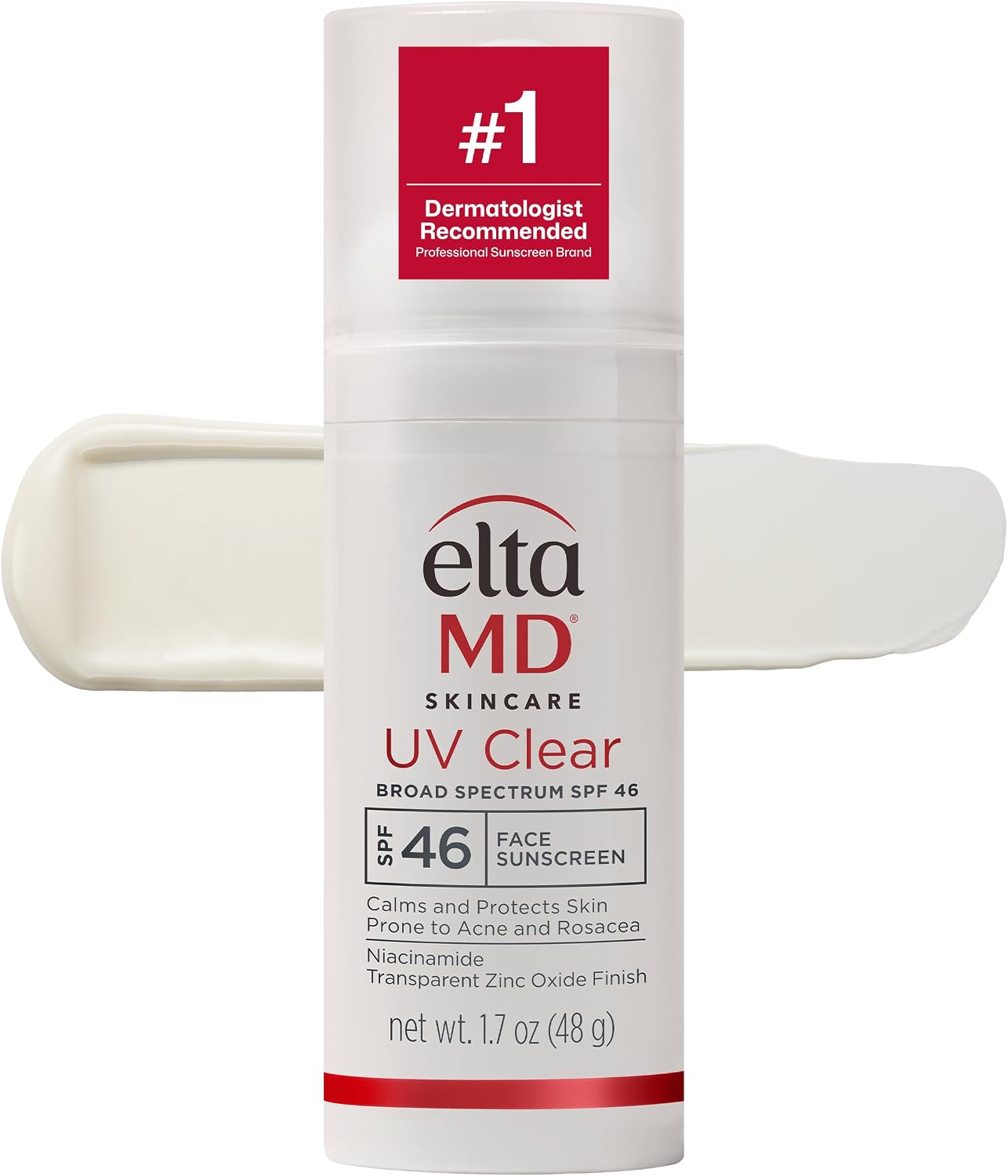
EltaMD UV Physical Broad-Spectrum SPF 41
If you have spent any time in a dermatologist's office, you have probably seen the white-and-teal pump bottle of EltaMD UV Physical SPF 41 sitting on the counter. It is one of those products that has achieved almost legendary status in clinical circles — recommended after chemical peels, microneedling sessions, and laser treatments when the skin is at its most vulnerable and needs a sunscreen that will not sting, irritate, or provoke inflammation. But a product being dermatologist-approved does not automatically make it a joy to wear every day. After weeks of testing UV Physical SPF 41 across different routines, seasons, and skin moods, we have a thorough, honest take on where this mineral sunscreen shines and where it falls short.
The Formula — What Is Inside the Bottle
EltaMD UV Physical SPF 41 is a 100% mineral sunscreen that relies solely on 9% zinc oxide as its active UV filter. Unlike chemical sunscreens that absorb UV radiation and convert it to heat, zinc oxide sits on the surface of the skin and physically reflects and scatters both UVA and UVB rays. This mechanism makes it inherently gentler and less likely to trigger contact dermatitis or phototoxic reactions — which is precisely why dermatologists trust it for compromised skin barriers.
The 9% zinc oxide concentration delivers SPF 41 protection, which translates to roughly 97% UVB filtration. It is not the highest SPF on the market, but for daily wear — commuting, office life, running errands — it is more than adequate. Where the formula truly earns its "broad-spectrum" label is in UVA protection: zinc oxide is one of the few FDA-approved filters that provides coverage across the entire UVA spectrum (both UVA I and UVA II), making it a genuine choice for anti-aging and hyperpigmentation prevention.
Beyond the active filter, the formula is enriched with a handful of skin-loving extras. Hyaluronic acid provides lightweight hydration, helping counteract the drying effect that mineral sunscreens can sometimes produce. Vitamin C (in the form of ascorbyl palmitate) offers antioxidant support, neutralizing free radicals generated by UV and environmental pollution. Vitamin E (tocopheryl acetate) adds another layer of antioxidant defense and supports barrier repair. The formula is also fragrance-free, paraben-free, and non-comedogenic, ticking the boxes that matter most for sensitive and acne-prone skin.
The Tint — A Universal Warm Neutral
One of the most distinctive features of UV Physical SPF 41 is its tint. The product dispenses as a warm, slightly caramel-toned cream that blends out to a sheer wash of color. EltaMD describes it as a universal tint, and for the most part, that claim holds up reasonably well on fair-to-medium skin tones. The tint serves a dual purpose: it neutralizes the notorious white cast that zinc oxide can leave behind, and it provides a subtle evening effect that mimics a very lightweight foundation or skin tint.
On fair skin (Fitzpatrick I–III), the tint blends in seamlessly and leaves a healthy, slightly warm glow without looking orange or muddy. On medium skin tones (Fitzpatrick IV), it can work as a no-makeup base, though the warmth may lean slightly bronzy if you are very cool-toned. For deeper skin tones (Fitzpatrick V–VI), the tint is unfortunately not universal — it can appear ashy or leave an unnatural warm cast, which is one of the most significant limitations of this product. EltaMD has expanded their tinted offerings in recent years, but UV Physical SPF 41 remains best suited for light-to-medium complexions.
Texture & Application Experience
Out of the pump, UV Physical SPF 41 has a medium-thick, creamy consistency that feels more like a moisturizer than a traditional sunscreen. It spreads easily across the skin with a bit of effort — you do need to work it in with gentle, outward strokes rather than a quick slap-and-go. The product takes approximately 60–90 seconds to fully absorb and set, leaving behind a natural, semi-matte finish that is neither dewy nor flat. It is a genuinely flattering finish for most skin types: not too shiny for oily skin, not too matte for dry skin.
Where the application experience falters slightly is in the blending itself. Because zinc oxide is a physical particle, it does not dissolve into the skin — it forms a layer. If you apply too much product in one area or do not blend thoroughly, you will see faint streaks or patchiness, especially along the jawline and hairline. The learning curve is modest but real: two pumps for the face, blended in sections, works far better than a single large dollop.
Under makeup, UV Physical SPF 41 performs admirably. It layers well under both liquid and powder foundations without pilling, and its semi-matte finish provides a smooth canvas for concealer and bronzer. The one caveat is that very dewy or silicone-heavy primers can occasionally cause the sunscreen to shift slightly during the day, so pairing it with a grippier, more matte primer tends to yield the best results.
Wear & Performance Throughout the Day
Over an eight-hour wear test, UV Physical SPF 41 held up respectably for an indoor office day. The tint remained even, there was no noticeable oxidation or color shift, and the semi-matte finish persisted without becoming oily or cakey. On days with moderate outdoor activity — a 20-minute walk in direct sun — the product maintained its integrity, though we did notice a slight shine breakthrough on the T-zone after about two hours of sun exposure.
For more intense outdoor activity, the water resistance is rated at 40 minutes, which is adequate for a quick swim or a sweaty workout but not for extended water sports. Reapplication is necessary every two hours during prolonged sun exposure, as with any sunscreen. The tint does make reapplication a bit tricky — layering a second coat over makeup or the existing tint can result in a slightly heavier, more noticeable finish. A tinted powder sunscreen or a spray-on mineral SPF is a more practical reapplication strategy for midday touch-ups.
Who This Sunscreen Is Really For
EltaMD UV Physical SPF 41 occupies a very specific niche: it is the mineral sunscreen for people who need gentle, non-irritating UV protection but still want a product that looks and feels pleasant on the skin. That niche is larger than it sounds. If you are post-procedure, rosacea-prone, eczema-prone, or simply someone whose skin reacts to every chemical sunscreen on the shelf, this is a product that will almost certainly play nice with your barrier. The tint eliminates the ghostly white cast that keeps many people from using mineral sunscreens at all, and the inclusion of hyaluronic acid and antioxidants means the formula does more than just sit there.
It is also an excellent choice for anyone who wants a multi-tasking morning product — a tinted moisturizer-sunscreen hybrid that can replace a separate moisturizer, primer, and light coverage base. For minimalist routines, this is a genuine three-in-one.
Where It Falls Short
No product is perfect, and UV Physical SPF 41 has its share of drawbacks. The tint, while convenient for many, is not truly universal — deeper skin tones are underserved. The price point of approximately $35–37 for 4 ounces is steeper than drugstore mineral options, and the SPF 41 rating, while adequate for daily wear, may feel insufficient for those who want maximum protection (SPF 50+). The formula can also feel slightly drying on very dry skin types, especially in low-humidity or winter conditions, despite the hyaluronic acid. If your skin runs very dry, you may need a separate hydrating layer underneath.
Finally, the 9% zinc oxide concentration — while effective for SPF 41 — is on the lower end for mineral sunscreens. Many competing mineral formulas use 15–22% zinc oxide to achieve SPF 50. The lower concentration means less white cast and a more elegant texture, but it also means slightly less UV protection per unit area. If you are meticulous about applying the full quarter-teaspoon to your face, this is a manageable trade-off; if you tend to under-apply, you may not be getting the full SPF 41 protection.
Pros
Cons
Key Ingredients at a Glance
How It Compares
Against its closest competitors, UV Physical SPF 41 holds its own on gentleness and finish but falls behind on SPF level and shade inclusivity. EltaMD UV Elements (SPF 44) offers a similar tinted mineral formula with slightly higher protection and a more hydrating base, though it comes at a higher price. La Roche-Posay Tinted Mineral SPF 50 delivers stronger UV protection and a broader shade range but uses a thicker texture that can feel heavier on oily skin. Colorescience Sunforgettable Total Protection Brush-On Shield wins for reapplication convenience but is a powder, not a replacement for a primary morning sunscreen. UV Physical SPF 41 remains the sweet spot for those who want a gentle, elegant, daily-wear mineral sunscreen at a reasonable (if not budget) price point.
The Velvet Pine Verdict
EltaMD UV Physical SPF 41 is not the flashiest sunscreen on the market, and it is not the most inclusive. But for what it sets out to be — a gentle, effective, dermatologist-trusted mineral sunscreen with a flattering tint and a comfortable finish — it succeeds remarkably well. If you have fair-to-medium skin, a sensitivity to chemical filters, or a post-procedure barrier that needs the gentlest possible protection, this is one of the best options available. It earns its place on the dermatologist's shelf and, just as importantly, it earns its place in a daily routine.
Disclosure: This review reflects our independent editorial opinion. We were not compensated by EltaMD for this review. Product was purchased at retail price. Some links may be affiliate links — we may earn a small commission at no cost to you.