
By Valentino Rodrigues ·
⭐⭐⭐⭐ (4/5)
If you've ever sat in a dermatologist's waiting room, you've probably seen EltaMD's distinctive blue bottles lined up on the shelf. UV Daily SPF 40 is one of their most recommended products—a lightweight daily moisturizer with broad-spectrum sun protection and hyaluronic acid. It occupies a specific niche: the "moisturizer-meets-sunscreen" category that promises to simplify your morning routine without sacrificing protection. I wore it for two weeks to see whether it lives up to its clinical reputation—or whether it's just riding the derm-office distribution advantage.
The Ingredient Breakdown
The sunscreen actives in UV Daily are Octinoxate (7.5%) and Zinc Oxide (9.0%). This is a hybrid filter system—chemical plus mineral—rather than a pure mineral formula. Octinoxate handles the UVB range efficiently, while Zinc Oxide provides broad-spectrum protection across both UVA and UVB wavelengths. The zinc concentration at 9% is moderate; pure mineral sunscreens typically range from 15–25% zinc oxide. By pairing it with Octinoxate, EltaMD achieves SPF 40 protection with less white cast potential than a standalone zinc formula at comparable SPF levels.
It's worth noting that Octinoxate has come under scrutiny for potential endocrine disruption and reef impact. The FDA has classified it as "generally recognized as safe and effective" (GRASE) pending further data, and the concentration here is within approved limits. If you prefer to avoid chemical filters entirely, this isn't your product—EltaMD's UV Elements or UV Physical would be the mineral-only alternatives in their line.
Beyond the actives, the supporting formula is where UV Daily distinguishes itself. Sodium Hyaluronate (the sodium salt of hyaluronic acid) appears prominently—it's a smaller-molecule form that penetrates more effectively than standard hyaluronic acid, drawing moisture into the skin rather than just sitting on top. Vitamin E (Tocopheryl Acetate) provides antioxidant support, which is particularly relevant in a sunscreen since UV exposure generates free radicals that antioxidants can help neutralize. The formula also contains Octisalate as a secondary UVB filter and Oxybenzone-free—a deliberate choice that avoids one of the more controversial chemical filters.
No fragrance. No parabens. No sensitivity-triggering essential oils. This is a formula engineered for post-procedure and sensitive skin, and the ingredient discipline reflects that.
Texture & Application Experience
UV Daily dispenses as a lightweight, slightly milky lotion—thinner than a traditional moisturizer but with more body than a serum. It spreads easily across the face; a quarter-teaspoon (the dermatologist-recommended amount for SPF protection) covers the full face and neck without feeling over-applied. The initial finish is a subtle dewy glow that settles within about 90 seconds. On my medium-warm skin tone, there was no discernible white cast—a real advantage over pure zinc oxide sunscreens at similar SPF levels. I tested it on a friend with deep brown skin and observed only the faintest initial sheen that disappeared within two minutes.
Under makeup, it performs admirably. It functions as a primer-like base that foundation adheres to without pilling or separating. I wore it under both liquid and powder foundations across the test period and experienced zero pilling—an issue I've had with richer mineral sunscreens. The dewy finish does mean that very oily skin types might want to set it with a light dusting of translucent powder, but for normal-to-combination skin, the finish is flattering without being greasy.
Two-Week Wear Test Results
Skin context: Combination skin with an oily T-zone, mild dehydration on cheeks, occasional redness around the nose. No active breakouts at the start of the test period.
Week 1: The most immediate observation was how comfortable this sunscreen feels. Unlike many SPF products that create a sensation of "wearing" something on your face, UV Daily essentially disappears after application. By day 3, I noticed that my morning routine felt more streamlined—skipping a separate moisturizer step saved time and my skin didn't feel like it was missing anything. The hyaluronic acid provided adequate hydration for my combination skin in moderate weather (mid-60s to low 70s °F). On a particularly dry indoor-heating day (day 5), my cheeks did feel slightly tight by mid-afternoon, suggesting that very dry skin types would need an additional hydrating layer underneath.
Week 2: The cumulative effect of daily hyaluronic acid exposure became noticeable. My skin felt consistently more supple in the morning—there was less of that crepey, dehydrated texture that I sometimes notice when I wake up. No new breakouts, no clogged pores, no irritation. The sunscreen held up well during a 45-minute outdoor walk in direct midday sun; I experienced no visible redness or sunburn. Under makeup, it maintained a consistent finish throughout 8-hour workdays without the midday oiliness breakthrough I've experienced with heavier SPF moisturizers. Reapplication at the 3-hour mark was seamless—it layered over itself without texture buildup.
One notable observation: The product's moisturizing claim is legitimate but modest. If you have genuinely dry skin, UV Daily alone won't replace a dedicated hydrating moisturizer. Think of it as a lightweight moisturizer with SPF, not a rich cream that happens to have sun protection. The distinction matters.
Pros & Cons
Pros:
Cons:
Who It's For
UV Daily is best suited for normal-to-combination skin types who want to simplify their morning routine with a single moisturizer-plus-SPF step. It's an excellent choice for people with sensitive skin who need a fragrance-free, clinically oriented product—especially post-procedure when the skin barrier is compromised. The hybrid filter system makes it a strong option for those who find pure mineral sunscreens too chalky but want more zinc-based protection than a purely chemical SPF offers.
It's not ideal for very dry skin (insufficient hydration), very oily skin (dewy finish may feel heavy), or those who strictly avoid chemical filters (Octinoxate is present). If you're spending extended time outdoors, you may want a higher SPF or a dedicated water-resistant sunscreen instead.
Price & Where to Buy
Price: $30–36 for 1.7 oz (48g). This positions UV Daily firmly in the premium sunscreen category—roughly $17–21 per ounce. For comparison, Beauty of Joseon Relief Sun runs about $12 for 1.7 oz and COSRX Aloe Soothing Sun Cream is around $14 for 50ml. The EltaMD premium reflects the clinical positioning and dermatologist-office distribution, not necessarily superior formulation.
Where to buy: EltaMD's official website (eltamd.com), Dermstore, Amazon (EltaMD's authorized storefront only—beware of third-party sellers), and dermatologist offices. Authorized retailers matter here; counterfeit EltaMD products have been reported on unauthorized Amazon listings. If the price seems too good, it probably is.
Comparison Notes
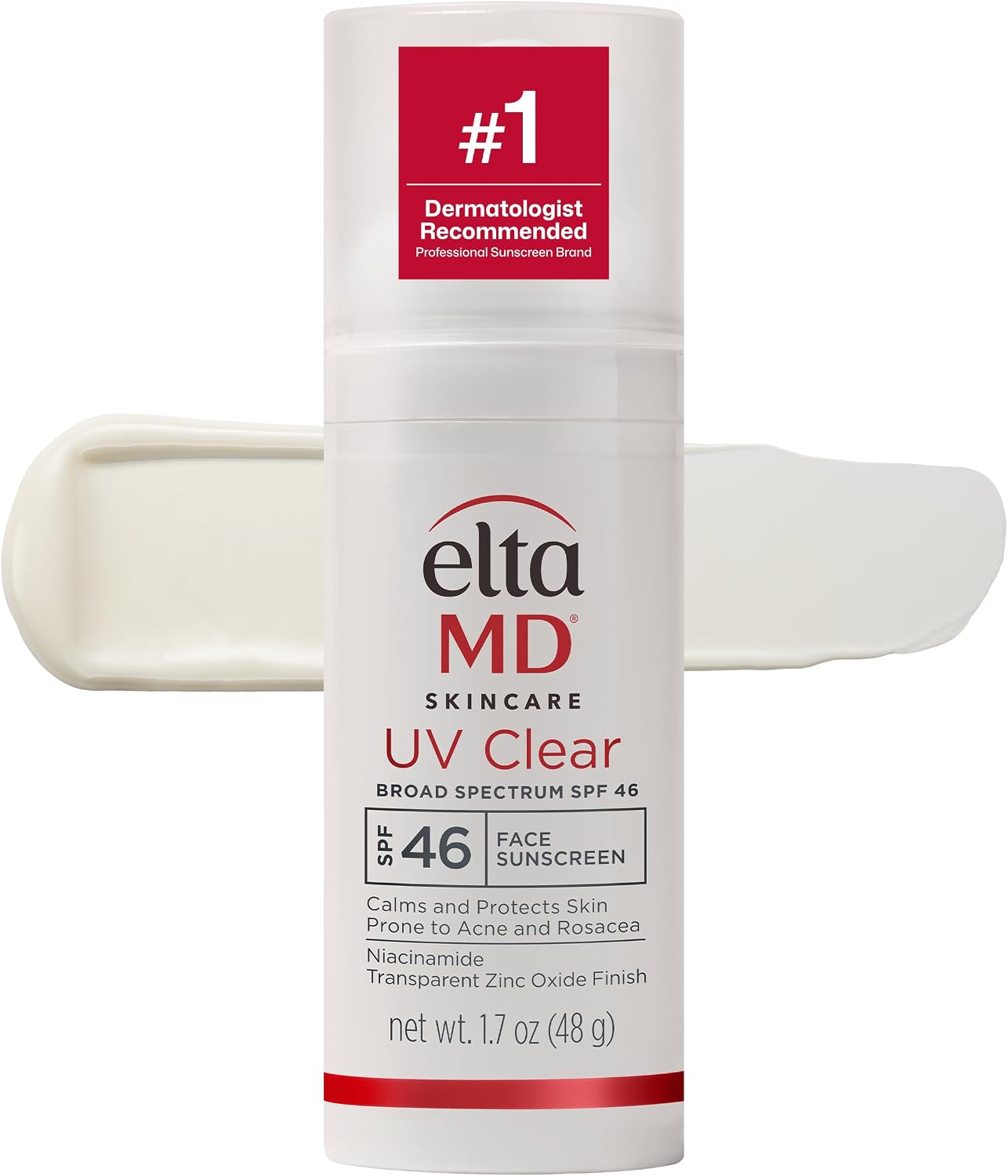
Against EltaMD UV Clear: UV Clear ($36/48g) adds niacinamide for acne-prone skin but has a slightly heavier finish. UV Daily is the better choice if breakouts aren't your primary concern and you prefer a lighter feel.
Against Beauty of Joseon Relief Sun: Relief Sun ($12/50ml) offers comparable wear with a purely chemical filter system at a third of the price. UV Daily wins on the hybrid mineral-chemical filter approach and clinical credibility; Relief Sun wins on value and texture elegance.
Against Supergoop Unseen Sunscreen: Supergoop ($38/50ml) is a pure chemical sunscreen with a silicone-primer finish. UV Daily feels more like skincare and less like a cosmetic product. If you prefer a "skin-like" finish, UV Daily is the better call.
Final Verdict
EltaMD UV Daily SPF 40 is exactly what it claims to be: a lightweight, no-nonsense daily moisturizer with sun protection that's formulated for sensitive skin and backed by clinical credibility. It doesn't break new ground in texture or innovation—the K-beauty market has moved further in terms of wear elegance—but it executes the fundamentals reliably. The hybrid filter system is a pragmatic compromise between mineral purity and cosmetic elegance, and the hyaluronic acid provides just enough hydration for normal-to-combination skin. The price is the real sticking point; at $30–36 for under two ounces, you're paying for the dermatologist-office stamp of approval. If that matters to you, UV Daily delivers. If you're purely optimizing for value, there are equally effective alternatives at a fraction of the cost.