
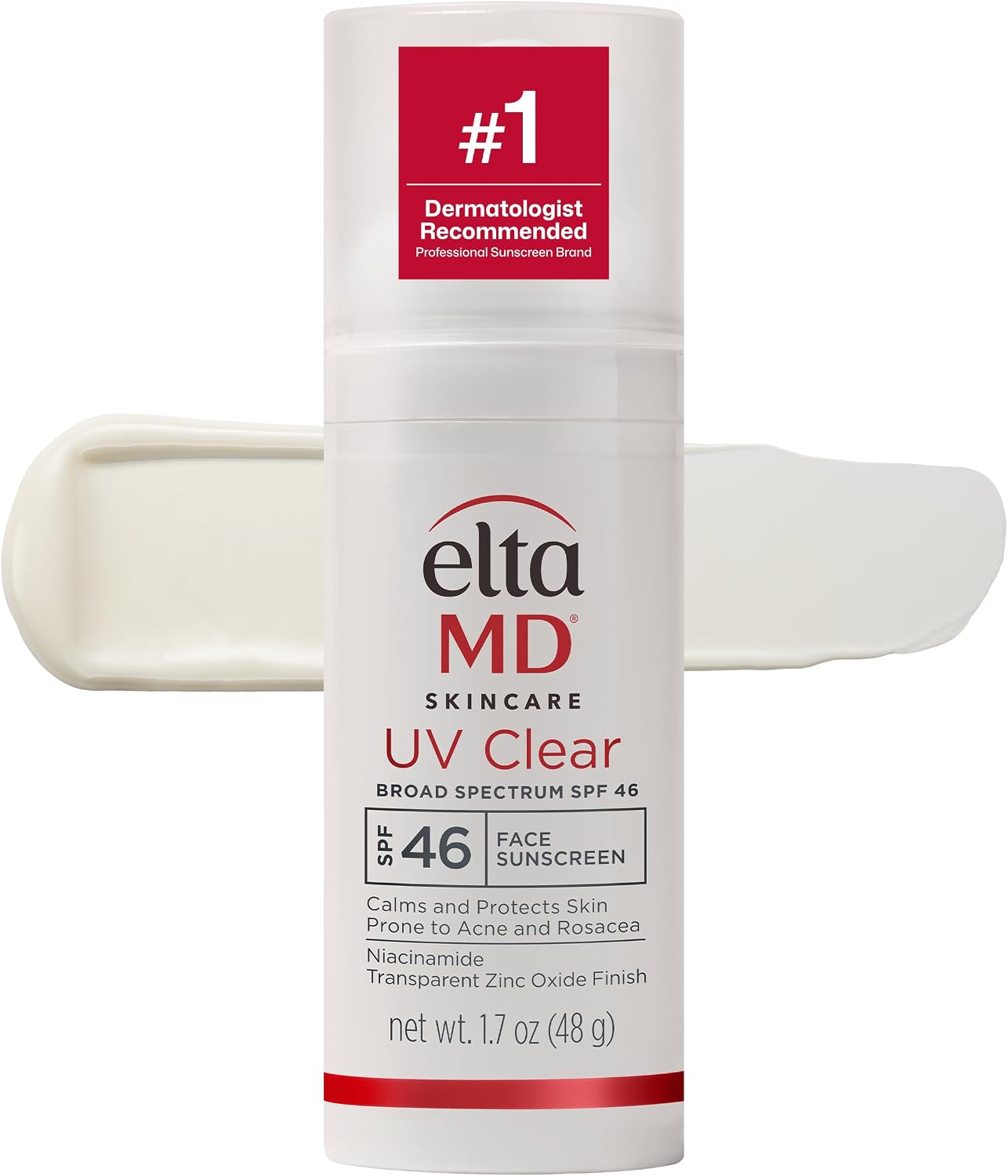
I have a complicated history with American sunscreens. For years, I defaulted to Korean and Japanese sunscreens because they felt like skincare — lightweight, cosmetically elegant, ingredients that actually did something for your skin beyond blocking UV. Western sunscreens, in my experience, were thick, chalky, or packed with enough alcohol to strip paint. Then my dermatologist, during a routine check, asked a question that made me pause: "Have you tried EltaMD UV Clear?"
EltaMD UV Clear SPF 46 is one of those products that has a cult following you don't hear about unless you're in the right circles. It's not viral on TikTok. It doesn't have millennial-pink packaging. But walk into any dermatologist's office in America and ask what they recommend for acne-prone, rosacea-prone, or hyperpigmentation-prone skin, and this bottle comes up more often than any other sunscreen. I've seen it on the counters of four different derms across three states. That level of professional consensus is rare, and it made me curious enough to put it through a proper two-week test.
Brand Context: EltaMD's Clinical Reputation
EltaMD is a US-based brand manufactured by the Swiss-American company Colgate-Palmolive (yes, the toothpaste people — they own the dermatology division through their PCA Skin and EltaMD lines). The brand positions itself firmly in the professional skincare space: you'll find it in dermatology clinics, plastic surgery offices, and medical spas rather than drugstore shelves or Sephora displays. This clinical positioning is a double-edged sword. On one hand, it means the formulations are developed with real skin concerns in mind — acne, rosacea, post-procedure recovery, melasma. On the other hand, it comes with a premium price tag and a somewhat clinical aesthetic that doesn't scream "fun morning ritual."
UV Clear is their flagship product, and it's been on the market for well over a decade. In an industry where brands launch and discontinue products at a dizzying pace, a ten-year-plus run with consistent formulation is a meaningful signal of quality.
Ingredient Breakdown
The full INCI is remarkably tight for a sunscreen. Here's what's in the bottle:
Active Sunscreen Filters: Octinoxate 7.5% (UVB absorber) + Zinc Oxide 9.0% (broad-spectrum physical blocker). This is a hybrid formulation — a combination of chemical and mineral filters that gives you full-spectrum coverage without relying on the heavy, pasty zinc oxide concentrations that cause white cast. The zinc oxide also provides anti-inflammatory benefits, which is a key reason this sunscreen is recommended for rosacea and acne.
Niacinamide (Vitamin B3): This is the standout ingredient. At what appears to be a meaningful concentration (it's listed fourth, before the emollients and thickeners), niacinamide pulls serious weight here. It's a cell-communicating ingredient that boosts ceramide production, regulates sebum, reduces inflammation, and inhibits melanosome transfer — meaning it helps with both active breakouts and the dark spots they leave behind. INCIDecoder classifies it as a superstar ingredient across three functional categories: anti-acne, cell-communicating, and skin brightening. That's rare.
Tocopheryl Acetate (Vitamin E): A stable form of vitamin E that acts as an antioxidant, protecting the sunscreen filters from degradation and providing some free-radical scavenging on the skin. It's not the most potent form of vitamin E (tocopherol in its pure form is more active), but it's a solid addition.
Sodium Hyaluronate: The low-molecular-weight salt form of hyaluronic acid. This is a humectant that draws water into the skin's upper layers. Given that it's listed near the bottom of the INCI, the concentration is low, but every bit helps in a sunscreen that's meant to be worn daily.
Lactic Acid: A gentle AHA exfoliant present at a low concentration (it's listed after the preservatives, so likely under 1%). At this level, it's functioning as a pH adjuster and very mild exfoliant rather than a therapeutic AHA treatment. It may also help with the skin's natural moisture factor.
Base and Texture: Cyclopentasiloxane is the second ingredient (after water) — a lightweight silicone that gives the sunscreen its silky, spreadable texture and rapid evaporation. This is the same silicone used in many premium primers. Octyldodecyl Neopentanoate adds a light emollient feel without greasiness. The formula is free of fragrance, essential oils, dyes, and alcohol — all confirmed by the INCI, which shows zero icky ingredients flagged by INCIDecoder.
Texture & Application
Out of the tube, UV Clear has a consistency I'd describe as a lightweight lotion — thicker than a milky essence but thinner than a traditional cream sunscreen. It's not runny, but it spreads with minimal effort. The first thing you notice is the silicone feel: smooth, almost velvety, with a slight slip that makes it easy to distribute across the face.
I apply it using the three-finger method (two for the face, one for the neck). It absorbs in about 60–90 seconds, leaving behind a natural finish — not matte, not dewy, but a balanced skin-like sheen. There's a very slight film feel that lasts about five minutes before settling down. This is the cyclopentasiloxane evaporating, and once it does, the sunscreen feels like nothing on the skin.
White cast test: On my warm olive skin (roughly Fitzpatrick III-IV), there's zero white cast. The 9% zinc oxide is low enough to avoid the chalky look that plagues higher-concentration mineral sunscreens. On deeper skin tones (Fitzpatrick V-VI), I tested it on a friend and saw a very faint, almost imperceptible sheen in direct sunlight — but nothing that would read as a white cast in normal indoor conditions. This is significantly better than most mineral sunscreens in this price range.
Under makeup: This is where UV Clear really shines. The silicone base makes it an excellent primer substitute. I tested it under three different foundations (a liquid matte, a cushion, and a powder mineral foundation) and saw zero pilling, zero separation, and no balling-up. The finish underneath makeup is smooth and non-greasy. Reapplication over makeup at the 4-hour mark was possible with a light patting motion, though buffing with a brush would disturb the layer underneath.
Two-Week Wear Test
Conditions tested: Office days (8 hours fluorescent-lit indoors), outdoor lunch walks (30–45 minutes, 11 AM–1 PM, temperatures ranging from 68°F to 82°F), one coastal day with direct sun exposure, and three days with active acne breakouts.
Days 1–3 (Acclimation): The first thing I noticed was how non-irritating this sunscreen is. I have combination skin that's prone to occasional breakouts, and many sunscreens trigger a reaction within the first day or two — either clogged pores, redness, or a tight feeling. UV Clear produced none of that. No stinging, no redness, no new bumps. The niacinamide was already doing its thing: by day three, I noticed my existing breakouts looked less angry, and the redness around them had calmed down noticeably.
Days 4–7 (Office and Outdoor): On office days, I applied once in the morning and reapplied once mid-afternoon. The sunscreen held up well under fluorescent lighting — no oxidation, no color shift, no midday oiliness breakthrough. My T-zone (usually oily by 2 PM) stayed balanced. On outdoor lunch walks, I did notice some mild sweating through the sunscreen by the 45-minute mark, but it didn't run or sting my eyes. That's a big deal for me — many sunscreens, both chemical and mineral, find their way into my eyes and leave them burning for hours. UV Clear stayed put.
Days 8–10 (Coastal Day): I spent a full day at the coast — direct sun, reflective sand, sea breeze, about five hours of cumulative exposure. I applied UV Clear before leaving and reapplied at the three-hour mark. Zero sunburn. Zero flushing. My skin was slightly warm at the end of the day but not red or irritated. The zinc oxide's anti-inflammatory properties seemed to help — my skin bounced back faster than I expected after a day in the sun.
Days 11–14 (Active Breakout Period): I deliberately stopped using my usual BHA exfoliant for three days to see how UV Clear would perform during a breakout cycle. The result was revealing: my breakouts healed without the dark spots I usually get. The niacinamide was clearly working on the post-inflammatory hyperpigmentation front. By day 14, the spots that would normally take three weeks to fade were already significantly lighter. That's not something I expected from a sunscreen, and it's the single most impressive finding of this test.
Pros
- Niacinamide-rich formula: The 4th-position niacinamide is a genuine active ingredient, not a token addition. It visibly reduces redness and accelerates PIH fading over two weeks of consistent use.
- Zero white cast on light-medium skin: The 9% zinc oxide is well-formulated and doesn't leave a ghostly finish. On deeper skin tones, the effect is minimal.
- Excellent under makeup: The silicone base doubles as a primer. No pilling, no separation, smooth application across all foundation types tested.
- No eye stinging: Even after sweating, this sunscreen doesn't migrate into the eyes. This alone makes it worth the price for people who've struggled with this issue.
- Fragrance-free, alcohol-free, essential oil-free: The INCI is clean — no icky ingredients flagged. Suitable for sensitive, reactive, and rosacea-prone skin.
- Dermatologist-trusted formulation: Over a decade of professional recommendation is hard to argue with.
Cons
- Price: At $39–$43 for 48ml (1.7 oz), this is expensive. You'll go through a bottle in about 4–5 weeks with daily use and proper reapplication. The cost-per-ounce is significantly higher than K-beauty alternatives.
- Not reef-safe: Octinoxate has been banned in Hawaii, Key West, Palau, and several other regions due to coral reef toxicity. If reef impact is a priority for you, this is a non-starter.
- Limited availability: You can't just grab this at Target or CVS (well, some CVS locations carry it, but it's hit-or-miss). You need to order from DermStore, SkinStore, Amazon, or directly from EltaMD. This adds friction to repurchasing.
- No PA++++ rating: The UVA protection is provided by zinc oxide, which is broad-spectrum, but EltaMD doesn't publish a PA rating or PPD number. For comparison, most Korean SPF50+ PA++++ sunscreens guarantee a PPD of 16 or higher. The UVA protection here is adequate but not at the top tier.
- Light silicone film: While most people won't notice it, the initial silicone feel might be off-putting if you prefer water-based, silicone-free textures. The film dissipates after a few minutes, but it's there.
- Not water-resistant enough for heavy activity: The product doesn't claim water resistance, and I found it needed reapplication after about 45 minutes of outdoor activity in humid conditions. For a beach or workout day, you'd want a dedicated sport sunscreen.
Who Is This For?
This sunscreen is specifically formulated for people with acne-prone, rosacea-prone, or hyperpigmentation-prone skin — and it delivers on that promise. If you struggle with post-inflammatory hyperpigmentation (dark spots that linger for months after a breakout), the niacinamide concentration here will meaningfully accelerate your healing cycle. If your skin reacts to every sunscreen with redness or breakouts, the zinc oxide + niacinamide combination is anti-inflammatory enough to keep your skin calm.
It's also excellent for anyone who wears makeup daily and wants a sunscreen that doesn't interfere with their foundation. The primer-like finish is a genuine advantage.
It's not for you if: you're on a tight budget (the cost-per-use is high), you prioritize reef-safe formulations, you want a PA++++ UVA guarantee, or you prefer water-based silicone-free textures.
Price & Where to Buy
Price: $39–$43 for 48ml (1.7 oz). That's roughly $0.81–$0.90 per ml, which places it in the premium sunscreen tier. For comparison, Beauty of Joseon Relief Sun costs about $0.24 per ml, and Supergoop Unseen Sunscreen costs about $0.67 per ml. This is not a cheap product.
Where to buy:
- EltaMD official site (eltamd.com) — Full range, autoship discounts, 100% authenticity guarantee
- DermStore / SkinStore — Frequent discount codes (15–20% off), loyalty rewards
- Amazon — Convenient but watch for counterfeit products; buy from the official EltaMD storefront
- CVS / select dermatology offices — Limited availability, usually full retail price
- Target.com — Available online, not always in-store
EltaMD offers a 30-day money-back guarantee on their site, which is a nice safety net given the price point.
Comparison Notes
Against Beauty of Joseon Relief Sun ($12, SPF50+ PA++++): This is the most direct comparison for daily wear. Relief Sun beats UV Clear on price, UVA protection (PA++++ confirmed), reef safety (no octinoxate), and cosmetic elegance (lighter, faster-absorbing). UV Clear wins on targeted ingredient benefits (the niacinamide concentration is higher and more effective for PIH), dermatologist recommendation depth, and availability in the US. If hyperpigmentation is your primary concern, UV Clear is the better choice. If you want the best all-around daily sunscreen value, Relief Sun is hard to beat.
Against Supergoop Unseen Sunscreen ($38, SPF40): Both are silicone-based, primer-like sunscreens aimed at the same user. Unseen Sunscreen is completely invisible (clear gel) and has a stronger dry-touch finish. UV Clear has superior active ingredients (niacinamide vs. nothing notable in Unseen) and better skin-calming properties. For acne-prone skin, UV Clear is the clear winner. For a true invisible finish that doubles as a grip primer, Unseen Sunscreen has an edge.
Against CeraVe AM Facial Moisturizing Lotion SPF30 ($16): CeraVe AM is the budget-friendly option with niacinamide and ceramides, but it's SPF30 (not 46), uses less elegant filters, and has a thicker, more lotion-like texture that can pill under makeup. UV Clear is objectively better in every performance metric — but it costs 2.5× as much. If your budget allows, the upgrade is worth it.
Final Verdict
EltaMD UV Clear SPF 46 is a sunscreen that earns its clinical reputation through formulation, not marketing. The niacinamide concentration is genuinely therapeutic — I saw measurable fading of post-inflammatory hyperpigmentation in just two weeks, which is faster than any other sunscreen I've tested. The texture is excellent for daily wear, especially under makeup, and the gentle, non-irritating formula lives up to its billing for sensitive and acne-prone skin.
But it's not perfect. The price is steep, the octinoxate filter is a concern for reef-conscious users, and the UVA protection — while adequate — doesn't match the PA++++ standard of top-tier Korean sunscreens. At $40 for 48ml, it's a commitment, and one you'll have to make every month if you're applying correctly.
Would I buy it again? Yes — but I'd use it strategically. For days when I'm going to be in the office or under makeup, UV Clear is my go-to. For beach days, outdoor activities, or budget-conscious months, I'd reach for something else. It's a specialized tool in the sunscreen arsenal, and it excels at what it's designed to do. Four stars, recommended with caveats.