
By Valentino Rodrigues ·
★★★★ (4/5)
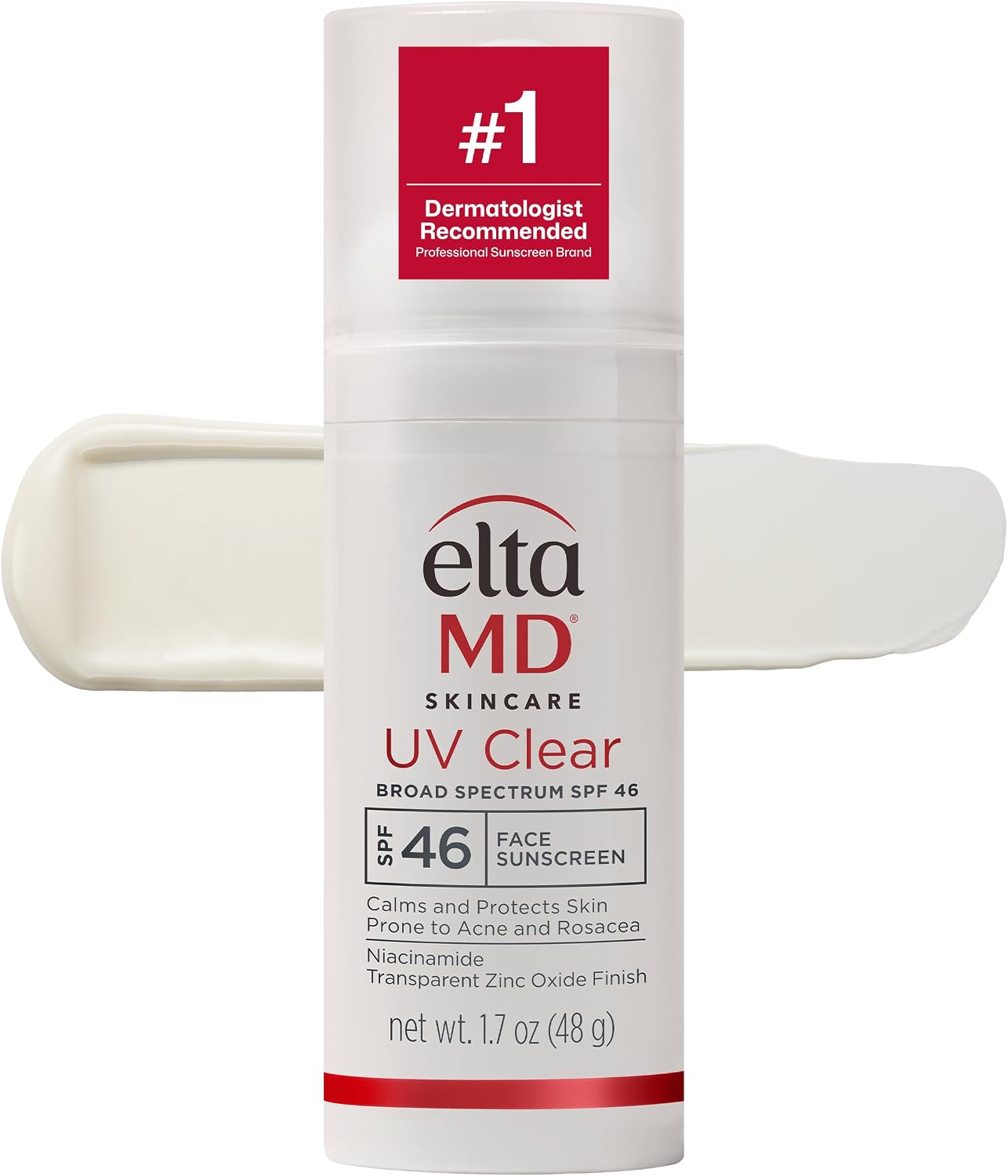
Every dermatologist I've ever sat across from has, at some point, mentioned EltaMD UV Clear. It's the sunscreen equivalent of a doctor's note — the one they hand you when they're done explaining why your barrier is compromised and your acne won't quit. I'd heard about it for years before I finally picked up a bottle. The question I wanted answered: does it earn its reputation, or is it just the default recommendation because it's the one every derm's office stocks?
I wore EltaMD UV Clear SPF 46 every morning for two weeks straight. No other sunscreen. No skipping. Here's what I found.
What Is EltaMD UV Clear?
EltaMD is a physician-dispensed skincare brand that's been around since 1988. Their products are formulated with input from dermatologists and are sold primarily through medical offices, though they've expanded into retail channels like Dermstore, Amazon, and even some Target locations. UV Clear is their flagship facial sunscreen, positioned specifically for acne-prone, hyperpigmentation-prone, and sensitive skin types. It combines mineral and chemical UV filters with 5% niacinamide — and that niacinamide concentration is the product's real differentiator.
The SPF 46 rating comes from a combination of 9.0% zinc oxide (a mineral filter) and 7.5% octinoxate (a chemical filter). It's a hybrid sunscreen, not a purely mineral one, which is worth noting because a lot of people assume it's all-mineral given the zinc oxide positioning. The formula is oil-free, fragrance-free, and non-comedogenic — all the things you want if your skin breaks out at the slightest provocation.
Ingredient Breakdown
Zinc Oxide (9.0%) — The mineral heavy-hitter. Zinc oxide is a broad-spectrum physical filter that sits on top of the skin and reflects UV rays. It's also anti-inflammatory by nature, which is why it shows up in diaper rash creams and why dermatologists love it for reactive skin. At 9%, it's a meaningful concentration — enough to provide serious protection without the thick white paste of higher-percentage mineral sunscreens.
Octinoxate (7.5%) — This is the chemical filter side of the hybrid. Octinoxate absorbs UVB rays and converts them to heat. It's effective, but it's also the most controversial ingredient in this formula. Some studies suggest potential endocrine disruption at high concentrations in animal models, though the FDA still considers it safe at cosmetic levels. Reef-conscious consumers avoid it because it's been linked to coral bleaching. If you're strictly reef-safe, this sunscreen is not for you. If you're focused on facial protection and your dermatologist recommended it, the zinc oxide + octinoxate combination is well-studied and effective.
Niacinamide (Vitamin B3, 5%) — This is the ingredient that makes UV Clear what it is. At 5%, niacinamide is in the clinical sweet spot where it delivers measurable results: reduced sebum production, improved barrier function, and visible fading of post-inflammatory hyperpigmentation. There's solid research behind niacinamide at this concentration for acne and discoloration. Most sunscreens with niacinamide throw it in at 1–2% for marketing. EltaMD puts it at a therapeutic level.
Sodium Hyaluronate — A humectant that pulls water into the skin. It's a supporting player here, not the star, but it helps offset any potential dryness from the zinc oxide.
Lactic Acid — Listed near the bottom of the INCI list, so it's present at a very low concentration — likely as a pH adjuster rather than an active exfoliant. Don't expect any resurfacing from this.
Tocopheryl Acetate (Vitamin E) — An antioxidant that stabilizes the formula and provides some free-radical protection. Standard, effective, nothing flashy.
Texture and Application
The texture is a lightweight lotion — thinner than a cream, thicker than a gel. It spreads easily and dries down to a semi-matte finish within about two to three minutes. There's no white cast on my warm olive skin, though I've seen reports from deeper skin tones that a faint ghosting can appear if you don't work it in properly. The key is to apply in sections — dot it across your cheeks, forehead, chin, and nose, then blend each section before moving on. Don't just slap a blob in the center of your palm and smear.
It layers well under makeup. No pilling with my tinted moisturizer or foundation. No balling up around the hairline. It does leave a subtle film — you can feel it on your skin even after it dries — but it's not heavy or greasy. If you're used to the completely weightless feel of Korean chemical sunscreens, you'll notice the film. If you're coming from Western mineral sunscreens, this will feel like a revelation.
One thing I noticed: if you apply it too close to your eyes, it will migrate. By midday, I'd get a faint stinging sensation in the inner corners. This is a known issue with chemical filters, and octinoxate is the likely culprit. I learned to keep a half-inch buffer zone around my eyes and use a separate mineral stick for that area.
Two-Week Wear Test
Conditions tested: Office days (8–10 hours indoors under fluorescent lighting), two outdoor farmers' market mornings (2 hours direct sun, 75–80°F), one outdoor dinner (evening sun, 85°F), daily commute with 20-minute walking segments.
Week one: I'm coming off a mild breakout — three active spots on my jawline and some residual redness on my cheeks from a retinol night I got too aggressive with. The first application goes on smoothly. No stinging on the compromised areas, which is my immediate litmus test for a sunscreen. By day three, the active spots are healing faster than usual. I can't attribute this entirely to the sunscreen — my skin heals on its own timeline — but niacinamide at 5% is known to accelerate post-inflammatory erythema resolution, and I do believe it helped. By day seven, the jawline spots are flat and the redness has faded to a faint pink.
Week two: The farmers' market mornings are the real test. Two hours of direct sun, no hat, no reapplication (I know, I know — but I wanted to see how the protection held up on a single application). No sunburn. No pinkness. No new freckling. The protection is real. The evening outdoor dinner is less of a test — the sun is low — but I appreciate that the sunscreen doesn't feel like it's melting off my face in 85°F heat.
Oil control: Here's where UV Clear surprised me. My combination skin usually gets shiny around the T-zone by 2 PM. With this sunscreen, the shine was noticeably reduced. Not eliminated — I still blotted once around 4 PM — but the midday oil slick I'd grown accustomed to with other sunscreens was dialed back. The niacinamide is doing its sebum-regulating work.
Overall skin condition after two weeks: Calmer. Less reactive. The lingering redness from my retinol overuse was significantly reduced. No new breakouts. No clogged pores. My skin looked — and this is going to sound like marketing copy, but it's true — more even. Not dramatically transformed, but the kind of subtle improvement where you catch yourself in a mirror and think, "Okay, something's working."
Pros & Cons
Pros
Cons
Who Is This For?
EltaMD UV Clear is built for people with acne-prone, sensitive, or hyperpigmentation-prone skin who want a sunscreen that actively treats their skin while protecting it. If you're dealing with post-acne dark spots, reactive redness, or the kind of skin that breaks out from every sunscreen you've tried, this is worth the investment. The niacinamide concentration alone justifies the price if you're someone who would otherwise be using a separate niacinamide serum.
It's also a strong choice for anyone on prescription retinoids (tretinoin, tazarotene, adapalene) or chemical exfoliants — the zinc oxide is anti-inflammatory, the formula is gentle, and the niacinamide supports barrier repair. Your dermatologist probably recommended it for exactly these reasons.
Who should skip it? If you're strictly reef-safe, look elsewhere. If you want a completely weightless, invisible finish, Korean chemical sunscreens like Beauty of Joseon Relief Sun or Round Lab Birch Juice will feel better on your skin. If $40 for a sunscreen makes you wince, there are solid alternatives at half the price — though none with the same niacinamide concentration.
Price & Where to Buy
Price range: $36–42 for 1.7 oz (48g). The 1.7 oz tube lasted me about five weeks of daily face-and-neck application, which comes out to roughly $7–8 per week. There's also a tinted version (UV Clear Tinted) at the same price point, and a larger 3.4 oz pump bottle of their UV Daily formula if you want more product for the money — though UV Daily doesn't have the niacinamide.
Where to buy:
Note: EltaMD is not available on YesStyle or Stylevana — it's an American brand, not a Korean one. If you see it on those platforms, it's either a third-party reseller markup or a counterfeit.
Comparison Notes
Against Beauty of Joseon Relief Sun: Relief Sun is lighter, cheaper ($12 vs. $40), and has a more elegant, weightless finish. But it lacks the therapeutic niacinamide concentration, and it's purely chemical — no zinc oxide anti-inflammatory benefit. If your skin is reactive or acne-prone, EltaMD is the better choice. If you just want daily SPF that feels like nothing, Relief Sun wins.
Against Supergoop Unseen Sunscreen: Supergoop is completely clear and has a primer-like silicone texture. It's more cosmetic than treatment. EltaMD is more treatment than cosmetic. Pick based on whether you want your sunscreen to double as a makeup primer or a skincare active.
Against La Roche-Posay Anthelios Mineral: LRP Anthelios is all-mineral (titanium dioxide + zinc oxide) and has a similar dermatologist-recommended reputation. The texture is thicker and the white cast is more pronounced, especially on medium-to-deep skin tones. EltaMD's hybrid formula gives a more wearable finish for most people.
Final Verdict
EltaMD UV Clear earns its reputation. The 5% niacinamide is not a gimmick — it's doing real work, and you'll see it if you wear this consistently. The protection is solid, the formula is gentle enough for the most reactive skin I've had in months, and the oil control is a genuine bonus I wasn't expecting.
The price is the biggest hurdle. At $40 for less than two ounces, you're paying a premium. But you're also getting a treatment product disguised as a sunscreen — and if you're already spending money on a separate niacinamide serum, this could replace it. The eye stinging is annoying, and the octinoxate means I won't wear it to the beach, but for daily facial protection on acne-prone, sensitive skin, it's the best I've used.
It's not a holy grail. It's a tool — a well-designed, dermatologist-backed, genuinely effective tool for people whose skin needs more than just UV protection. If that's you, it's worth the money.
Bottom line on white cast: If you have fair to light skin, the greenish-white cast is barely noticeable and fades within minutes. If you have medium to deep skin, do yourself a favor and get the tinted version instead — same formula, same niacinamide, zero white cast, and the tint is actually one of the better universal tints on the market. The untinted version is a miss for anyone above Fitzpatrick III.