
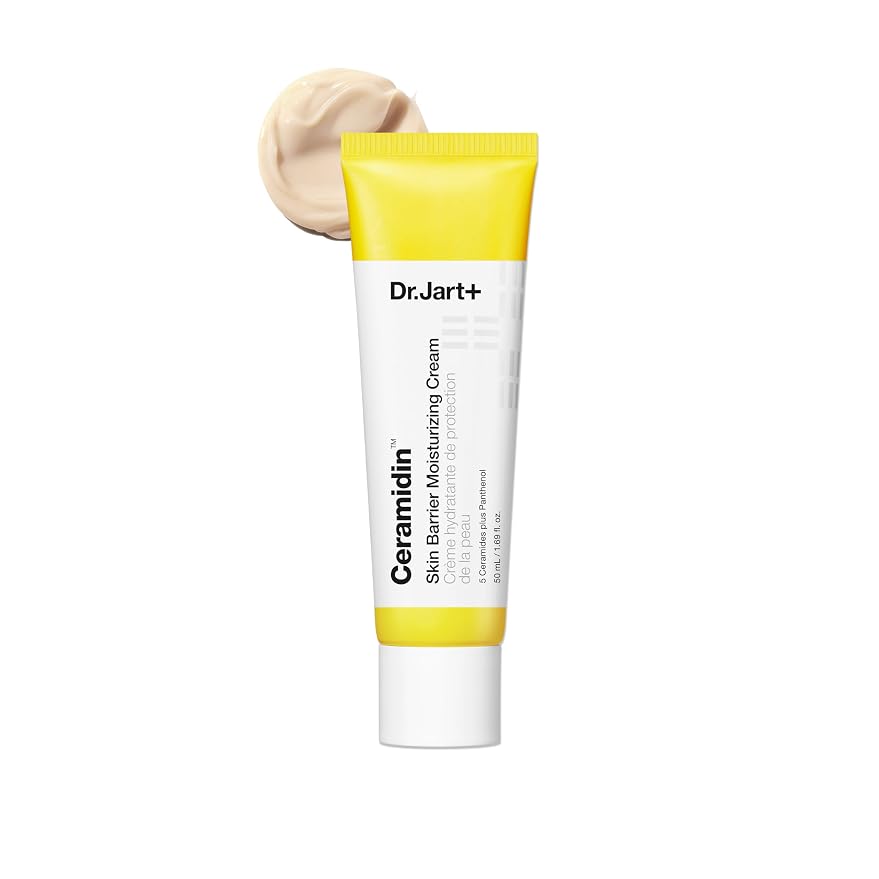
I went into this review with high expectations. Dr. Jart+ is one of K-beauty's most respected brands — their Cicapair line is legendary for sensitive skin, and their Ceramidin range is a barrier-repair staple. So when they released a mineral sunscreen, I figured it would be the elegant, skin-friendly option that mineral sunscreen skeptics have been waiting for. Half right. The formulation is genuinely impressive in some ways, but there's a glaring contradiction buried in the ingredient list that keeps this from being a top pick.
Brand Context: Dr. Jart+ and the Mineral Gap
Dr. Jart+ has always positioned itself at the intersection of dermatology and K-beauty innovation. The brand name literally references "Doctor Jart" — a dermatologist-founded label that leans clinical. Their Cicapair line (centella-focused, for redness and repair) and Ceramidin line (ceramide-focused, for barrier health) are both designed for compromised skin. A mineral sunscreen fits perfectly into this philosophy: physical filters that don't irritate, sitting on the skin's surface rather than being absorbed into it.
The "Every Sunday" naming is interesting — it suggests a weekend ritual, a self-care moment. But SPF 50+ mineral protection should be an every-day product, not a once-a-week treat. The branding undersells the utility here. This is a daily sunscreen, full stop.
The Ingredient List: Dual Mineral Filters and a Problem
Zinc Oxide + Titanium Dioxide: This is the gold standard for mineral sunscreen. Unlike products that rely on titanium dioxide alone (which has weaker long-UVA coverage), Dr. Jart+ uses both filters. Zinc oxide covers the full UVA range (320-400nm) plus UVB, while titanium dioxide handles UVB and short UVA (320-340nm) exceptionally well. Together, they provide genuinely broad-spectrum protection without the gaps you'd get from a single-filter mineral formula.
Butyloctyl Salicylate: This is an SPF booster — not a UV filter itself, but it helps dissolve and stabilize the mineral particles, improving their dispersion and therefore their protective efficiency. It's a smart formulation choice that lets the product hit SPF 50+ without needing an impractically high concentration of zinc and titanium.
Cyclopentasiloxane + Caprylyl Methicone: The silicone base. These volatile silicones evaporate after application, leaving the mineral filters evenly distributed without a heavy, greasy feel. They're the reason mineral sunscreens can now feel lightweight instead of paste-like. Cyclopentasiloxane is the primary spreading agent; caprylyl methicone adds a silky after-feel.
Methyl Methacrylate Crosspolymer: This is the matte-maker. It's a porous polymer sphere that absorbs excess oil and reduces the shiny, greasy look that plagues many mineral sunscreens. It's the same ingredient found in mattifying primers. In a sunscreen, it's doing double duty: keeping the formula from looking slick while also improving the texture on skin.
Aluminum Hydroxide + Triethoxycaprylylsilane: These are coatings applied to the mineral particles themselves. Uncoated zinc and titanium are more reactive and more likely to clump, which creates uneven coverage and a worse white cast. The aluminum hydroxide coating stabilizes the particles; the silane coating improves their dispersion in the silicone base. Together, they make the mineral filters more elegant and more effective.
Propanediol + Butylene Glycol Dicaprylate/Dicaprate: Humectant and emollient. Propanediol draws moisture into the skin (a lighter, less sticky alternative to glycerin); the caprylate blend provides slip without greasiness. These keep the formula from feeling drying — a common problem with mineral sunscreens that rely heavily on absorbent powders.
Tocopherol (Vitamin E): Antioxidant protection. UV filters block most but not all oxidative stress; vitamin E neutralizes the free radicals that slip through. It's a small but meaningful addition that provides a secondary layer of photo-protection.
The Problem — Three Citrus Essential Oils: Here's where the formula stumbles badly. Citrus Aurantium Dulcis (Orange) Oil, Citrus Nobilis (Mandarin Orange) Peel Oil, and Litsea Cubeba Fruit Oil are all present in this sunscreen. Citrus essential oils contain limonene and other terpenes that are known skin irritants and photosensitizers — meaning they can actually increase sun sensitivity, the exact opposite of what a sunscreen should do. They're also common allergens, particularly for people with compromised skin barriers.
This is a fundamental contradiction. Mineral sunscreens are typically recommended for sensitive skin precisely because they avoid irritating ingredients. Adding three citrus essential oils to a mineral sunscreen undermines the entire premise. If you have reactive skin, rosacea, or a damaged barrier — the exact skin types that should be reaching for mineral SPF — these essential oils are a problem.
Texture & Application: The Good News
The texture is where Dr. Jart+ earns points. This is a fluid, lightweight lotion that pours easily and spreads with minimal effort. The silicone base gives it a silky slip — it glides on without the dragging or tugging you get from thicker mineral pastes. The methyl methacrylate crosspolymer kicks in as it dries, leaving a soft matte finish that doesn't look flat or powdery.
White cast: Moderate. On my warm olive skin, there's a visible white cast immediately after application that fades to a slight ashy tone over 2-3 minutes. It's better than most Western mineral sunscreens but noticeably worse than Korean chemical sunscreens or the best hybrid options. The aluminum hydroxide and silane coatings help, but they can't fully eliminate the inherent whiteness of zinc and titanium at SPF 50+ concentrations. On deeper skin tones, the cast would be more problematic.
Finish: Soft matte. Not completely flat — there's a subtle naturalness to it, not a chalky deadness. The methyl methacrylate crosspolymer does excellent oil control. By hour 3-4, my T-zone was still matte, which is unusual for me. Most sunscreens (mineral or chemical) start breaking down into shine by then.
Two-Week Wear Test: Real Conditions
Conditions tested: Office days (8 hours indoor, air-conditioned), outdoor commutes (15-20 minutes direct sun each way), one outdoor errand day (2+ hours continuous exposure with reapplication), one post-exfoliation day (mild barrier compromise from AHA use).
Indoor days: The matte finish held beautifully. No midday shine, no greasy breakdown. Under makeup, it performed well as a base — no pilling with my usual primer and foundation, though the slight white cast did alter the appearance of my foundation shade slightly (made it look a touch lighter). The oil control was genuinely impressive; I didn't need blotting papers until hour 6-7, which is better than most sunscreens I've tested.
Outdoor exposure: During commutes, no burning or redness. On the errand day with 2+ hours of sun, I applied generously and reappplied once at the 90-minute mark. No sunburn, no flushing. The water resistance was moderate — light sweating was fine, but heavy sweating (I was walking briskly) caused some breakdown around the nose and hairline after about 45 minutes. Reapplication was straightforward; it layers over itself without turning cakey or pill-y.
Sensitive skin performance: This is where the citrus oils showed their impact. On my post-exfoliation day (skin was slightly sensitive, mild tingling from the AHA the night before), this sunscreen caused noticeable stinging for the first 2-3 minutes after application. It wasn't unbearable, but it was present — and it's the exact reaction that mineral sunscreens are supposed to avoid. On normal days, no stinging. But on compromised skin days, the essential oils were irritating.
Eye area: Mild stinging if it migrated too close to the eyes. Not as bad as some chemical sunscreens, but not the zero-irritation performance of a truly minimal mineral formula. The citrus oils are volatile and can travel; keep this away from the immediate eye area.
Pros
- Dual mineral filters: Zinc oxide + titanium dioxide provides genuinely broad-spectrum UVA/UVB coverage without the gaps of single-filter mineral formulas
- Lightweight texture: Silicone base makes it spread easily; doesn't feel heavy or paste-like
- Excellent oil control: Methyl methacrylate crosspolymer keeps skin matte for 5-6 hours; unusual for a sunscreen
- SPF 50+ protection: Butyloctyl salicylate booster helps achieve high SPF without excessive mineral concentration
- Particle coatings: Aluminum hydroxide and silane coatings improve dispersion and reduce (but don't eliminate) white cast
- Antioxidant support: Tocopherol provides secondary photo-protection against free radicals
- Good makeup base: Matte finish works well under foundation; no pilling
Cons
- Three citrus essential oils: Orange, mandarin, and litsea cubeba oils are irritants and photosensitizers — a serious problem in a product designed for sensitive skin
- Moderate white cast: Visible on medium skin tones immediately after application; fades but doesn't disappear
- Not ideal for compromised skin: The exact skin types that should use mineral SPF (reactive, rosacea, post-procedure) will be irritated by the essential oils
- Eye area stinging: Citrus oils are volatile and can cause mild eye irritation if product migrates
- Price: Around ₩30,000-35,000 in Korea ($25-30 USD), which is premium for a sunscreen with irritants
- Contradicts mineral sunscreen philosophy: Mineral SPF is supposed to be the gentle option; this undermines that with fragrance irritants
Who Is This For?
Ideal for: Normal-to-oily skin that wants matte sun protection, people who don't have sensitive skin or a compromised barrier but prefer mineral filters for environmental or personal reasons, those who want oil control from their sunscreen, anyone who doesn't react to citrus essential oils.
Less ideal for: Sensitive skin, rosacea, post-procedure skin (laser, microneedling, chemical peels), anyone with a damaged skin barrier, citrus allergy sufferers, very deep skin tones (white cast is moderate), those seeking a truly gentle mineral option for reactive skin.
Price & Where to Buy
Dr. Jart+ Every Sunday Mineral Sunscreen SPF 50+ retails for approximately ₩30,000-35,000 in Korea (Olive Young, brand website). International pricing is around $25-30 USD for 50ml. Available at:
- Olive Young (in-store and online, Korea)
- Olive Young Global (international shipping)
- YesStyle
- Stylevana
- Dr. Jart+ official website (select markets)
- Amazon (third-party sellers; verify authenticity)
Price per ml is roughly ₩600-700, which is comparable to other premium K-beauty sunscreens but higher than drugstore mineral options. Given the essential oil content, the value proposition is questionable for the target audience.
Comparison Notes
Against Avene Mineral Sunscreen SPF 50+: Avene uses titanium dioxide only (weaker UVA1 coverage) but is fragrance-free and formulated specifically for reactive skin. Dr. Jart+ has better broad-spectrum coverage (dual filters) but the citrus oils make it less suitable for sensitive skin. Avene wins for reactive skin; Dr. Jart+ wins for oil control and texture on normal skin.
Against Beauty of Joseon Relief Sun (chemical SPF 50+): Beauty of Joseon is a chemical sunscreen with zero white cast, a lightweight serum texture, and no essential oils. It's dramatically more elegant cosmetically and better suited for daily wear under makeup. But it contains chemical filters that can irritate sensitive skin. Dr. Jart+ is the trade-off: mineral protection with a white cast and irritants, in exchange for physical filters that some people prefer or require.
Against Isntree Hyaluronic Acid Watery Sun Gel (chemical SPF 50+): Isntree is another chemical option with a hydrating, invisible finish. No white cast, no essential oils, and a lower price point. For most people without mineral filter requirements, Isntree is the better daily option. Dr. Jart+ only makes sense if you specifically need or want mineral filters and don't react to citrus oils.
Final Verdict
Dr. Jart+ Every Sunday Mineral Sunscreen SPF 50+ is a frustrating product. The formulation is technically impressive — dual mineral filters for broad-spectrum coverage, silicone base for elegant texture, methyl methacrylate for exceptional oil control, particle coatings to reduce white cast. On paper, it's everything a mineral sunscreen should be. But the addition of three citrus essential oils undermines the entire premise of a mineral sunscreen for sensitive skin.
If you have normal-to-oily skin that isn't reactive, and you prefer mineral filters for personal or environmental reasons, this is a solid option. The matte finish and oil control are genuinely excellent, and the dual-filter protection is robust. But if you're reaching for mineral sunscreen because your skin is sensitive, compromised, or reactive — the exact use case mineral SPF is designed for — the citrus oils make this a poor choice. There are better options (Avene, Vanicream, EltaMD) that deliver mineral protection without the irritants.
The texture and oil control earn this product points, but the formulation contradiction keeps it from being a top recommendation. It's a 3.5-star product: technically capable, cosmetically elegant in some ways, but fundamentally at odds with its own purpose.
Rating: ★★★☆ (3.5/5) — Good mineral protection and excellent oil control, but the citrus essential oils are a serious misstep for a product targeting sensitive skin.