
I remember the first time I held a bottle of snail mucin. A friend had handed me the COSRX pump bottle with a look that said "just trust me," and I stared at the words "Snail Secretion Filtrate" on the label like they'd been printed in a foreign language. That was three years ago. Since then, I've gone through four bottles of this essence, recommended it to at least a dozen people, and watched it transform from a niche K-beauty curiosity into a product that now sits on the shelves of mainstream American retailers. If there is a single product that put snail mucin on the Western skincare map, this is it.
But the real question — the one I get asked constantly — is whether it actually does anything. Does snail mucin deserve its reputation, or is the COSRX essence just a well-marketed bottle of slime? I put my current bottle through a disciplined two-week wear test to answer that question with fresh eyes, not nostalgia.
Brand & Product Context
COSRX is one of those rare brands that built its reputation almost entirely through word of mouth. Founded in 2013 in South Korea, the name stands for "Cosmetics + RX (prescription)" — a philosophy that positions skincare as functional, targeted, and ingredient-driven rather than luxury-driven. They don't do elaborate packaging. They don't run celebrity campaigns. What they do is formulate products with high concentrations of single hero ingredients, stripped of fragrance, essential oils, and unnecessary filler. The Advanced Snail 96 Mucin Power Essence is the flagship of that philosophy. It launched in 2015 and has been a bestseller ever since.
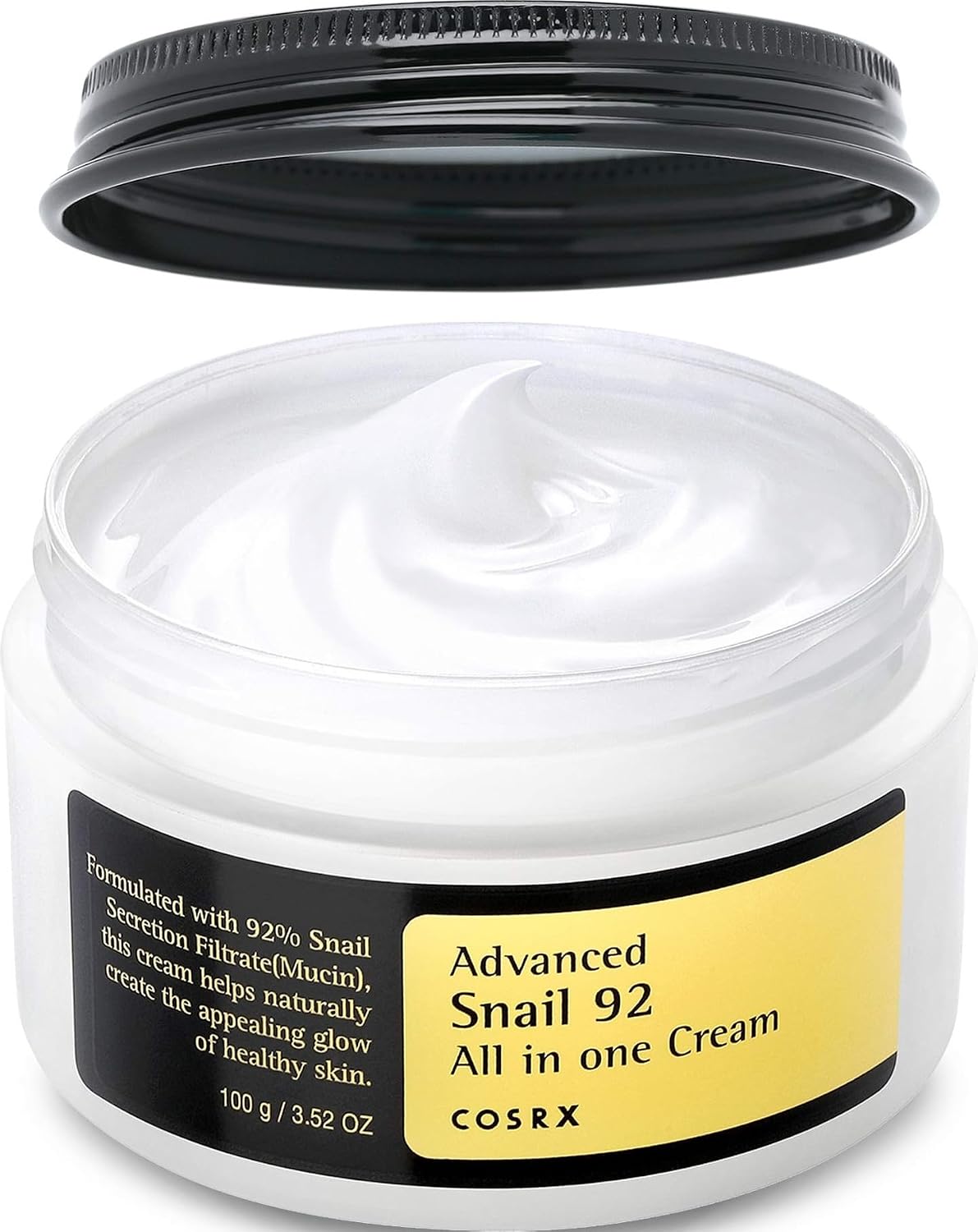
A quick word on the naming: COSRX also makes the Advanced Snail 92 All in One Cream, which is a moisturizer with 92% snail mucin. The 96 Essence is a lighter, more hydration-focused step meant to be applied before moisturizer. If you see both numbers floating around, that's the difference — the 96 is the essence, the 92 is the cream. I'm reviewing the essence here.
The Ingredient Breakdown
The formula is refreshingly short at just 12 ingredients. Here's the full INCI list, in order:
Snail Secretion Filtrate (96%) — The star. Snail mucin is a complex mixture of naturally occurring compounds: hyaluronic acid, glycoproteins, glycolic acid, copper peptides, antimicrobial peptides, and zinc. Functionally, it's a humectant (draws water into the skin), a wound-healing signaler, and a mild exfoliant all in one. The 96% claim is marketing-friendly — the filtrate itself is mostly water, so the "active" dry-weight concentration of those beneficial compounds is lower than 96% suggests. That said, it's still a genuinely high concentration compared to most snail products on the market, which typically hover between 60–80%.
Betaine — A humectant derived from sugar beets. It works differently from hyaluronic acid: instead of binding water directly, it helps skin cells regulate their internal water balance (osmotic protection). Think of it as teaching your skin to hold onto water better, rather than just dumping water on top of it. It's also mildly anti-inflammatory.
Butylene Glycol — A lightweight slip agent and humectant. It improves spreadability and helps the active ingredients penetrate. Occasionally flagged as a potential irritant in very high concentrations, but in this formula it's well-tolerated by most people.
1,2-Hexanediol — A multi-functional ingredient that acts as both a solvent and a preservative booster. It helps keep the formula stable without needing a heavy preservative load.
Sodium Polyacrylate — A thickening agent that gives the essence its characteristic gel-like body. Without it, the snail filtrate would be too watery to apply easily.
Phenoxyethanol — A broad-spectrum preservative. Used at very low concentrations (typically under 1%) and well-tolerated by most people, though it can sting on severely compromised barriers.
Sodium Hyaluronate — The salt form of hyaluronic acid. It has a smaller molecular weight than standard HA, meaning it penetrates slightly deeper. It can hold up to 1,000 times its weight in water. In this formula, it works synergistically with the snail mucin's own HA content to deliver a one-two hydration punch.
Allantoin — A soothing agent derived from the comfrey plant. It's been used in wound care for decades because it promotes cell proliferation and calms inflammation. At the concentrations used here, it's a gentle, reliable soother — exactly what you want in a product marketed for sensitive and compromised skin.
Ethyl Hexanediol — Another solvent and mild preservative booster. Nothing particularly exciting, but it helps the formula stay stable.
Carbomer — A gel-forming polymer that works with the sodium polyacrylate to give the essence its texture. It also helps suspend the ingredients evenly so you don't get separation in the bottle.
Panthenol (Vitamin B5) — One of my favorite ingredients in skincare. Panthenol converts to pantothenic acid in the skin, which is essential for barrier function and wound healing. It's deeply hydrating and anti-inflammatory. I'm always happy to see it in a formula, and its presence here elevates the snail mucin's repair capabilities.
Arginine — An amino acid that's naturally present in skin. It functions as a humectant and has been shown to support wound healing. It's also the reason this formula has a slightly higher pH than some other essences — arginine is alkaline, which helps balance the mildly acidic snail filtrate.
What's not in this formula is equally important: no fragrance, no essential oils, no denatured alcohol, no silicones, no dyes. This is a product designed for people whose skin reacts to everything, and the ingredient list reflects that restraint.
Texture & Application Experience
Let's not dance around it: this is snail slime, and it feels like snail slime. When you pump it into your palm, it comes out as a translucent, slightly viscous gel. The moment you touch it, it starts to stretch — pull your fingers apart and thin strings of mucin bridge the gap. It's not unpleasant, but it's unmistakably biological. If you have texture sensitivities, you need to know this going in.
On the face, it spreads easily. I use two pumps for my entire face and neck, applied immediately after cleansing while the skin is still slightly damp. The initial sensation is cool and slick — almost like applying aloe gel, but with more slip. For the first two to three minutes, there's a noticeable tackiness. Your skin will feel slightly sticky to the touch, and if you try to layer anything over it too quickly, you'll get pilling. I've learned to wait. After about three to five minutes, the tackiness settles into a soft, dewy finish that isn't sticky or greasy — just present. It's the kind of finish that makes people ask if you're wearing highlighter when you're not.
One thing I've noticed across multiple bottles: the texture can vary slightly between batches. Some bottles are thicker and more stringy; others are thinner and more watery. This is likely due to natural variation in the snail filtrate itself — it's a biological ingredient, not a synthetic one. None of the variations have affected performance in my experience, but it's worth knowing if you open a new bottle and it doesn't match your memory of the last one.
Two-Week Wear Test
Skin context: I'm combination-oily with a tendency toward dehydration. My T-zone produces oil by midday, but my cheeks and forehead can feel tight and papery after cleansing. I also have mild redness around my nose and some post-inflammatory hyperpigmentation from old breakouts along my jawline. During the test period, I used no other new products and kept my routine otherwise consistent: gentle cleanser, this essence, a lightweight moisturizer, and SPF during the day.
Days 1–3: The first thing I noticed was how my skin felt after cleansing. Normally, there's a window of about 90 seconds after washing my face where I need to get moisturizer on or the tightness sets in. With the snail essence applied immediately after cleansing, that window disappeared entirely. My skin felt comfortable and quenched before I even reached for moisturizer. By day 3, I noticed my forehead looked smoother in the mirror — not dramatically different, but the fine dehydration lines that usually crease horizontally across my forehead were softer. I took a photo under the same bathroom lighting as my baseline shot, and there was a visible difference in skin texture. Not dramatic, but real.
Days 4–7: This is where the cumulative effect started to show. My skin began to look genuinely plumper. I know "plump" is one of those overused skincare words, but I mean it literally: my skin looked fuller, more hydrated, less tired. The redness around my nose, which has been a persistent feature of my face for years, calmed down noticeably. Not gone — nothing in two weeks is going to erase redness I've had since puberty — but softer. Less angry. I also noticed that my moisturizer seemed to work better on top of the essence. It spread more easily and absorbed more thoroughly, as if the snail mucin had prepped my skin to receive whatever came next.
Days 8–14: By the second week, the results had stabilized. The initial "wow" factor of the first few days leveled off, but the baseline hydration improvement held. My skin felt consistently comfortable — no random tightness, no midday dehydration patches. The acne scars along my jawline looked marginally lighter, though I'd attribute that more to the consistent hydration and mild glycolic acid content of the snail mucin than to any dramatic brightening effect. I did not experience any breakouts during the test period, which is notable because some people report clogged pores with snail mucin products. The butylene glycol in the formula can be comedogenic for a small subset of people (rated 1 on the comedogenicity scale), but I wasn't one of them.
One unexpected observation: my skin seemed to recover faster from incidental irritation. I accidentally over-exfoliated with a konjac sponge on day 10 (got distracted while washing my face — it happens), and the resulting redness and sensitivity resolved within about 12 hours instead of the usual 24–36. I can't prove causation, but the combination of snail mucin's wound-healing peptides, panthenol, and allantoin makes a compelling case for accelerated barrier recovery.
Pros & Cons
Pros:
- Exceptional hydration without heaviness. It delivers the plumping effect of a thick serum without any of the weight or greasiness. Ideal for layering.
- Minimalist, fragrance-free formula. At 12 ingredients with no fragrance, essential oils, or alcohol, it's one of the safest products for reactive and sensitive skin.
- Visible results within the first week. The dehydration improvement and texture smoothing are fast enough to be motivating, which matters for product adherence.
- Supports barrier repair. The combination of snail mucin, panthenol, and allantoin makes this genuinely helpful for compromised skin — not just a hydration booster but a recovery aid.
- Excellent value. At roughly $14–18 for 100ml (and often less on sale), the cost per use is low. A single bottle lasts me about three months with twice-daily use.
- Plays well with actives. I've used it alongside retinoids, AHAs, BHAs, and vitamin C without any adverse interactions. It seems to buffer irritation rather than amplify it.
Cons:
- The texture is polarizing. The stringy, mucin-like consistency is exactly what you'd expect from snail secretion, and that's not for everyone. If you're texture-averse, this will be a challenge.
- 3–5 minute absorption window. You cannot rush through your routine with this product. It needs time to settle before you layer anything over it, or you'll get pilling. On busy mornings, those extra minutes matter.
- Not a standalone moisturizer. Despite the "96%" claim, this is an essence, not a moisturizer. It provides hydration but not occlusion. Dry skin types will absolutely need a cream on top.
- Butylene glycol sensitivity. A small percentage of people react to butylene glycol with redness or breakouts. If you know you're sensitive to it, this product isn't for you.
- The "96%" claim is marketing. While the snail filtrate is genuinely the first and dominant ingredient, the filtrate itself is mostly water. The active compound concentration is lower than the number implies. This doesn't make the product ineffective — it just means you should calibrate your expectations.
Who Is This For?
This essence is best suited for people with dehydrated skin — regardless of whether you're oily, dry, or combination. Dehydration is a condition (lack of water), not a skin type (lack of oil), and the snail mucin essence addresses it directly. It's also excellent for:
- Sensitive and reactive skin. The minimalist formula makes it one of the safest hydration products for people whose skin flares up at the slightest provocation.
- Barrier-compromised skin. Whether from over-exfoliation, retinoid use, or environmental stress, the repair-supporting ingredients make this a valuable recovery step.
- Aging skin. The plumping effect temporarily softens fine lines and the hydration boost improves overall skin texture, which can make the skin look more youthful.
- People new to K-beauty. This is one of the best entry points into the multi-step Korean skincare routine. It's approachable, affordable, and delivers results that make you want to keep going.
It's less ideal for people who need a single-step routine (this essence needs a moisturizer on top), people with confirmed butylene glycol sensitivity, and people who simply cannot tolerate the texture. If the idea of putting snail secretion on your face makes you squeamish, no amount of ingredient science will change that, and that's fine — there are other excellent hydrating essences on the market.
Price & Where to Buy
The COSRX Advanced Snail 96 Mucin Power Essence typically retails for $14–18 for 100ml, though it frequently drops below $12 during sales events. It's widely available: Amazon carries it (be careful about counterfeits — buy from the official COSRX storefront), YesStyle and Stylevana stock it at competitive prices with frequent discounts, and it's now available at Ulta and some Target locations in the US. The pump bottle is practical and hygienic, and the 100ml size is generous enough that you won't feel like you're rationing it.
Comparison Notes
Against COSRX Advanced Snail 92 All in One Cream: The 92 Cream is a moisturizer, the 96 Essence is a hydration step. The essence is lighter, more slippery, and absorbs faster. The cream is heavier and more occlusive. If you have dry skin, use both. If you have oily skin, the essence alone under a lightweight gel moisturizer is probably sufficient.
Against Mizon Snail Repair Intensive Ampoule: Mizon's snail ampoule contains 80% snail mucin plus a longer list of supporting ingredients, including peptides and plant extracts. It's slightly more elegant in texture (less stringy) but also more expensive per ml. I'd recommend the COSRX for pure hydration value and the Mizon if you want additional anti-aging benefits.
Against Peach Slices Snail Rescue Intensive Serum: Peach Slices (from the same parent company as COSRX) offers a 95% snail mucin serum at a similar price point, with the addition of cica and hyaluronic acid. It's less stringy, more accessible in US drugstores, and a solid alternative if you can't find COSRX. In my experience, the COSRX has a slight edge in hydration longevity, but the difference is marginal.
Against Benton Snail Bee High Content Essence: Benton's formula pairs snail mucin with bee venom and a longer ingredient list. It's more targeted at acne-prone skin specifically. The COSRX is more broadly applicable and has a cleaner ingredient list for truly sensitive skin.
Final Verdict
The COSRX Advanced Snail 96 Mucin Power Essence earns its reputation. It's not a miracle product — nothing in skincare is — but it's a consistently effective, well-formulated hydration step that delivers visible results within a week. The minimalist ingredient list means it's unlikely to trigger reactions, and the price point means trying it isn't a financial gamble. After four bottles and multiple wear tests, I can say with confidence that this is one of the few viral skincare products that deserves the attention it gets.
My recommendation: if you struggle with dehydration, barrier issues, or just want your skin to look healthier and more resilient, buy the COSRX snail essence. Give it a full two weeks of consistent use, apply it to damp skin, and wait those three to five minutes before layering. If you can get past the texture — and most people can — you'll likely find it earns a permanent spot in your routine. I know it has in mine.