
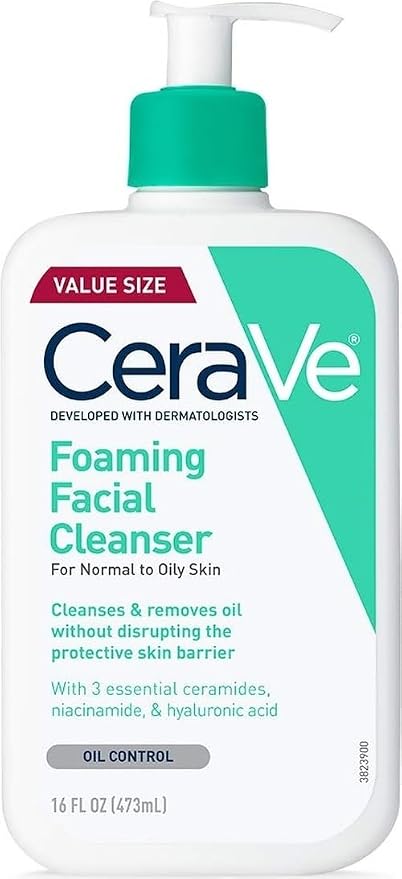
There's a particular kind of loyalty that CeraVe inspires — not the screaming-from-rooftops kind that certain K-beauty brands generate, but the quiet, practical, "this is just what I use" kind. Walk into any dermatologist's office in America, and there's a better-than-even chance you'll spot those distinctive blue-and-white bottles lined up on a shelf. CeraVe PM Facial Moisturizing Lotion has been one of the brand's bestsellers for years, and it occupies a specific niche: a lightweight nighttime moisturizer that pairs ceramides with niacinamide at a price that doesn't make you wince. I wore it for two weeks straight to see whether it deserves its cult status — or whether it's just coasting on the CeraVe brand halo.
Brand Context: Why CeraVe Matters
CeraVe was developed in 2005 by a team of dermatologists in partnership with Valeant Pharmaceuticals (now Bausch Health). The brand's founding thesis was simple: the skin barrier needs ceramides to function properly, and most moisturizers on the market weren't delivering them. The name itself is a contraction of "ceramide" and "MVE" — the brand's patented MultiVesicular Emulsion technology, which is designed to release ingredients slowly over time rather than all at once. It's a technology borrowed from pharmaceutical transdermal delivery systems, and it's what gives CeraVe products their signature long-lasting feel.
CeraVe was acquired by L'Oréal in 2017, and since then the brand has expanded aggressively. You can now find CeraVe in virtually every drugstore, big-box retailer, and online marketplace in the United States, and it's increasingly available internationally. The PM Facial Moisturizing Lotion was one of the original products in the lineup, and it's remained largely unchanged since its launch — a rare thing in an industry that reformulates every eighteen months to generate buzz.
Ingredient Breakdown
The ingredient list for CeraVe PM is refreshingly short and focused. There's no filler, no marketing-driven "hero" ingredients at token concentrations, and no fragrance. It's a formula built around two clear objectives: barrier repair and overnight hydration. Let me walk through the key players.
Key Actives
- Niacinamide (Vitamin B3): This is the star ingredient, and it's positioned at number four in the INCI list — right after water, glycerin, and caprylic/capric triglyceride. That placement suggests a concentration somewhere between 4% and 5%, which is right in the sweet spot established by the research literature. Niacinamide does a staggering amount of work: it strengthens the skin barrier by increasing ceramide synthesis, reduces inflammation, regulates sebum production, improves uneven skin tone, and helps with fine lines. It's one of the most versatile actives in dermatology, and CeraVe PM puts it front and center.
- Ceramide NP: The most abundant ceramide in human skin, also known as Ceramide 3. It restores the lamellar structure of the stratum corneum and prevents transepidermal water loss. CeraVe uses their MVE encapsulation technology to deliver it gradually, which is a genuine advantage over competitors that just dump ceramides into the formula and hope they absorb.
- Ceramide AP: A less common ceramide that reinforces the skin's moisture barrier alongside Ceramide NP. Its inclusion alongside NP signals that CeraVe is thinking about ceramide diversity — not just ceramide presence — even in a drugstore product.
- Ceramide EOP: The rarest ceramide in the lineup. Ceramide EOP (also called Ceramide 1) is critical for the long-chain fatty acid barrier and is one of the first ceramides depleted when the barrier is damaged. Very few brands include this at any price point, and finding it in a $16 drugstore lotion is genuinely impressive.
- Cholesterol: Essential for lamellar membrane formation in the stratum corneum. Without cholesterol, ceramides can't organize properly into the functional lipid layers that make the barrier work. The ceramide-cholesterol-fatty acid triad is the gold standard in barrier repair research, and CeraVe PM includes all three.
- Phytosphingosine: A sphingolipid that serves as a precursor to ceramide synthesis in the skin. It also has antimicrobial properties, which makes it particularly useful for acne-prone skin. This is a thoughtful inclusion — it doesn't just repair the barrier, it helps the skin make more of its own ceramides.
- Sodium Hyaluronate: The sodium salt of hyaluronic acid, with a smaller molecular weight that allows it to penetrate the upper layers of the skin more effectively. It acts as a humectant, drawing water into the skin and providing immediate hydration.
- Glycerin: The workhorse humectant. It's the second ingredient in the list, which means it's present at a meaningful concentration. Glycerin is one of the most well-studied moisturizing ingredients in dermatology, and it works by pulling water from the deeper layers of the skin and the environment into the stratum corneum.
- Caprylic/Capric Triglyceride: A lightweight emollient derived from coconut oil and glycerin. It provides a smooth, non-greasy slip to the formula and helps the other ingredients spread evenly across the skin.
What's Not in It
This is where CeraVe PM genuinely shines. The formula is fragrance-free — no essential oils, no fragrance compounds, no masking agents. For a product that's designed for nighttime use on potentially compromised skin, this is exactly right. There are no denatured alcohols, no drying sulfates, no lanolin, and no parabens. The preservative system uses phenoxyethanol and ethylhexylglycerin, which are well-tolerated by most skin types. The only ingredient that raises eyebrows is dimethicone, which sits at position eleven in the INCI. Dimethicone is a silicone that creates a smooth, protective layer on the skin. It's generally considered safe and non-comedogenic, but some people find that it creates a "trapping" effect that can lead to breakouts if their skin is prone to congestion. I'll address this in the wear test section.
Texture & Application
CeraVe PM has a texture that's hard to pin down — it's not quite a lotion, not quite a gel-cream, and not quite a serum. It's a white, slightly opaque fluid that pumps out of the bottle with a consistency somewhere between whole milk and a light cream. It spreads easily and absorbs within about two minutes, leaving a matte-to-satin finish that's surprisingly dry for a product called a "moisturizing lotion."
The pump dispenser is one of the best things about this product. It dispenses a controlled amount, keeps the formula hygienic, and prevents oxidation of the ceramides and niacinamide. Each pump gives you roughly a pea-sized amount, which is enough for the full face. Two pumps if you want to include your neck. The packaging is basic but functional — no luxury weight, no frosted glass, just a lightweight plastic bottle with a reliable pump. It's exactly what a drugstore product should be.
The finish is where CeraVe PM reveals its identity. It's not a rich, sinking-in cream — it's a lightweight, almost invisible layer that sits on the skin without feeling heavy. There's a faint dimethicone slip to it, which some people love (it creates a smooth canvas for the next morning's routine) and some people hate (it can feel like a thin film). I'm in the first camp, but I understand the complaint. If you're used to richer, more emollient moisturizers, CeraVe PM will feel almost too light at first.
Two-Week Wear Test
Conditions tested: Late winter with indoor heating running constantly — dry air, static electricity, and the kind of skin that feels tight within an hour of washing. I also tested it during a period where I was using a 2% salicylic acid treatment three nights a week, which left my barrier slightly compromised.
Days 1–3: I started using CeraVe PM on skin that was already feeling the effects of winter heating — tight cheeks, slightly flaky patches around my nose, and a general dullness that no amount of water was fixing. The first application was underwhelming in the best possible way. It went on light, absorbed quickly, and didn't leave any residue. I woke up the next morning with skin that felt... normal. Not miraculous, not transformed, just comfortable. And honestly, after weeks of waking up with tight, dry skin, "comfortable" felt like a revelation.
Days 4–7: By the end of the first week, the flakiness around my nose had resolved completely. My skin felt more resilient — not just hydrated, but actually calmer. The niacinamide was clearly doing its job: my skin looked less red, and the overall tone was more even. I noticed that my salicylic acid nights were more tolerable — the CeraVe PM applied afterward seemed to take the edge off the irritation without interfering with the acid's effectiveness. This is a crucial observation, because finding a moisturizer that works with your actives rather than against them is harder than it sounds.
Days 8–14: The second week was where I started to notice the limitations. While CeraVe PM was excellent for my cheeks and jawline, it wasn't quite enough for the persistent dry patches on my forehead and temples. I found myself reaching for a heavier balm to layer over those areas. On the other hand, the niacinamide continued to deliver: my skin was visibly less red, and I noticed a subtle brightening effect that I hadn't expected from a "basic" moisturizer. The sebum regulation claim also held up — my T-zone was less oily by midday compared to when I was using a richer cream.
One thing worth noting: I did experience a small closed comedone on my chin around day ten. I can't definitively blame CeraVe PM — it could have been the salicylic acid, hormonal fluctuations, or just the dimethicone interacting with my particular skin. But it's worth mentioning because this is a common complaint in online reviews. If you're acne-prone and sensitive to silicones, this product may not be your best friend.
Pros
- Three-ceramide complex with cholesterol: Ceramide NP, AP, and EOP plus cholesterol and phytosphingosine — this is a complete barrier-repair system at a drugstore price. The inclusion of Ceramide EOP is particularly noteworthy; it's rare at any price point.
- Niacinamide at an effective concentration: Positioned at number four in the INCI, suggesting 4–5%. This is the research-backed sweet spot for barrier repair, sebum regulation, and brightening.
- Fragrance-free: No essential oils, no fragrance compounds, no masking agents. This is exactly what a nighttime moisturizer should be.
- MVE delivery technology: The slow-release encapsulation means the ceramides and niacinamide are delivered over time, not just dumped onto the surface and washed away.
- Hygienic pump packaging: Protects the formula from oxidation and contamination. Jar packaging is the enemy of ceramide stability, and CeraVe avoids it here.
- Price: At $15–18 for 89ml, this is one of the best values in skincare. You get a ceramide-cholesterol complex plus niacinamide for less than what many brands charge for a single ceramide.
Cons
- Not hydrating enough for very dry skin: If you have genuinely dry or dehydrated skin, especially in harsh winter conditions, CeraVe PM may not provide enough occlusive moisture on its own. I needed to layer a heavier balm over dry patches.
- Dimethicone can cause congestion: The silicone creates a smooth finish but can trap debris and sebum in pores, particularly for acne-prone skin. I experienced a small closed comedone during testing.
- Texture is underwhelming: The lightweight, almost watery consistency won't satisfy people who want a rich, indulgent nighttime cream. It feels clinical rather than luxurious.
- No additional soothing agents: Unlike K-beauty moisturizers that often include centella, panthenol, or allantoin, CeraVe PM relies entirely on ceramides and niacinamide for barrier support. There's no dedicated calming ingredient for reactive skin.
- Hard to find the right amount: The pump dispenses a fixed amount, and the thin texture means it's easy to over-apply (which increases the risk of congestion) or under-apply (which leaves you insufficiently moisturized).
Who Is This For?
CeraVe PM is best suited for normal to combination skin types who want a no-nonsense nighttime moisturizer that delivers ceramides and niacinamide without the fluff. If you're using retinoids, acids, or other actives that compromise your barrier, this lotion provides a reliable, fragrance-free foundation that won't irritate already-stressed skin. It's also a smart choice for oily skin types who find most nighttime moisturizers too heavy — the lightweight, matte-to-satin finish respects the fact that you don't want to wake up feeling like you slept in a face mask.
If you have very dry or eczema-prone skin, CeraVe PM is likely too lightweight for you as a standalone nighttime moisturizer. You'd be better served by the CeraVe Moisturizing Cream (the tub version) or a richer ceramide option like Kao Curél Intensive Moisture Cream. If you're sensitive to silicones or prone to closed comedones, the dimethicone in this formula may be a dealbreaker — consider a silicone-free alternative like the Illiyoon Ceramide Ato Concentrate Cream.
Price & Where to Buy
CeraVe PM Facial Moisturizing Lotion retails for approximately $15–18 USD for 89ml (3 fl oz). It's widely available at Target, Walmart, CVS, Walgreens, Amazon (verify the seller is CeraVe or an authorized retailer), and directly from CeraVe's website. The 89ml bottle with pump dispenser lasts roughly two to three months with nightly use. CeraVe frequently runs promotions at drugstores — buy-one-get-one-half-off deals are common, and the brand often appears in skincare gift sets during the holidays. At full price, it's already one of the best values in skincare; on sale, it's almost absurdly cheap for what you get.
Comparison Notes
Against CeraVe Moisturizing Cream (the tub): The Cream is richer, thicker, and more occlusive — it uses petrolatum as a key ingredient, which creates a stronger moisture seal. It's better for very dry skin and body use, but it comes in a jar (less hygienic, ceramides degrade faster) and lacks niacinamide. The PM Lotion is lighter, includes niacinamide, and comes in a pump. If you need rich moisture, go with the Cream. If you want a lightweight nighttime option with active benefits, the PM Lotion is the better choice.
Against Illiyoon Ceramide Ato Concentrate Cream: Illiyoon is the K-beauty budget champion at around $12–15 for 100ml. It's fragrance-free, silicone-free, and contains ceramide NP and a ceramide complex. The texture is thicker and more emollient than CeraVe PM, making it better for dry skin. However, it lacks niacinamide and the Ceramide EOP that CeraVe includes. If you're sensitive to silicones, Illiyoon is the safer pick. If you want the niacinamide benefit, CeraVe PM wins.
Against EltaMD PM Therapy: EltaMD's PM Therapy is a closer competitor — it also pairs ceramides with niacinamide in a lightweight formula. It includes additional peptides and antioxidants, which makes it a more "complete" formula. But it retails for $30–36 for 48ml, which is roughly three times the price per milliliter of CeraVe PM. The ingredient list is more impressive, but whether the difference is noticeable on your skin is debatable. CeraVe PM delivers the same core actives at a fraction of the cost.
Final Verdict
CeraVe PM Facial Moisturizing Lotion is one of those products that earns its place on the shelf through sheer competence rather than charisma. It doesn't have the seductive texture of a luxury cream, the exotic ingredient list of a K-beauty essence, or the Instagram-worthy packaging of a trendy brand. What it has is a ceramide-cholesterol-niacinamide formula that actually works, at a price that doesn't require justification, in packaging that keeps the formula stable. The three-ceramide complex (including the rare Ceramide EOP) at a drugstore price point is genuinely remarkable. The niacinamide at an effective concentration adds real value — it's not just a moisturizer, it's a treatment. The fragrance-free formula respects the fact that nighttime is when your skin is most vulnerable.
But it's not perfect. The dimethicone can cause issues for acne-prone skin, the lightweight texture won't satisfy very dry skin types, and the overall experience is clinical rather than indulgent. If you want a nighttime moisturizer that feels like a spa treatment, this isn't it. If you want a nighttime moisturizer that quietly does its job, supports your barrier, and doesn't irritate your skin — all for under $18 — this is one of the best options available. It's not exciting, and it's not going to go viral on TikTok. But it's the kind of product that dermatologists recommend for a reason: it works, it's affordable, and it gets out of your way. Sometimes that's exactly what you need.