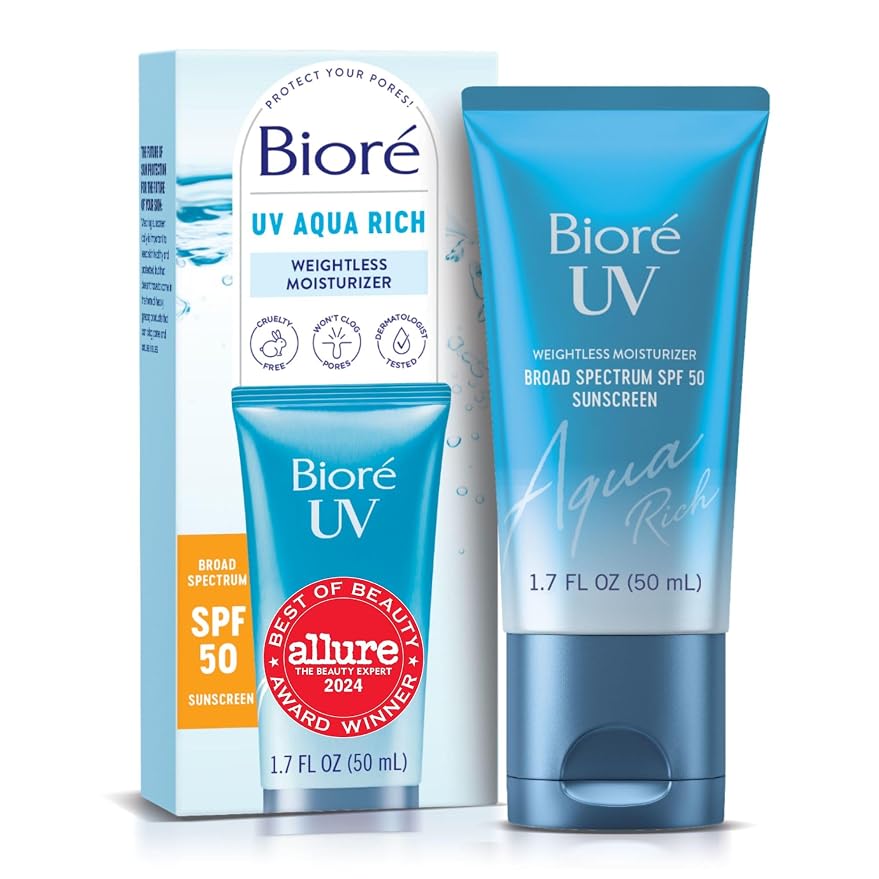
Before K-beauty sunscreens became the global obsession they are today, there was Biore UV Aqua Rich Watery Essence. Launched by Kao Corporation—a Japanese household name—this product essentially invented the "watery sunscreen" category that Korean brands later perfected. I've used multiple versions over the years, but I wanted to do a proper two-week wear test of the current 2023 formulation to see whether it still holds up against the newer Korean competition, or whether it's resting on legacy alone.
Japanese Sunscreen Standards: What Makes Biore Different
Japan regulates sunscreens under the Pharmaceutical Affairs Act, and the testing standards are rigorous—comparable to Korea's MFDS system. A product claiming SPF50+ PA++++ in Japan has undergone standardized in-vivo testing. The PA++++ rating (the highest available under the Japanese system) indicates a PPD of 16 or higher, meaning strong UVA protection against photoaging and hyperpigmentation.
Biore's filter system is a four-filter combination that covers the full UV spectrum:
- Ethylhexyl Methoxycinnamate (Octinoxate): UVB filter. One of the most widely used UVB filters globally, though it's not the most photostable on its own.
- Ethylhexyl Triazone (Uvinul T 150): UVB filter. Highly photostable, boosts SPF efficiently at low concentrations.
- Diethylamino Hydroxybenzoyl Hexyl Benzoate (Uvinul A Plus): UVA1 filter. Photostable, covers the long-wave UVA range responsible for deep photoaging.
- Bis-Ethylhexyloxyphenol Methoxyphenyl Triazine (Tinosorb S): Broad-spectrum filter. Photostable, covers both UVA and UVB, and stabilizes other filters.
This is a modern, photostable filter combination. No oxybenzone. No octocrylene. No avobenzone (which degrades quickly without stabilizers). The inclusion of Tinosorb S and Uvinul A Plus means the UVA protection is robust and won't break down mid-day. That said, the presence of Octinoxate—while effective—raises mild concerns about endocrine disruption at high systemic absorption levels. For a leave-on product applied to the face, the exposure is minimal, but it's worth noting if you're avoiding this filter entirely.
Ingredient Breakdown: Beyond the Filters
The supporting cast here is functional rather than luxurious. Biore prioritizes texture and wear experience over skin-conditioning actives:
- Alcohol (Denatured): This is the second ingredient on the list, right after water. It's used as a solvent to achieve the watery texture and rapid evaporation on skin. This is the most controversial aspect of the formula. For oily or resilient skin types, it's not a problem. For dry, sensitive, or compromised barriers, daily use of a high-alcohol product can contribute to dehydration and irritation over time.
- Glycerin: A classic humectant that draws moisture to the skin. Present in a modest concentration.
- Sodium Hyaluronate: The salt form of hyaluronic acid. Provides surface hydration and a plumping effect. The molecular weight here is likely high-molecular, so it sits on the surface rather than penetrating deeply.
- Xylitol: A sugar-derived humectant that also supports the skin's natural moisturizing factors. A nice touch.
- Arginine: An amino acid that helps maintain skin's pH balance and supports barrier function.
- Dimethicone: A silicone that provides slip and a smooth, matte finish. Helps the sunscreen spread evenly and resist water.
- Isopropyl Palmitate: An emollient that can be comedogenic for acne-prone skin. Not a dealbreaker for most, but worth flagging.
There's no fragrance listed in the INCI, but the product has a distinct citrus scent that likely comes from a fragrance blend or natural extract not fully disclosed. If you're fragrance-sensitive, patch-test first.
Texture & Application Experience
This is where Biore UV Aqua Rich earned its cult status. The texture is genuinely unlike anything else on the market—a thin, watery gel that breaks into a lightweight serum consistency upon application. It spreads effortlessly, absorbs in under 30 seconds, and leaves zero white cast on any skin tone. The finish is semi-matte with a slight dewiness that reads as healthy skin rather than product residue.
The alcohol content is what enables this texture. It evaporates quickly, leaving the filters and emollients behind in a thin, even film. For someone used to thick, pasty Western sunscreens, this feels like nothing—and that's both its greatest strength and its potential weakness. The "nothing there" feel can lead to under-application, which compromises protection.
Two-Week Wear Test
Conditions tested: Office days (8 hours indoor, air-conditioned), outdoor commutes (20 minutes morning and evening sun exposure), one weekend of mixed indoor/outdoor activity with humidity around 70%.
Indoor days: The sunscreen performed beautifully under makeup. No pilling with primer or foundation. No midday greasiness—my combination skin stayed balanced. The semi-matte finish held for about 4 hours before my T-zone started showing through, which is comparable to most Korean sunscreens I've tested.
Outdoor exposure: No visible sunburn or flushing after 20-minute commutes (8–9 AM and 5–6 PM) over ten consecutive days. The protection held up as expected for SPF50+. On the weekend with higher humidity and mixed sun exposure, the sunscreen did start feeling slightly tacky after 3 hours of continuous outdoor activity, but it didn't run or streak. Reapplication was straightforward.
Skin feel over time: This is where the alcohol content became noticeable. By day 10, I experienced mild tightness around my cheeks—something I don't typically experience with Korean sunscreens that avoid alcohol. The hydration from glycerin and hyaluronic acid helped, but it wasn't enough to fully counteract the drying effect of daily alcohol exposure. If you have oily or resilient skin, this won't be an issue. If you're dry or sensitive, you may want to layer a hydrating serum underneath.
Pros
- Iconic texture: Watery, lightweight, absorbs instantly. Sets the standard for invisible SPF wear.
- Zero white cast: Works on all skin tones without ghosting.
- Modern filter system: Photostable, broad-spectrum, reef-conscious (no oxybenzone or octinoxate... wait, it does have octinoxate. Correction: no oxybenzone, but it does contain octinoxate).
- Fast absorption: No waiting period before makeup application.
- Affordable: Around $10–15 for 50g, widely available.
- Layers well: No pilling under makeup or skincare.
Cons
- High alcohol content: Can be drying or irritating for sensitive, dry, or compromised skin barriers with daily use.
- Contains Octinoxate: Some users avoid this filter due to endocrine disruption concerns (though exposure from sunscreen is minimal).
- Fragrance: Citrus scent may irritate fragrance-sensitive users.
- Isopropyl Palmitate: Potentially comedogenic for acne-prone skin.
- Less skin-conditioning: Compared to Korean sunscreens with rice extract, probiotics, or ceramides, Biore is purely functional.
Who Is This For?
Biore UV Aqua Rich is ideal for oily, combination, or resilient skin types who want a lightweight, invisible sunscreen that doesn't feel heavy or greasy. It's also a solid choice for makeup wearers who need a fast-absorbing base that won't pill or slide. If you have dry, sensitive, or compromised skin, the alcohol content may be problematic for daily use—consider a Korean alternative that avoids alcohol entirely.
Price & Where to Buy
Biore UV Aqua Rich Watery Essence typically retails for $10–15 for 50g. It's widely available at drugstores in Japan, as well as online retailers like YesStyle, Stylevana, Amazon, and Walmart. Be cautious of counterfeit products on third-party marketplaces—buy from authorized sellers or directly from Kao's official channels when possible.
Comparison Notes
Against Beauty of Joseon Relief Sun: Relief Sun is more hydrating and alcohol-free, with skin-conditioning ingredients like rice extract and probiotics. Biore absorbs faster and feels lighter, but Relief Sun is better for long-term barrier health. If you have dry or sensitive skin, go with Relief Sun. If you have oily skin and prioritize texture, Biore wins.
Against Skin1004 Hyalu-Cica Water-Fit Sun Serum: Skin1004 offers similar lightweight texture but with added centella and hyaluronic acid for soothing and hydration. It's alcohol-free and more skin-conditioning, but costs slightly more ($15–18 vs. $10–15). For daily wear with skin benefits, Skin1004 edges out Biore.
Against EltaMD UV Clear: EltaMD is a dermatologist-standard mineral-chemical hybrid, but it leaves a noticeable film and costs $36 for 48ml. Biore delivers comparable protection at a third of the price with a superior wear experience. If you're on a budget or prioritize texture, Biore is the clear winner.
Final Verdict
Biore UV Aqua Rich Watery Essence is a landmark product that redefined what sunscreen could feel like. Its texture is still unmatched, its filter system is modern and photostable, and its price point is unbeatable. However, the high alcohol content and lack of skin-conditioning actives mean it's not the best choice for everyone. If you have oily or resilient skin and prioritize a lightweight, invisible SPF, this is still a top-tier option. If you have dry, sensitive, or compromised skin, or if you want sunscreen that doubles as skincare, the newer Korean alternatives offer more.
Four out of five stars. It's iconic for a reason—but the competition has caught up.