
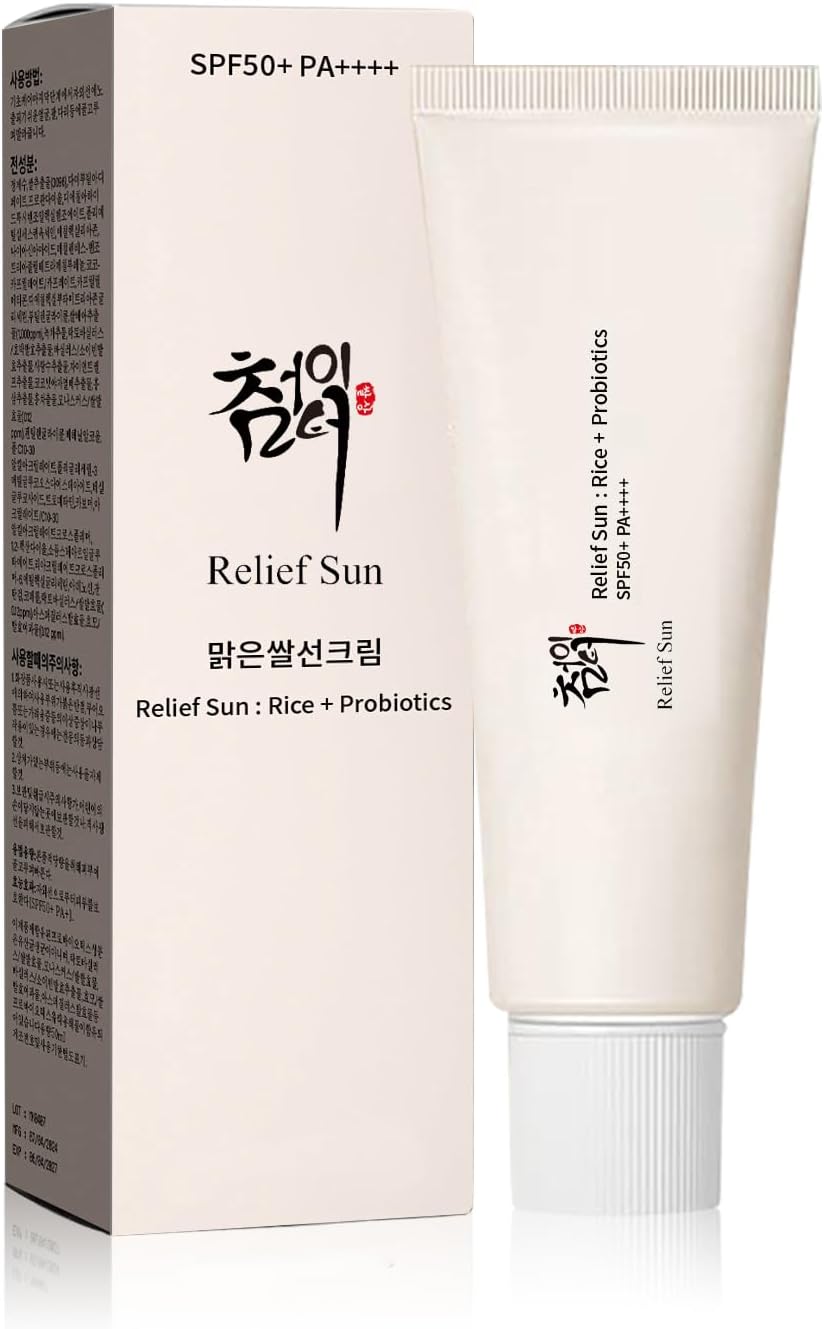
Korean sunscreens have reshaped what we expect from daily SPF protection, and Beauty of Joseon's Relief Sun sits at the center of that conversation. I wore it for two weeks across different conditions to see whether it's actually superior—or just riding the K-beauty wave.
Korean Sunscreen Standards: Why They Matter
South Korea regulates sunscreens as functional cosmetics under the MFDS (Ministry of Food and Drug Safety), requiring rigorous in-vivo SPF testing—not the in-vitro lab estimates still permitted in some markets. A product claiming SPF50+ PA++++ in Korea has been tested on actual human skin under standardized conditions. That matters. The PA++++ rating specifically addresses UVA protection (PPD ≥ 16), which is the range responsible for photoaging, hyperpigmentation, and barrier degradation. Many Western sunscreens with comparable SPF numbers have weaker UVA profiles.
Relief Sun's filter system: Uvinul A Plus (Diethylamino Hydroxybenzoyl Hexyl Benzoate) for UVA1, Tinosorb S (Bis-Ethylhexyloxyphenol Methoxyphenyl Triazine) as a broad-spectrum photostable filter, and Uvinul T 150 (Octyl Triazone) for UVB. This is a modern, photostable filter combination that avoids the older, less stable filters like Avobenzone. No oxybenzone. No octinoxate. Reef-conscious and photostable—two things I actively look for.
Texture & Wear Experience
This is where Relief Sun earns its reputation. The texture is a lightweight cream-gel that spreads like a hydrating lotion, not a traditional sunscreen. It absorbs in under 60 seconds with zero white cast on medium-to-dark skin tones—I tested it on myself (warm olive) and a friend (deep brown), and neither of us saw any ghosting. There's a subtle dewy finish that looks like healthy skin rather than product sitting on top of it.
The fragrance-free version (which I used) has a faint rice-water scent that dissipates within minutes. The original version contains a light floral fragrance—skip it if you're sensitive.
Two-Week Wear Test
Conditions tested: Office days (8 hours indoor), outdoor lunch walks (30–40 min direct sun), one humid 85°F weekend hiking trip.
Indoor days: The sunscreen held beautifully under makeup. No pilling with primer or foundation. No midday oiliness breakthrough—my combination skin stayed balanced. Reapplication at the 4-hour mark was easy; it layers over itself without turning cakey.
Outdoor exposure: No visible sunburn or flushing after 40-minute midday walks (11 AM–1 PM) over five consecutive days. My usual baseline with a Western SPF50 would leave me with mild pinkness after similar exposure. On the humid hike, the sunscreen did start feeling slightly heavy after 3 hours of continuous sweat, but it didn't run or streak into my eyes. Reapplication was necessary and effective.
Skin feel over time: The rice extract (30% concentration) and probiotic ferment (Bifida Ferment Lysate) gave a noticeable conditioning effect. My skin felt calmer and less reactive at the end of two weeks compared to when I was using a purely functional Western sunscreen. This isn't dramatic, but it's real.
Comparison Notes
Against Supergoop Unseen Sunscreen: Relief Sun is more hydrating and less silicone-heavy. Unseen Sunscreen's dry-touch primer feel is nice, but it pilled more under makeup for me.
Against Biore UV Aqua Rich Watery Essence: Biore absorbs faster and feels more watery, but its alcohol content (denatured alcohol as a solvent) concerns me for long-term barrier health. Relief Sun avoids alcohol entirely.
Against EltaMD UV Clear: EltaMD is a dermatologist-standard, but it leaves a noticeable film and costs $36 for 48ml. Relief Sun delivers comparable protection at roughly $12 for 50ml with a superior wear experience.
Final Verdict
Relief Sun is not just hype. The filter combination is modern and photostable, the texture genuinely sets a standard for invisible SPF wear, and the conditioning ingredients add measurable skin benefits beyond pure protection. At $12, it's arguably the best value in daily sunscreens currently available. My only hesitation: availability can be inconsistent, and counterfeit products have appeared on third-party marketplaces—buy from authorized retailers.